
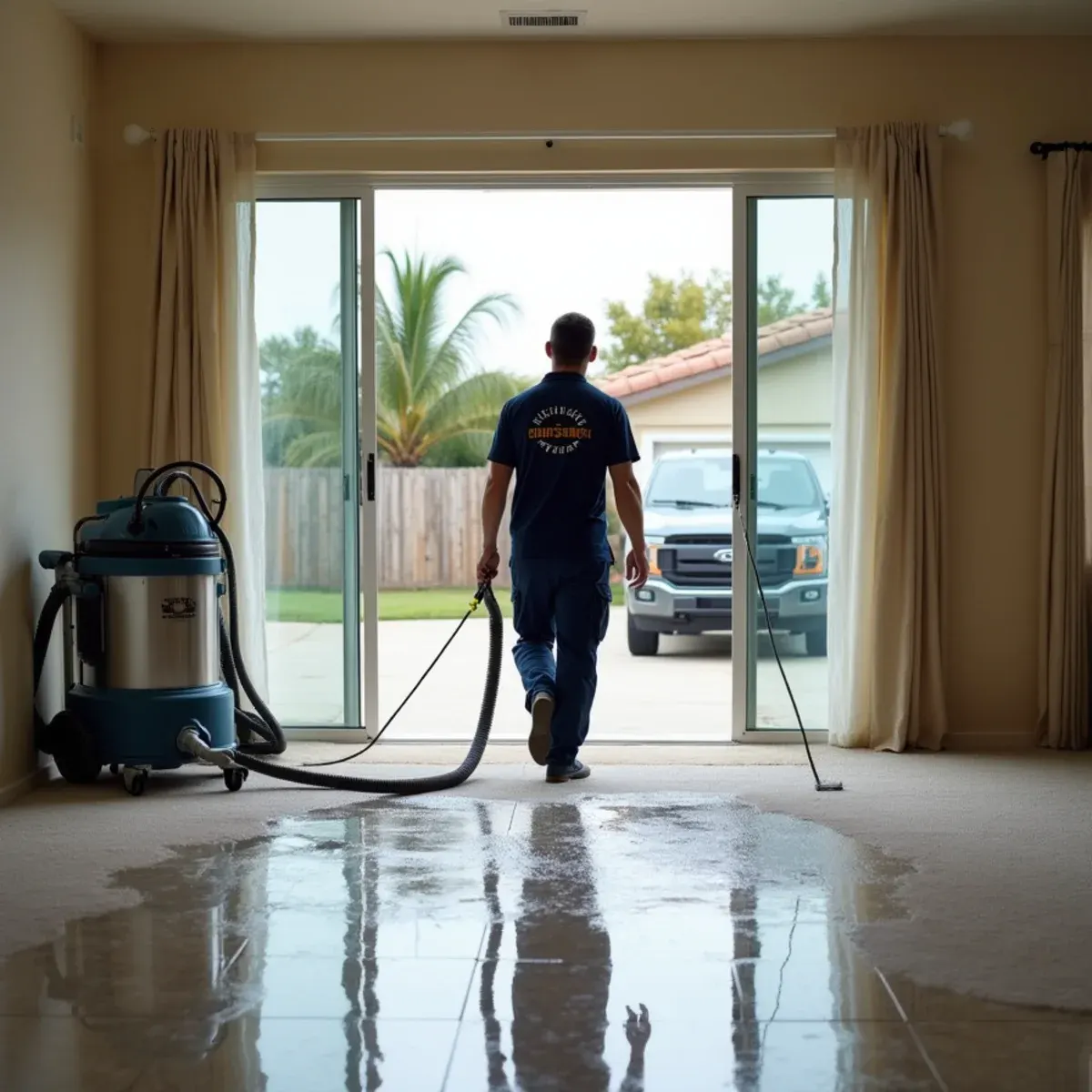
Pico Rivera was built on the strip of ground between the San Gabriel River and the Rio Hondo, and that position governs everything about how water behaves here. The table sits high. During sustained storms the soil saturates faster than it does in Downey or Bellflower a few miles away, and once it's saturated it stops accepting anything — so surface water that would normally soak in instead runs toward the lowest threshold on your lot. Homeowners in North Pico Rivera and the Rivera district see it every wet winter.
For extraction, the practical consequence is that some water we pump out can come back. If groundwater is pressing up around a slab edge or into a low garage, removing the standing water is not the end of the job — it's a holding action until the ground drops. We're direct about that rather than pretending one visit finishes it. Interior plumbing failures in the 1945-to-1965 tract stock, with original galvanized supply and cast-iron drains, behave normally and extract normally. It's the storm-season work where the water table changes the plan.
What Pico Rivera Changes About Water Extraction
1Saturated ground refills what we pump
When the table is high after days of rain, water removed from a low garage or side-yard sump can return within hours. We'll say so up front and set expectations honestly: the first visit removes bulk water and protects contents, and drying begins in earnest once infiltration stops. Pretending a single extraction solves a groundwater event just costs you a second emergency call.
2Area drains and downspouts do the real work
On lots with limited absorption, the drainage system is your first defense. Blocked area drains and downspouts that discharge two feet from the foundation are what we find behind most storm-related Pico Rivera losses. After extraction we walk the exterior and point out where water actually entered, because that's usually a fixable grading or discharge problem rather than a structural one.
3Postwar slab and galvanized inside the house
Setting the channels aside, the interior stock is uniform 1945-to-1965 slab construction. Original galvanized supply lines fail with volume in small rooms, and carpet over pad holds most of it. That's conventional weighted extraction, pad removal and cavity work at wall plates — and it's worth separating from the storm story, because insurers treat the two very differently.
How the Work Runs
The method is the same one we use on every water extraction job, documented to the IICRC S500:2025 standard. Here it is in short — the full water extraction & removal process explains each stage in detail.
- Bulk removal with submersible pumps
- Truck-mounted extraction on carpet and pad
- Hard-surface and specialty extraction
- Cavity and void extraction
- Removing what cannot be saved
- Post-extraction moisture reading
The Pico Rivera Background Worth Knowing
On a hillside, storm water leaves. In Pico Rivera it soaks in, and when the soil is already near capacity it stops soaking in and simply stands. That is why a yard here can hold water two days after the rain stops while a yard up in the Whittier hills is dry by morning. The lawn is not draining badly. The ground underneath it is full. Once that happens, every path water can take toward your house becomes the path it takes: the garage threshold, the slider track, the gap where a patio slab has settled back toward the wall.
There is more on the housing stock, drainage and plumbing history of this city on our water damage restoration in Pico Rivera page.
Pico Rivera at a glance
- Dominant construction era
- 1945–1965
- Foundation type
- slab on grade
- Supply piping found here
- original galvanized steel, copper
- Drain line materials
- cast iron
- Terrain and water table
- flat, shallow water table
- Most common local failure
- ground saturating fast during sustained storms because the water table between two channels sits high
- Highest-value local prevention
- clearing area drains and confirming downspouts discharge well away from the foundation
What It Costs in Pico Rivera
We do not quote a number over the phone before seeing the property — anyone who does is guessing. The variables that actually move the price on a water extraction job are volume and depth of water, flooring type, contamination level, and they are broken down in full on the water extraction & removal page. The assessment and the written estimate are free anywhere in Pico Rivera, day or night, with no obligation.
Water Extraction Questions from Pico Rivera Homeowners
Because the source isn't above ground. Living between the San Gabriel and the Rio Hondo, your soil saturates quickly and the water table rises with sustained rain, pushing moisture up through slab edges and cold joints. Pumping removes what's there but can't lower the table. We extract to protect contents and prevent wicking into walls, then dry once infiltration stops. Longer term, exterior drainage and slab-edge sealing are the fixes worth pricing.
For a typical single-room residential loss, extraction runs one to three hours. Multi-room losses or Category 3 water can take most of a day because of containment setup and material removal. We will give you a realistic timeframe after the walkthrough, before we start.
Often we can save the carpet and only replace the pad, which is the cheaper and less disruptive path. The deciding factors are water category, how long it sat, and whether the pad is a moisture barrier type. Clean water caught quickly usually means the carpet stays.
Not in the way people picture it. The channels are engineered, and what we actually see is a groundwater and surface drainage problem rather than a channel overtopping. Because the water table between the two runs high and the ground is flat, soil here reaches saturation faster than it does a few miles inland. Once it does, storm water stops soaking in and starts looking for the lowest opening in your house, which is almost always the garage.