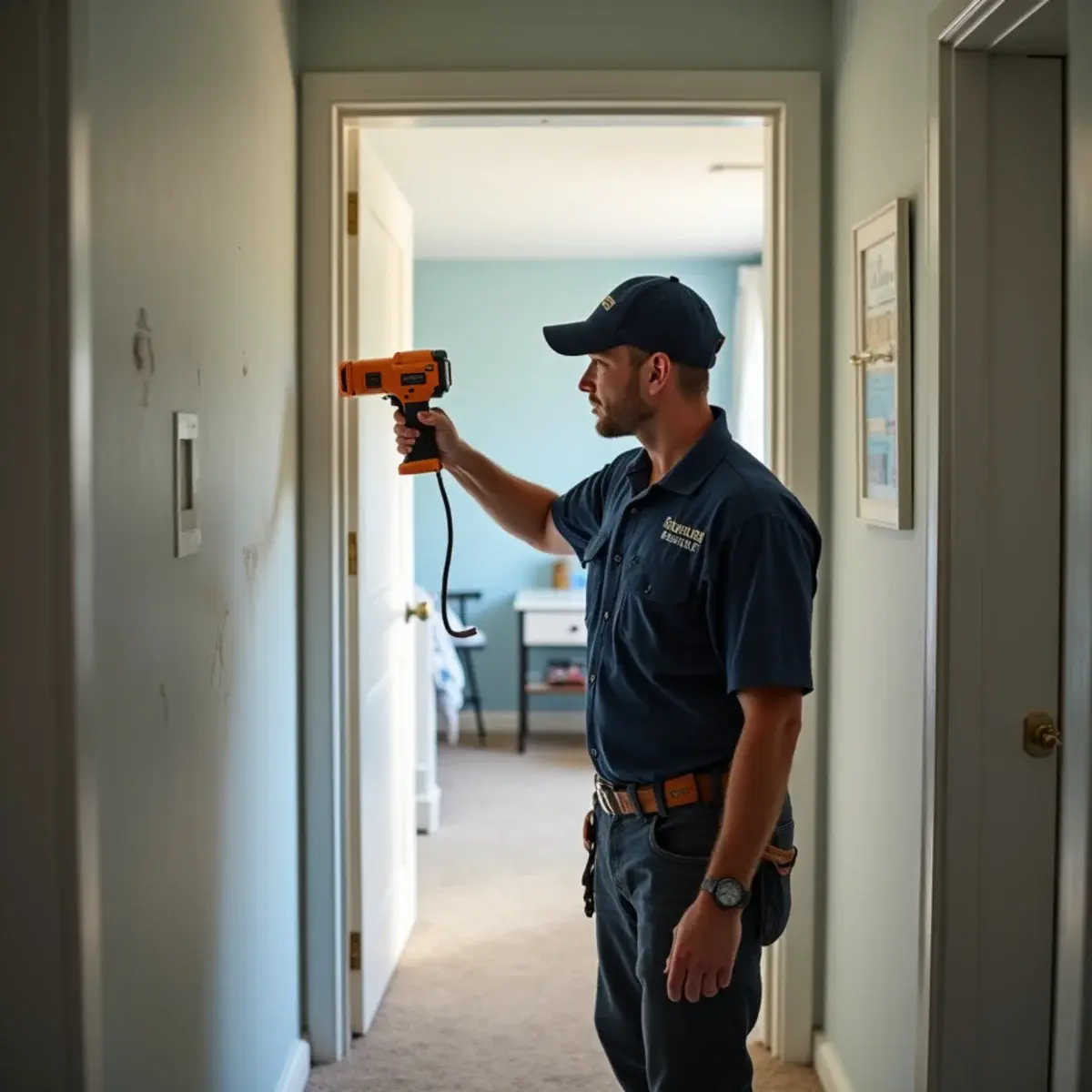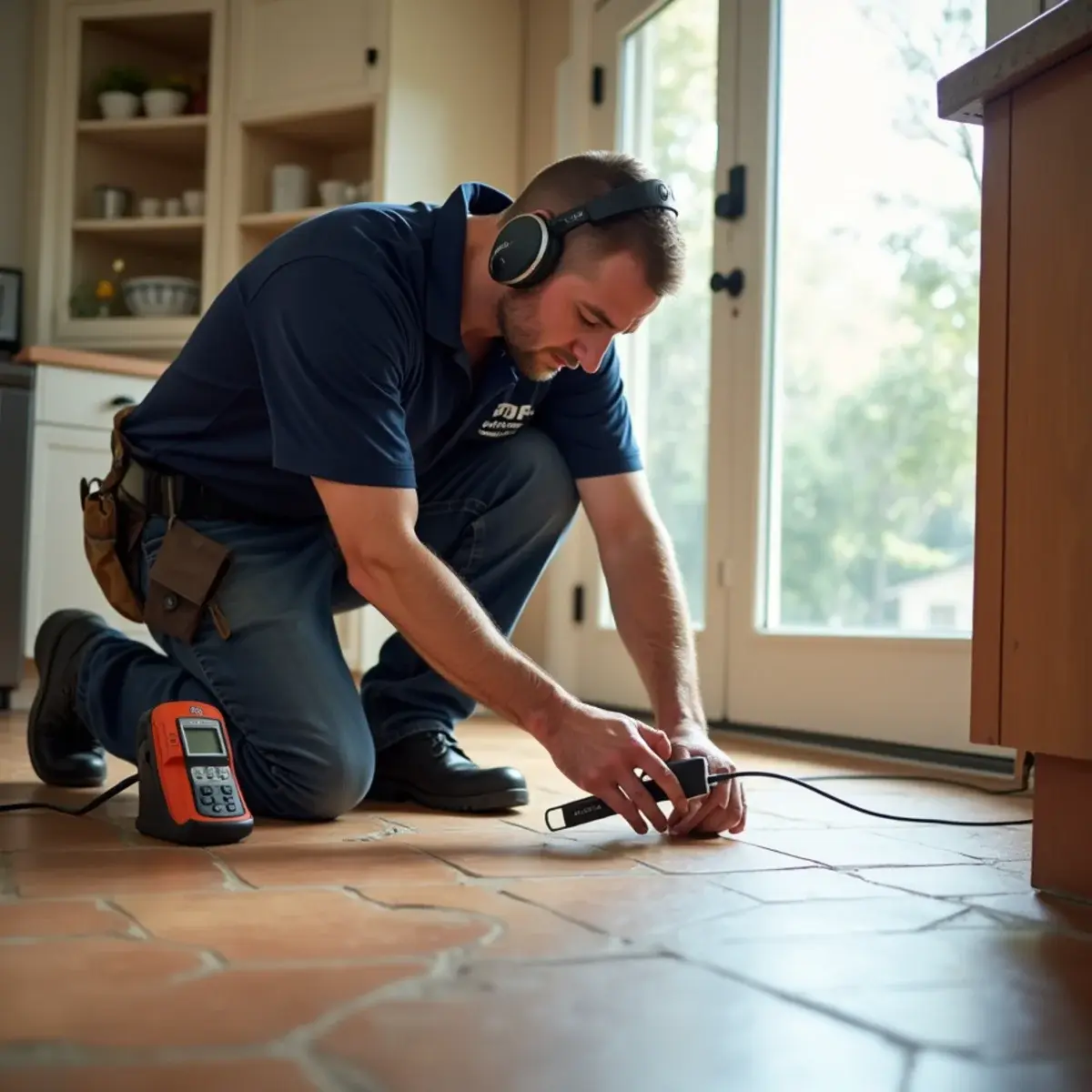
Most of the expensive water damage we deal with started as something small that nobody could see. A pinhole in a wall. A shower pan seeping into the subfloor. A slab leak that ran for a year. In every one of those, the damage compounded quietly and the bill arrived all at once.
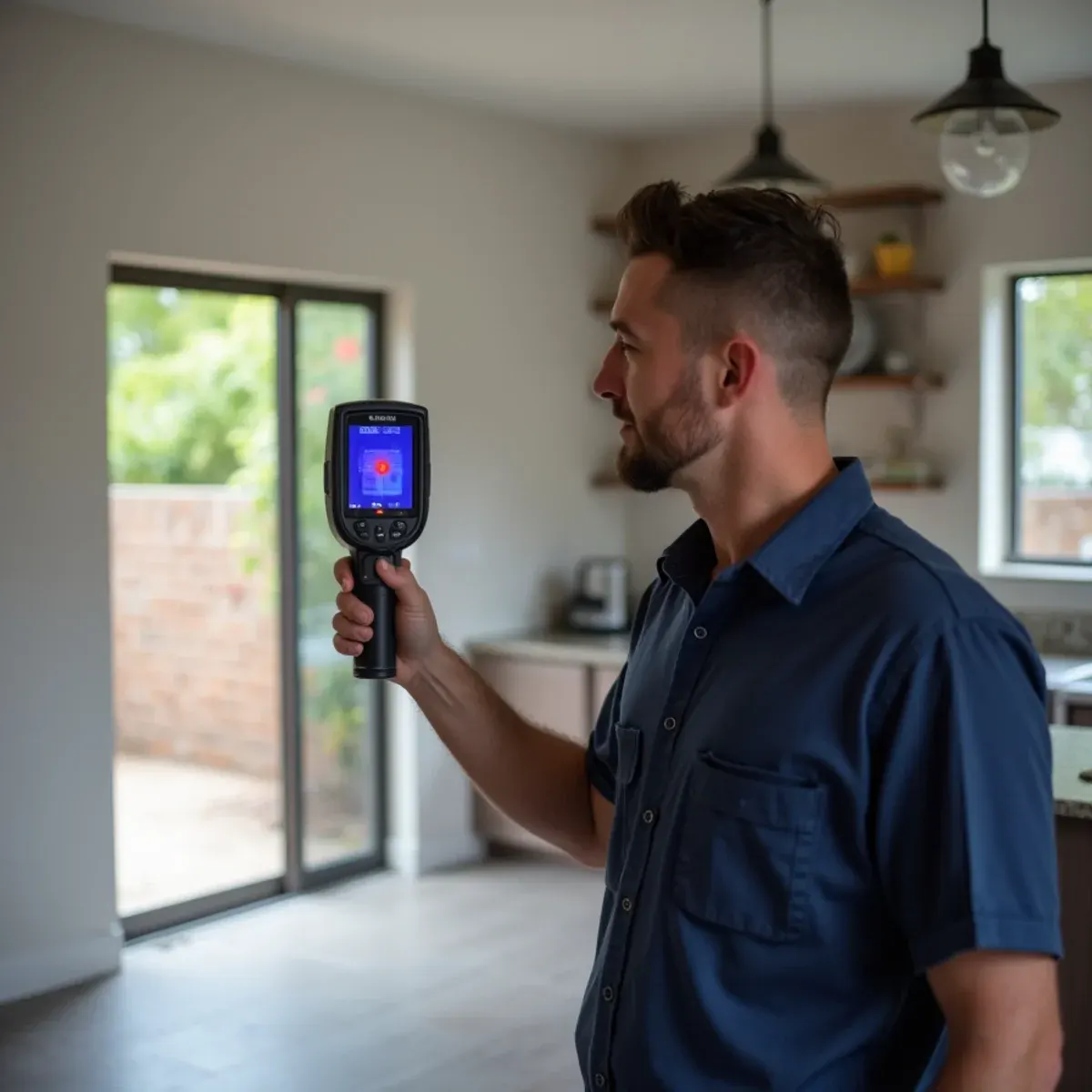
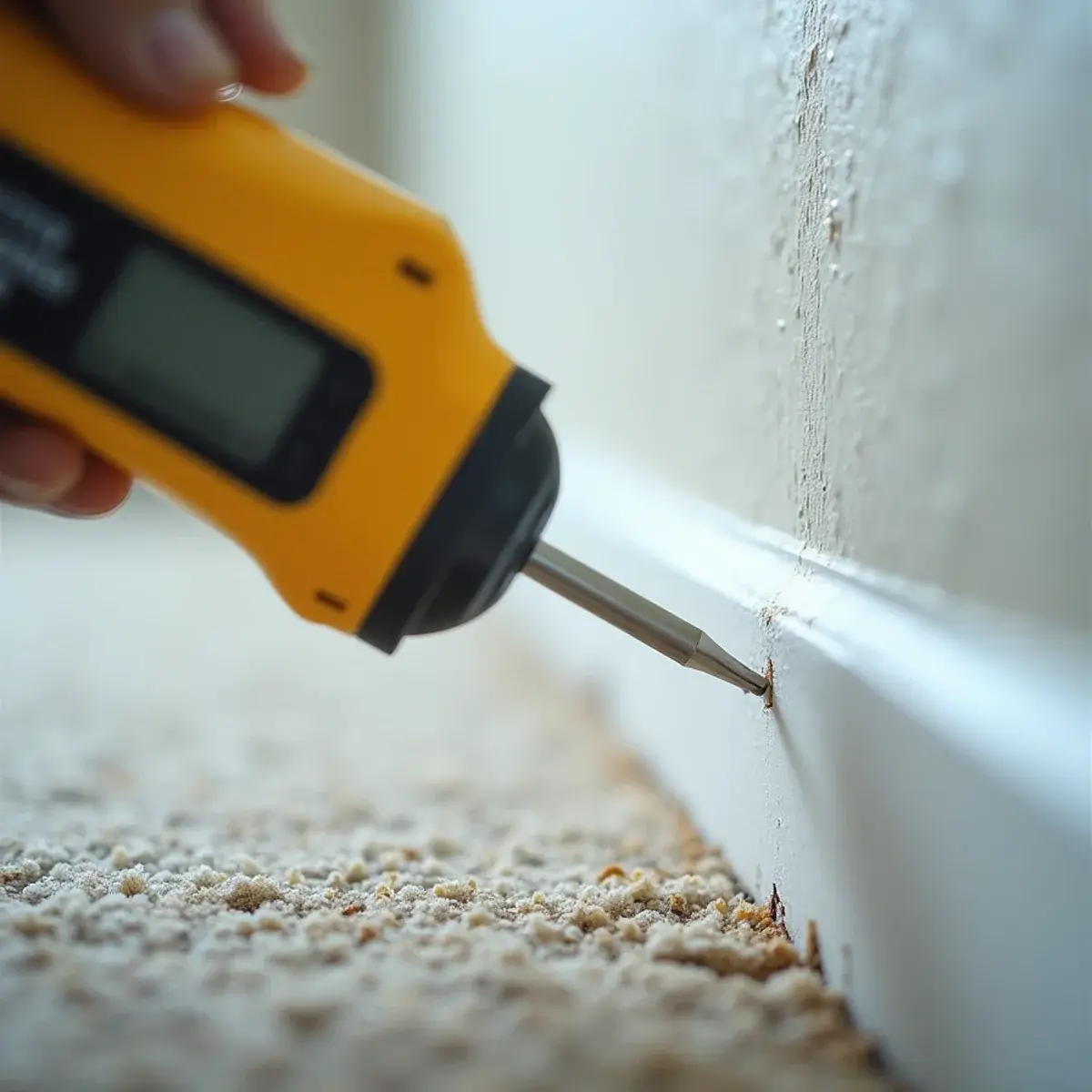
The instruments that find these problems are not exotic. A thermal imaging camera shows the temperature differential that evaporating moisture creates behind a surface. Pin and pinless moisture meters quantify what is actually in the material. Together they turn an educated guess into a measurement.
We offer this inspection at no charge and with no obligation, for a reason that is not entirely altruistic: a homeowner who finds a problem early has a small job, and a homeowner who finds it late has a large one. We would rather build a reputation on the first outcome.
When to Get an Inspection
These situations are worth a free twenty-minute check:
A musty smell you cannot locate
Odor without a visible source is the most common reason people call us for an inspection, and it very often traces to moisture inside a wall or under a floor.
A water bill that went up without explanation
The meter test tells you whether water is escaping. If it is and nothing is visibly wet, the leak is under the slab or inside a wall — and thermal imaging narrows down where.
After any leak you cleaned up yourself
Surface drying is not material drying. A reading tells you definitively whether the assembly under and behind the visible area is still wet.
Before buying a home
A standard home inspection is largely visual. Moisture mapping finds active leaks, prior unrepaired damage, and evidence of a poorly handled restoration — all things that materially affect what a house is worth.
A stain that may or may not be old
The only way to know whether a ceiling or wall stain is an active leak or a dry historical one is to meter it. Guessing costs far more than checking.
After a storm, even with no visible damage
Attic intrusion frequently soaks insulation without ever staining the ceiling. Checking after a major storm regularly finds problems while they are still cheap to fix.
Recurring paint, flooring, or grout problems in one spot
Paint that keeps bubbling, grout that keeps cracking, or flooring that keeps lifting in the same place is a moisture symptom, not a materials failure.
What the Inspection Involves
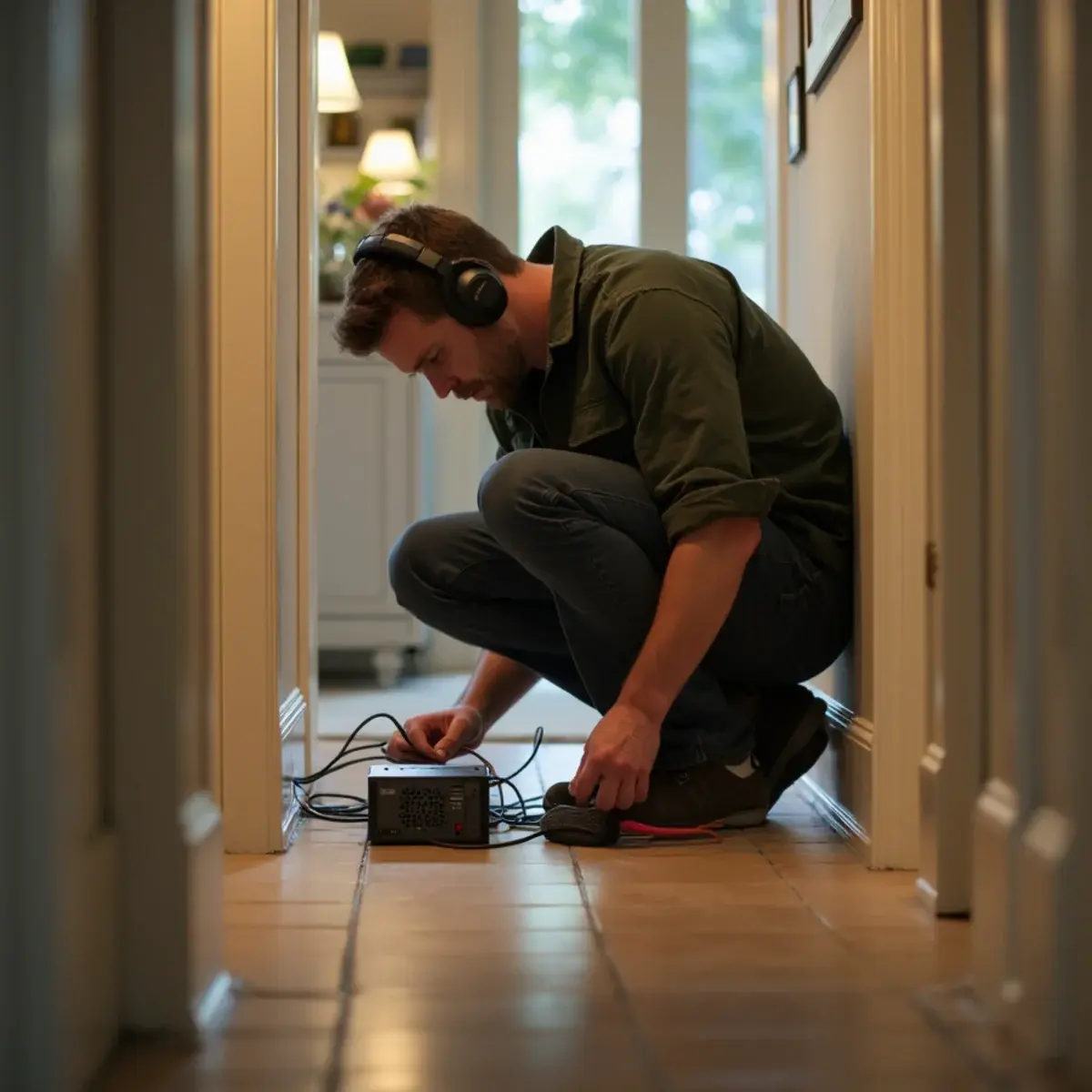
Twenty to forty minutes, non-invasive, and you get the findings in writing.
- 1
Talk through the history
What you have noticed, when it started, any prior leaks or repairs, and the age and construction of the home. That context usually narrows the search substantially before any instrument comes out.
- 2
Thermal imaging survey
We scan walls, ceilings, and floors in the suspect areas. Evaporating moisture cools a surface, producing a thermal signature that reads as an anomaly even when the surface looks and feels normal.
- 3
Confirm with moisture meters
Thermal imaging shows temperature, not water — it is a locator, not a proof. Every anomaly gets confirmed with a pinless meter and, where warranted, a pin meter that reads actual moisture content in the material.
- 4
Supply-side isolation testing
Where a pressurized leak is suspected, we run a meter test with fixtures isolated to determine whether water is actively escaping the supply system and roughly where.
- 5
Written findings with images
You receive the thermal images, the moisture readings with locations, and a plain-language explanation of what they mean and what we recommend — including when the recommendation is to do nothing.
- 6
Options, not a sales pitch
If there is a problem we explain the scope and cost. If there is not, we tell you that and leave. Plenty of our inspections end with everything reading normal, and that is a fine outcome.
What Thermal Imaging Can and Cannot Do
It is worth being precise here, because thermal cameras get oversold. A thermal camera detects surface temperature, not moisture. It finds water indirectly, because evaporating moisture cools the surface above it, and that differential shows up clearly on the image.
That works extremely well for finding active moisture behind drywall, under flooring, and in ceilings — usually within minutes and without opening anything. It is genuinely the most useful diagnostic tool in this trade.
What it does not do: see through walls, identify a leak that has already dried, distinguish moisture from an air draft or a thermal bridge without confirmation, or tell you how wet something is. Anyone who shows you a thermal image alone as proof of a problem is skipping the step that matters. Every anomaly has to be confirmed with a moisture meter, and that confirmation is what we put in the written findings.
The Pre-Purchase Moisture Survey
This is one of the highest-value things a buyer can do in this market and almost nobody does it. A standard home inspection is overwhelmingly visual — a good inspector will flag a stain or an obvious problem, but they are not mapping moisture content through the structure.
In a city where a large share of the housing stock is fifty to sixty years old and sitting on slab-routed copper, that gap matters. We regularly find active slab leaks, past water damage that was cosmetically covered rather than dried, and shower pan failures in homes that passed a general inspection without comment.
The survey covers all wet-area walls and floors, the attic and any accessible crawl space, the perimeter slab line, under every sink, around every appliance, and the ceiling planes below bathrooms. You get thermal images, moisture readings, and a written report you can take to a negotiation. Finding a slab leak before closing is worth several thousand dollars of leverage — and finding nothing is worth knowing too.
What Inspection and Detection Costs
The moisture inspection is free. A few specialized situations carry a cost, and we tell you before we do them:
Standard moisture inspection — no charge
Thermal imaging, moisture mapping, written findings, and photographs of any affected area. No obligation and no pressure.
Electronic slab leak location
Acoustic listening and line tracing to pinpoint a leak under concrete is specialized work with a fee, and it is usually credited against the restoration if you hire us for the repair.
Pre-purchase moisture survey
A comprehensive whole-home survey for a real estate transaction is a scheduled, documented service with a flat fee, since it produces a report meant to stand on its own.
Laboratory air or surface sampling
Where mold testing is genuinely warranted, samples go to an independent accredited lab and the lab fee is passed through at cost.
Invasive investigation
If finding the source requires opening a wall or ceiling, that is a scheduled visit with a small fee that covers the access and the patch.
Insurance note: The reason the basic inspection is free is straightforward: it takes us half an hour, and it regularly turns a future five-figure loss into a same-week repair. That math works for both of us.
Why Cypress Homeowners Call Us for Inspection & Leak Detection
Plenty of companies list this service. Fewer can tell you what equipment they will bring, what standard the work is measured against, or what happens if they are wrong. Here is what you are actually buying.
Free, and we will tell you there is nothing wrong
Finding nothing is a perfectly good outcome and we say so. An inspection that always discovers an expensive problem is a sales call.
Thermal imaging plus meters, not one or the other
Thermal shows a temperature difference; a meter confirms whether it is moisture. Using only the camera is how companies produce dramatic images of nothing.
A written report you can act on
Readings, images, and a plain-language finding — useful whether you hire us, hire a plumber, or do nothing at all.
- 20+ years restoring Orange County homes
- IICRC Certified Firm
- Licensed, Bonded & Insured
- We bill your insurance company directly
- IICRC S500:2025 compliant on every job
- 100% satisfaction guarantee — in writing, on every job
Frequently Asked Questions
The standard moisture inspection is — thermal imaging, moisture mapping, and written findings, with no obligation. Specialized services like electronic slab leak location, a full pre-purchase survey, or lab sampling carry a fee, and we tell you the number before we start.
Twenty to forty minutes for a targeted check of a specific concern. A comprehensive whole-home survey for a real estate transaction runs about ninety minutes to two hours.
Almost always. Thermal imaging plus moisture meters plus supply-side isolation testing locates the great majority of leaks non-invasively. Occasionally a small inspection opening is needed to confirm, and when it is, we tell you first and we patch it.
Then we tell you that, put it in writing, and leave. It happens regularly and it is a legitimate result — knowing that a stain is old and dry, or that an odor is coming from something other than moisture, is worth the visit.
In this housing stock, yes. A general home inspection is largely visual and does not map moisture. Given how common slab leaks and undocumented past water damage are in fifty-year-old Orange County tract homes, a moisture survey before closing is inexpensive insurance.
Related Reading
- 9 Signs of Hidden Water Damage Behind Your Walls — Most expensive water losses start as small leaks nobody could see. These are the nine signals that something is wet inside your walls.
- Slab Leak Signs Every Orange County Homeowner Should Know — A slab leak can run for a year before you see water. These are the signs that show up first — and the free test that confirms it.