
Brea grew up as an oil town and turned into a hillside suburb, and the seam between those two versions of the city is still obvious from the driveway. The small houses around downtown date to the 1920s and 1930s and carry galvanized supply lines, clay drain laterals and whatever plumbing generations of owners bolted on since. A few miles north, the tracts off Carbon Canyon Road were built in the 1990s and 2000s into graded hillside with PEX, area drains and retaining walls. Nothing about inspecting one prepares you for the other.
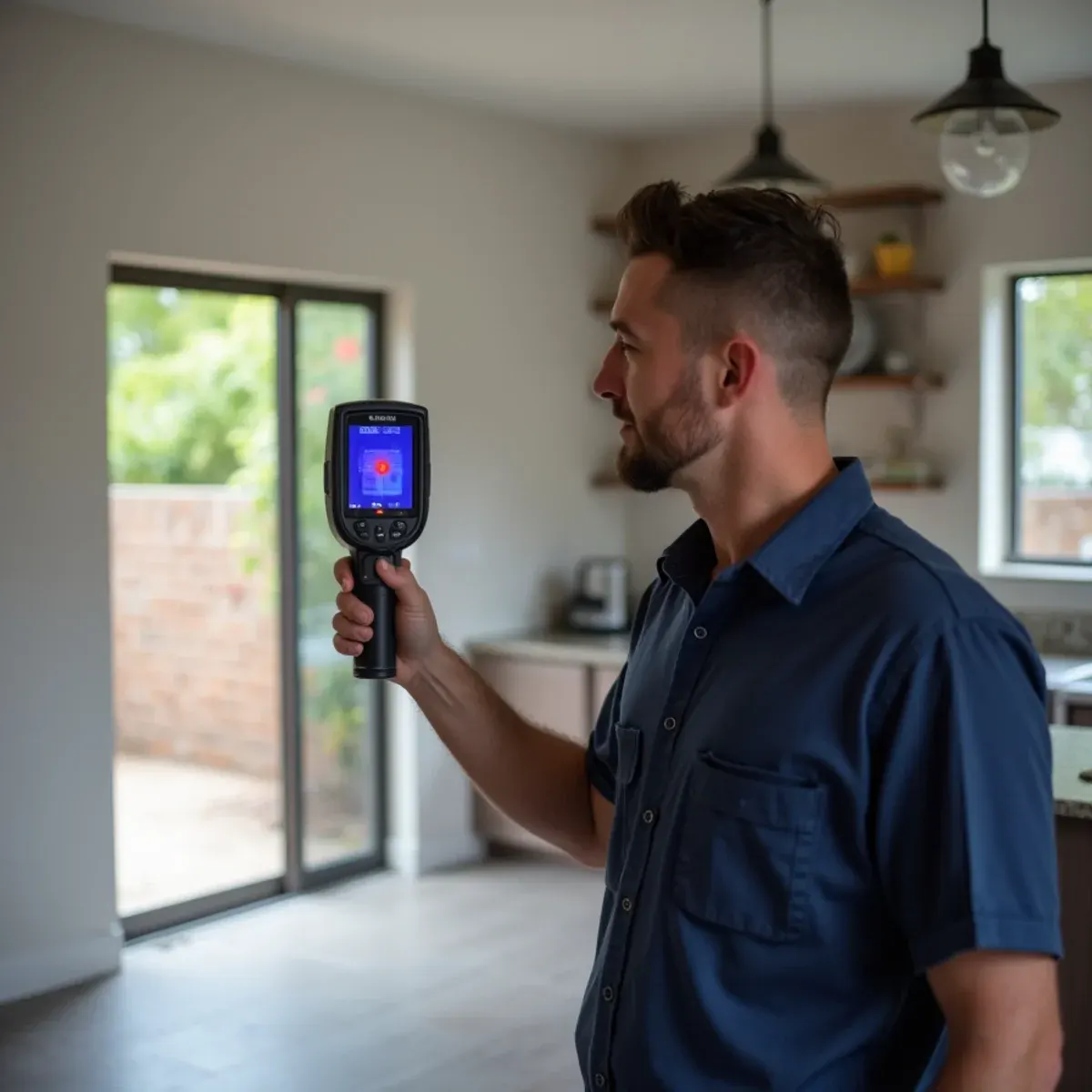
On the older stock, we're looking for galvanized that has closed up with corrosion and started weeping at threaded joints, usually inside a wall or under a service porch. Thermal imaging catches the temperature signature; a pinless meter confirms it without adding holes to old plaster. Up in Olinda Ranch, Blackstone and Country Hills the questions are different: where does canyon runoff go, are the v-ditches clear, and is that damp baseboard a supply failure or a slope that overran its drainage during one hard hour of rain.
What Brea Changes About Inspection & Leak Detection
1Galvanized near downtown fails at threads
Ninety-year-old steel supply doesn't usually burst. It corrodes from the inside, restricts flow, and starts weeping where pipe meets fitting — a slow drip inside a wall cavity that shows up as a stain months later. Low pressure at the tap is a real clue here. We check static pressure and temperature signature together before we start opening anything up.
2Canyon storms arrive concentrated, not steady
Carbon Canyon collects rain over a wide area and delivers it fast. A hillside lot can be fine through a whole wet season and then take on water during one intense hour. That's why we ask what the weather was doing when you first saw moisture — a storm-timed intrusion and a plumbing leak leave different moisture maps, and the map is what we read.
3Mixed foundations in one neighborhood
Brea's low stock uniformity means we don't assume slab. Some downtown-area houses sit on raised foundations with crawl access, some were slabbed over in a later remodel, and hillside homes may have a stepped foundation with a garage below living space. We confirm what we're standing on before choosing a method, because a crawl-space inspection and a slab isolation test are not interchangeable.
How the Work Runs
The method is the same one we use on every inspection & leak detection job, documented to the IICRC S500:2025 standard. Here it is in short — the full water damage inspection & leak detection process explains each stage in detail.
- Talk through the history
- Thermal imaging survey
- Confirm with moisture meters
- Supply-side isolation testing
- Written findings with images
- Options, not a sales pitch
The Brea Background Worth Knowing
Brea's hillside tracts were designed to handle rain. Terrace drains catch runoff partway up a slope, v-ditches carry it around the toe, area drains take the flat yard, and everything ties into a system that moves water past the house rather than through it. The design works. What fails is maintenance. Over a dry summer those inlets fill with eucalyptus leaf litter, decomposed granite, and whatever the wind brought down the canyon, and nobody looks at them because they sit on a slope behind a fence. The first hard storm of the season finds every one that is blocked.
There is more on the housing stock, drainage and plumbing history of this city on our water damage restoration in Brea page.
Brea at a glance
- Dominant construction era
- 1920–2005
- Foundation type
- mixed on grade
- Supply piping found here
- galvanized steel, under-slab copper, PEX in newer hillside tracts
- Drain line materials
- cast iron, clay, ABS
- Terrain and water table
- hillside-mixed, deep water table
- Most common local failure
- canyon and hillside runoff overwhelming slope drainage during concentrated storms
- Highest-value local prevention
- keeping Carbon Canyon-side slope drains, v-ditches and downspout extensions genuinely clear
What It Costs in Brea
We do not quote a number over the phone before seeing the property — anyone who does is guessing. The variables that actually move the price on a inspection & leak detection job are standard moisture inspection — no charge, electronic slab leak location, pre-purchase moisture survey, and they are broken down in full on the water damage inspection & leak detection page. The assessment and the written estimate are free anywhere in Brea, day or night, with no obligation.
Inspection & Leak Detection Questions from Brea Homeowners
Not necessarily, but it's worth checking. In the older parts of Brea, falling pressure usually means galvanized supply lines closing up with internal corrosion — a flow problem, not a leak. The two often travel together, though, because the same corroded threads that restrict flow also weep. We check static pressure, run an isolation test at the meter, and thermal-scan the walls around the older runs, then tell you which problem you actually have.
The standard moisture inspection is — thermal imaging, moisture mapping, and written findings, with no obligation. Specialized services like electronic slab leak location, a full pre-purchase survey, or lab sampling carry a fee, and we tell you the number before we start.
Twenty to forty minutes for a targeted check of a specific concern. A comprehensive whole-home survey for a real estate transaction runs about ninety minutes to two hours.
Usually not under a standard homeowners policy. Water that runs across the ground and enters a building is surface water, and that is an excluded cause on nearly every form, whether it came off a Carbon Canyon slope or out of the street. Separate flood coverage handles it. Damage from a covered failure is a different story, so let us document the entry point and cause before anything gets cleaned up.