
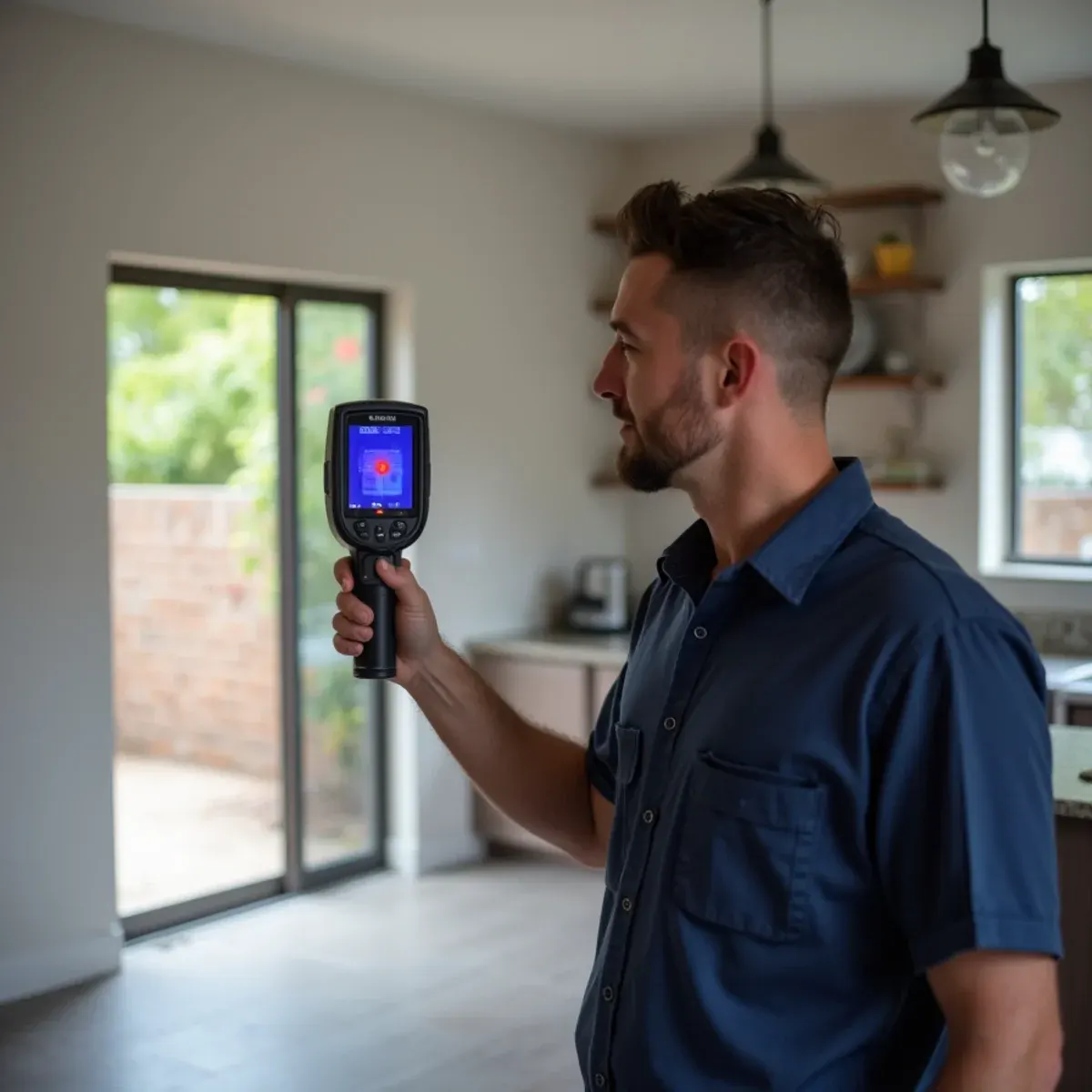
Ask how we inspect a house in Anaheim and the honest answer is another question: which Anaheim? A 1912 home in the Colony Historic District has lath and plaster walls that hold several times the water drywall does and release it far more slowly, so a surface meter reading tells you almost nothing about what's behind it. A 1958 house in West Anaheim is a straightforward slab-on-grade scan. A three-level home off Nohl Ranch Road brings engineered drainage, retaining walls and water arriving from uphill. Same city, three different jobs, three different sets of instruments.
The plaster homes are the ones we treat with the most urgency. Plaster is keyed to wood lath — it squeezes through the gaps and hardens into hooks on the back side. Get that assembly wet and the keys soften. Wait too long and the plaster releases from the lath in sheets, and no amount of drying afterward brings it back. So on any Colony or downtown loss we want depth readings and thermal images within hours, not days. Around the Resort District and the Packing District, the work shifts again toward hotels and commercial tenants with occupancy on the line.
What Anaheim Changes About Inspection & Leak Detection
1Lath and plaster reads differently on a meter
A pin meter set for gypsum will lie to you on plaster. Density, lime content and the wood lath behind it all shift the numbers, and moisture sits deep in the assembly long after the face feels dry. We take readings at depth, compare against dry-standard areas in the same wall, and photograph thermal patterns that show the wet footprint behind the finish rather than on it.
2Hillside drainage above Anaheim Hills homes
Multi-level homes built into a slope depend on drainage that was engineered decades ago and has since been landscaped over. Area drains fill with leaf litter, subdrains behind retaining walls silt up, and water finds the lowest interior level. On a hillside inspection we walk the exterior grade and the drain outlets first, because a reading on a lower-level wall usually starts outside the house.
3Resort and Packing District commercial work
Hotels near the convention center and tenants in the Packing District can't close a floor for a day. We inspect around operating hours, keep everything non-invasive, and key each image in the written findings to a specific room or suite. Commercial buildings this dense also share risers, so a single fixture failure is worth tracing vertically before anyone assumes it's contained.
How the Work Runs
The method is the same one we use on every inspection & leak detection job, documented to the IICRC S500:2025 standard. Here it is in short — the full water damage inspection & leak detection process explains each stage in detail.
- Talk through the history
- Thermal imaging survey
- Confirm with moisture meters
- Supply-side isolation testing
- Written findings with images
- Options, not a sales pitch
The Anaheim Background Worth Knowing
The Anaheim Colony Historic District and the older streets around downtown contain homes built from the early 1900s through the 1930s, and they are constructed differently in ways that matter enormously during a water loss.
There is more on the housing stock, drainage and plumbing history of this city on our water damage restoration in Anaheim page.
Anaheim at a glance
- Dominant construction era
- 1900–2000
- Foundation type
- mixed on grade
- Supply piping found here
- galvanized steel, under-slab copper, original early-century piping in the Colony
- Drain line materials
- cast iron, clay
- Terrain and water table
- hillside-mixed, moderate water table
- Most common local failure
- lath-and-plaster assemblies that hold several times the water drywall does and release it far more slowly
- Highest-value local prevention
- acting immediately on any plaster-wall loss, because wet plaster keys soften and release from the lath
What It Costs in Anaheim
We do not quote a number over the phone before seeing the property — anyone who does is guessing. The variables that actually move the price on a inspection & leak detection job are standard moisture inspection — no charge, electronic slab leak location, pre-purchase moisture survey, and they are broken down in full on the water damage inspection & leak detection page. The assessment and the written estimate are free anywhere in Anaheim, day or night, with no obligation.
Inspection & Leak Detection Questions from Anaheim Homeowners
Not a surface reading, no. Plaster's density and the wood lath behind it throw off meters calibrated for drywall, and the wettest material is usually well behind the face. We use depth probes, compare every reading against an unaffected wall in the same house as a dry standard, and back it with thermal imaging. The written findings show both numbers and images, so a plaster wall's condition is documented rather than estimated.
The standard moisture inspection is — thermal imaging, moisture mapping, and written findings, with no obligation. Specialized services like electronic slab leak location, a full pre-purchase survey, or lab sampling carry a fee, and we tell you the number before we start.
Twenty to forty minutes for a targeted check of a specific concern. A comprehensive whole-home survey for a real estate transaction runs about ninety minutes to two hours.
Yes, and we approach them differently. Lath and plaster holds much more water than drywall and dries far more slowly, so it needs more equipment and considerably more patience — but it can usually be saved in place, and original plaster is not something a repair can replace.