
Most of Bellflower went up between 1940 and 1960 on what had been dairy and orchard land — small houses on small lots, built quickly for a fast-growing population. That means something specific eighty years later: the original galvanized supply lines and the original cast-iron waste lines were installed in the same year, in the same ground, by the same crews. They're aging out together. We routinely find a house with a weeping supply joint in one wall and a cracked lateral under the side yard, and the owner had no idea about either one.
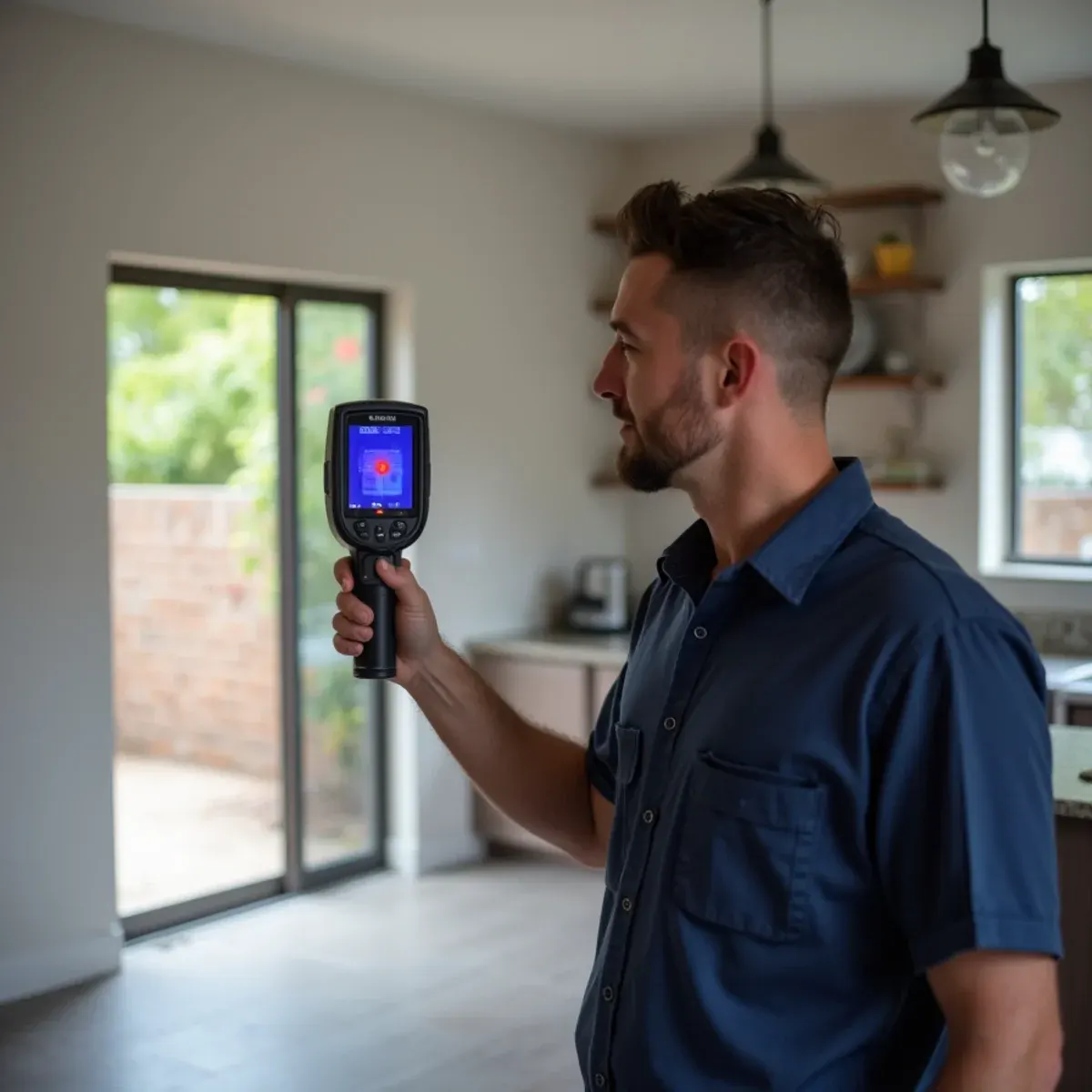
So we inspect both sides of the plumbing rather than just chasing the symptom that made you call. Supply gets a static pressure check and a meter isolation test. The drain side gets attention because it's usually never been looked at — a cast-iron lateral on a 1950 house in Mayfair or off Somerset has had seventy-plus years of root intrusion and scale. The thermal camera and moisture meters map what's already wet inside. Written findings, with readings by location, so you can plan instead of react.
What Bellflower Changes About Inspection & Leak Detection
1Supply and waste failing in the same decade
When the original galvanized starts weeping, the original cast iron is usually not far behind. We've walked into Bellflower houses where the ceiling stain everyone was worried about was minor and the real problem was a lateral that had been leaking under the side yard for years. Checking one and ignoring the other on a house this age doesn't serve you.
2Small lots put neighbors close together
On these compact postwar lots, a leak at a side-yard hose bib or a failing lateral doesn't stay on your property. Saturated soil crosses the fence line, and we've been called by one neighbor to diagnose water that came from another. We document the moisture pattern and the grade in writing, which is what you need if that conversation gets awkward.
3Multi-family adds a vertical problem
Bellflower has a lot of apartment stock, and in a two- or three-story building water moves down through framing before it appears in a ceiling. The unit reporting damage is rarely the unit with the failure. We scan the stack of units above the complaint and take readings at each level so the source gets found on the first visit rather than the third.
How the Work Runs
The method is the same one we use on every inspection & leak detection job, documented to the IICRC S500:2025 standard. Here it is in short — the full water damage inspection & leak detection process explains each stage in detail.
- Talk through the history
- Thermal imaging survey
- Confirm with moisture meters
- Supply-side isolation testing
- Written findings with images
- Options, not a sales pitch
The Bellflower Background Worth Knowing
Galvanized steel was the standard supply pipe when Bellflower was being built, and it fails from the inside out. The zinc lining wears through, the steel underneath corrodes, and scale builds on the interior wall until the pipe is a fraction of its original diameter. Narrower pipe means faster, more turbulent water, which chews at elbows and threaded fittings until one of them lets go. Hot lines corrode faster than cold, which is why hot water pressure is usually the first thing to drop. Eighty years is well past any service life anyone intended when this was installed.
There is more on the housing stock, drainage and plumbing history of this city on our water damage restoration in Bellflower page.
Bellflower at a glance
- Dominant construction era
- 1940–1960
- Foundation type
- slab on grade
- Supply piping found here
- original galvanized steel, early copper
- Drain line materials
- cast iron
- Terrain and water table
- flat, moderate water table
- Most common local failure
- original galvanized supply lines and cast-iron laterals failing together in the same decade
- Highest-value local prevention
- scoping the sewer lateral, which on a house this age has usually never been looked at
What It Costs in Bellflower
We do not quote a number over the phone before seeing the property — anyone who does is guessing. The variables that actually move the price on a inspection & leak detection job are standard moisture inspection — no charge, electronic slab leak location, pre-purchase moisture survey, and they are broken down in full on the water damage inspection & leak detection page. The assessment and the written estimate are free anywhere in Bellflower, day or night, with no obligation.
Inspection & Leak Detection Questions from Bellflower Homeowners
On a Bellflower house from the forties or fifties, yes. Cast iron that old has scale, root intrusion and often a bellied section, and it usually still drains right up until the day it doesn't. A camera scope shows you the condition before it becomes a backup — and a backup from a lateral is Category 3 water under S500, which means removal of porous materials rather than drying them. Knowing early is much cheaper than knowing late.
The standard moisture inspection is — thermal imaging, moisture mapping, and written findings, with no obligation. Specialized services like electronic slab leak location, a full pre-purchase survey, or lab sampling carry a fee, and we tell you the number before we start.
Twenty to forty minutes for a targeted check of a specific concern. A comprehensive whole-home survey for a real estate transaction runs about ninety minutes to two hours.
It is the most common gap we see here. A cast iron lateral that age has corroded along the bottom, the joints have shifted, and the parkway trees on most Bellflower streets have had seventy years to find them. A camera inspection costs a small fraction of a sewage remediation, and on a line that has never been scoped it usually finds something worth knowing about before it finds you at two in the morning.