
Seventeen thousand homes, three years, up to a hundred a day. What Lakewood built between 1950 and 1953 is famous, and the part that matters to us is that an entire city's plumbing shares not just a decade but a single installation window. Galvanized steel fails in a known sequence: the zinc coating wears through, the exposed steel corrodes, scale builds inward and narrows the bore, water velocity climbs through the restriction, and eventually a fitting that has been eroding from the inside for decades lets go. Seventy years in, most of this city is somewhere in the back half of that sequence.
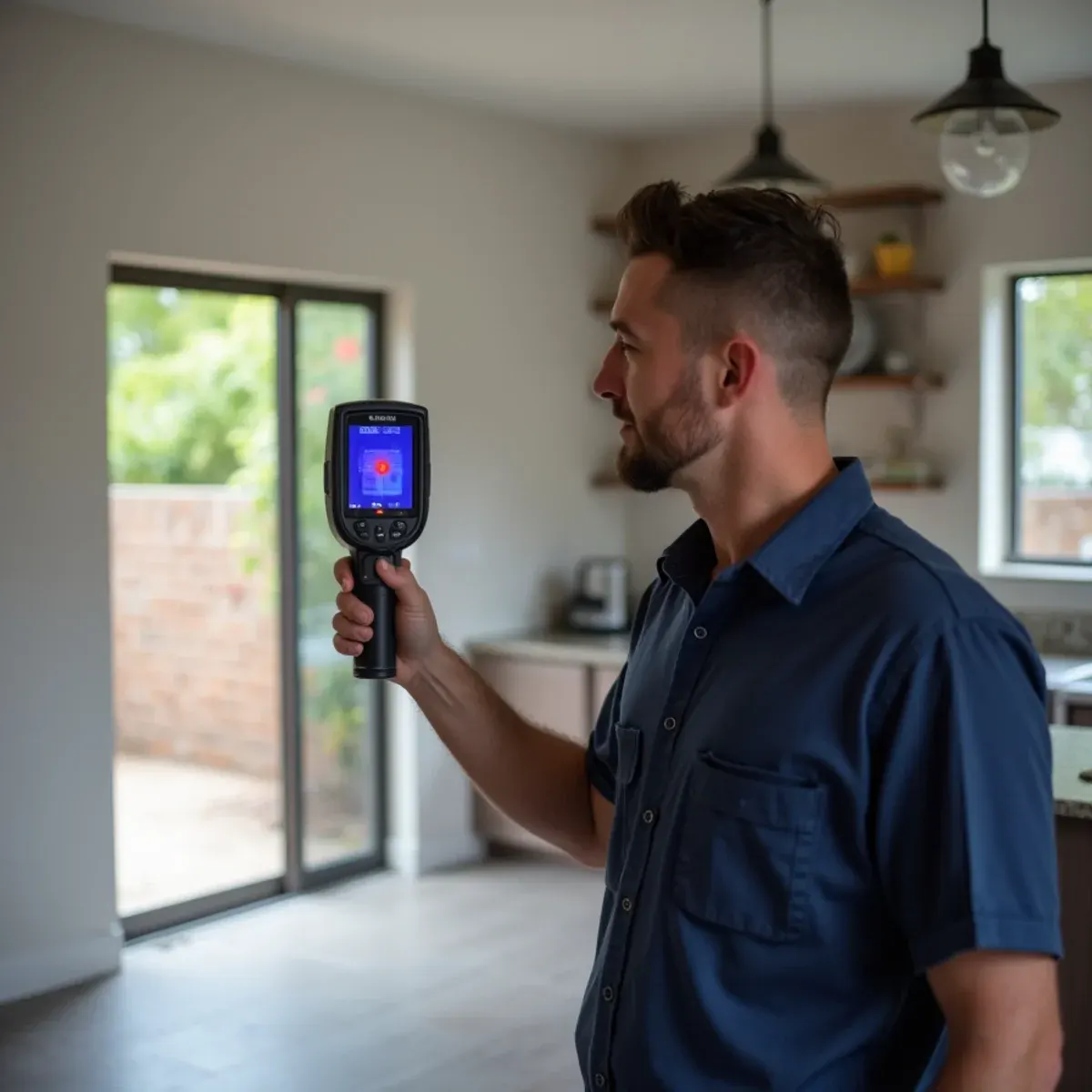
The layout helps us find it. These houses were built with clustered wet cores — kitchen, bath and laundry sharing plumbing walls to save pipe and labor — so the supply system is concentrated in a small part of the floor plan. That's where the scan goes. We thermal image those walls and the slab beneath them, meter anything the camera flags, and run isolation testing on the supply side to see whether the system holds pressure. Around Mayfair Park, Del Valle and Bolivar, we've seen enough of these floor plans to know where the fittings are before we walk in.
What Lakewood Changes About Inspection & Leak Detection
1Clustered wet cores concentrate the scan
Because kitchen, bath and laundry share plumbing walls in these plans, the vast majority of supply piping sits in a compact area. That makes a thorough inspection realistic in a single visit — we can scan the whole wet core properly rather than sampling a large house. It also means one fitting failure often wets several rooms at once, since they back onto the same cavity.
2Reading galvanized before it lets go
Failing galvanized usually announces itself before the rupture: reduced flow at the farthest fixture, rusty water after the house sits, weeping at a threaded joint in the garage or under a sink, staining at a hose bib. We look for all of it, photograph what we find, and note where the visible pipe's exterior condition suggests the interior is scaled. It's inference, not certainty, and the report says so.
3Timing a repipe around an open wall
If a fitting fails and a wall is already open for the repair, that is the cheapest moment this house will ever offer to replace more of the run. Doing it later as a standalone project means paying twice for access and finish work. Our findings identify which sections are reachable from the opening you already have, so you can make that call before the drywall goes back.
How the Work Runs
The method is the same one we use on every inspection & leak detection job, documented to the IICRC S500:2025 standard. Here it is in short — the full water damage inspection & leak detection process explains each stage in detail.
- Talk through the history
- Thermal imaging survey
- Confirm with moisture meters
- Supply-side isolation testing
- Written findings with images
- Options, not a sales pitch
The Lakewood Background Worth Knowing
Galvanized steel supply piping was standard when Lakewood was built, and it fails in a specific and predictable way. The zinc coating protecting the steel wears through from the inside, the steel corrodes, and scale builds up on the interior wall — narrowing the pipe over decades. As the diameter shrinks, water velocity and turbulence increase, which accelerates the erosion at elbows and fittings until a thin spot lets go.
There is more on the housing stock, drainage and plumbing history of this city on our water damage restoration in Lakewood page.
Lakewood at a glance
- Dominant construction era
- 1950–1953
- Foundation type
- slab on grade
- Supply piping found here
- original galvanized steel
- Drain line materials
- cast iron
- Terrain and water table
- flat, moderate water table
- Most common local failure
- seventy-year-old galvanized supply lines letting go at a scaled, eroded fitting
- Highest-value local prevention
- repiping while walls are already open for a repair, rather than as a separate project later
What It Costs in Lakewood
We do not quote a number over the phone before seeing the property — anyone who does is guessing. The variables that actually move the price on a inspection & leak detection job are standard moisture inspection — no charge, electronic slab leak location, pre-purchase moisture survey, and they are broken down in full on the water damage inspection & leak detection page. The assessment and the written estimate are free anywhere in Lakewood, day or night, with no obligation.
Inspection & Leak Detection Questions from Lakewood Homeowners
We can't give you a number, and anyone who does is guessing. What we can do is read the evidence: flow at the far fixtures, water color after the house sits overnight, exterior corrosion and weeping at threaded joints, and whether the system holds isolation pressure. Those tell us where you are in the failure sequence, roughly. A short section cut out during any other repair is the only thing that shows the actual bore, and it's worth looking at when the chance comes.
The standard moisture inspection is — thermal imaging, moisture mapping, and written findings, with no obligation. Specialized services like electronic slab leak location, a full pre-purchase survey, or lab sampling carry a fee, and we tell you the number before we start.
Twenty to forty minutes for a targeted check of a specific concern. A comprehensive whole-home survey for a real estate transaction runs about ninety minutes to two hours.
Have it assessed. Seventy-year-old galvanized has exceeded any reasonable service life, and declining pressure or rust-colored water means it is well along. If a repair is already opening walls, that is the cheapest moment you will ever get to repipe — the demolition and patching are already in the scope.