
The first thing we need to know in Long Beach isn't where the water is. It's what the wall is made of. A 1926 Craftsman in Bluff Park or California Heights has lath and plaster that holds several times the moisture drywall does and gives it up slowly, and cutting into it the way you'd cut drywall destroys material that's difficult to match. A 1958 house in Los Altos or El Dorado Park Estates is a straightforward slab-on-grade job that behaves almost exactly like the homes around our shop in Cypress. Same city, same insurer, completely different restoration problem.
Geography splits it further. Naples sits on filled land with canals on three sides and a shallow table that moves with the tide, so a damp lower wall there deserves a different set of questions than the same wall in Bixby Knolls. Belmont Shore is narrow lots with no driveway and limited street parking, which means equipment staging has to be settled before anyone arrives rather than worked out on the curb. And East Long Beach near the Cypress border drains toward the San Gabriel River the same way our home city does. We ask about your neighborhood before we ask about the leak.
What Long Beach Changes About Inspection & Leak Detection
1Bluff Park plaster versus Los Altos drywall
On plaster we measure at depth, sound the wall for keys that have released from the lath, and plan for desiccant capacity because refrigerant dehumidification alone often stalls. On postwar drywall a surface meter and a thermal scan tell most of the story in twenty minutes. Getting this backwards either destroys irreplaceable plaster or wastes days on a wall that would have dried in two.
2Naples and canal-front filled ground
Filled land beside tidal water behaves differently from anything inland. Groundwater responds to tide, seawalls and bulkheads age, and lower-level slabs can read damp for reasons unconnected to plumbing. We take readings at more than one time of day where that's practical and note exterior conditions, because writing up tidal groundwater as a plumbing leak sends everyone down the wrong path.
3Belmont Shore staging planned in advance
Narrow lots, no driveway, tight street parking. It doesn't complicate a non-invasive inspection, but it dictates everything about the response if we find active water — hose run distances, where a truck can legally sit, whether equipment comes through the front door. We record access conditions in the findings so the plan exists before it's needed at eleven at night.
How the Work Runs
The method is the same one we use on every inspection & leak detection job, documented to the IICRC S500:2025 standard. Here it is in short — the full water damage inspection & leak detection process explains each stage in detail.
- Talk through the history
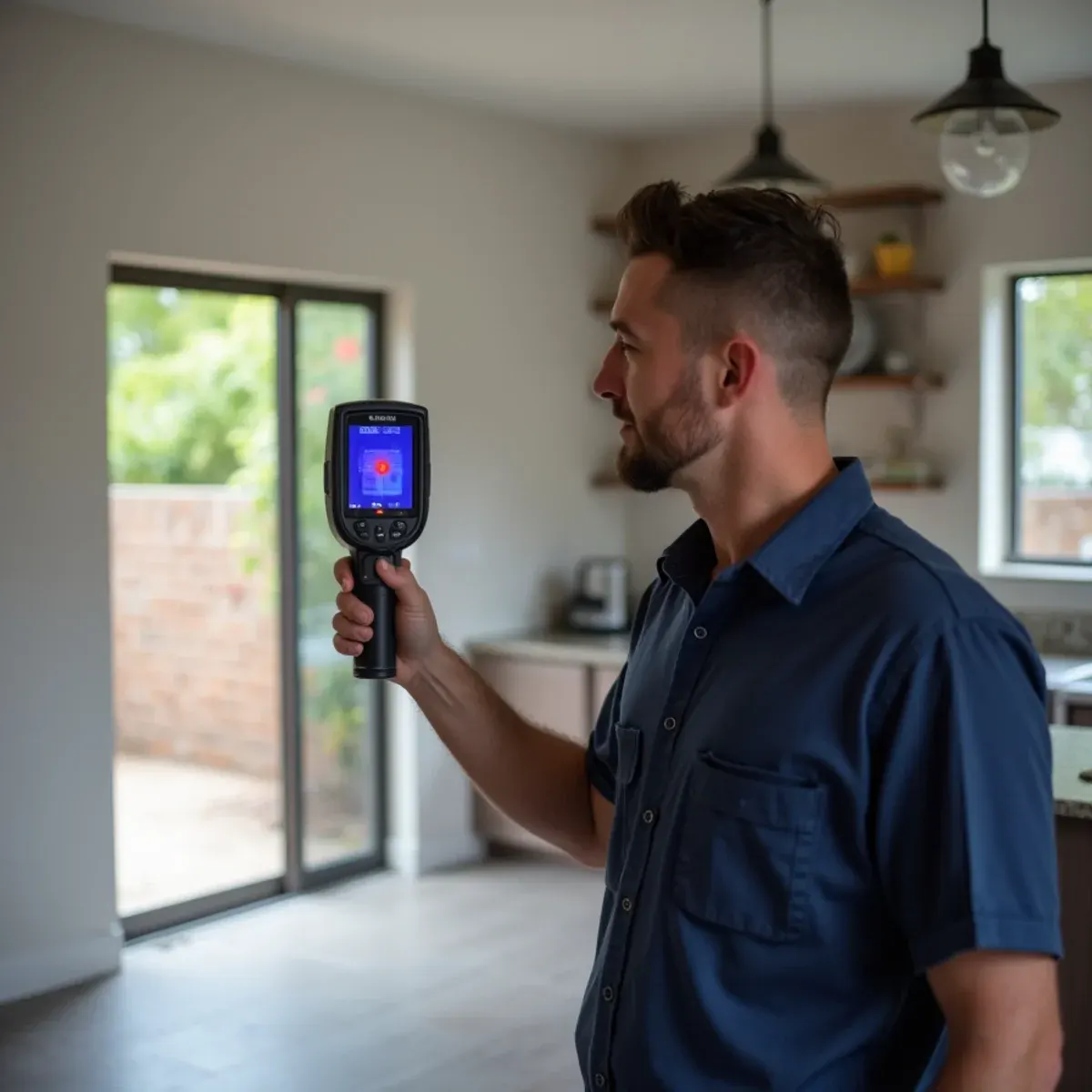
- Thermal imaging survey
- Confirm with moisture meters
- Supply-side isolation testing
- Written findings with images
- Options, not a sales pitch
The Long Beach Background Worth Knowing
The postwar tracts around El Dorado Park, Los Altos, and the neighborhoods near the Cypress border were built in the same era and largely the same way as the housing in our home city. Single-story slab construction, plumbing routed under the concrete, and a fifty-to-seventy-year age on the supply lines.
There is more on the housing stock, drainage and plumbing history of this city on our water damage restoration in Long Beach page.
Long Beach at a glance
- Dominant construction era
- 1920–1980
- Foundation type
- mixed on grade
- Supply piping found here
- original 1920s piping, galvanized steel, under-slab copper
- Drain line materials
- cast iron, clay
- Terrain and water table
- coastal-flat, shallow water table
- Most common local failure
- the approach changing entirely by neighborhood — a 1926 plaster wall and a 1955 drywall wall are different restoration problems
- Highest-value local prevention
- identifying the construction type before anyone starts cutting
What It Costs in Long Beach
We do not quote a number over the phone before seeing the property — anyone who does is guessing. The variables that actually move the price on a inspection & leak detection job are standard moisture inspection — no charge, electronic slab leak location, pre-purchase moisture survey, and they are broken down in full on the water damage inspection & leak detection page. The assessment and the written estimate are free anywhere in Long Beach, day or night, with no obligation.
Inspection & Leak Detection Questions from Long Beach Homeowners
It does, and plaster is the main reason to do one on a house that age. A standard visual home inspection doesn't measure moisture in walls at all. We scan the plaster with thermal imaging, take depth readings rather than surface ones, sound for areas where the keys have already released from the lath, and check the crawl space or slab underneath. You get written findings with images before you own the problem rather than after.
The standard moisture inspection is — thermal imaging, moisture mapping, and written findings, with no obligation. Specialized services like electronic slab leak location, a full pre-purchase survey, or lab sampling carry a fee, and we tell you the number before we start.
Twenty to forty minutes for a targeted check of a specific concern. A comprehensive whole-home survey for a real estate transaction runs about ninety minutes to two hours.
All of it, with the fastest response to East Long Beach — El Dorado Park Estates, Los Altos, and the neighborhoods near the Cypress border, which are typically twenty to twenty-five minutes. Coastal and downtown areas run a little longer, and we will give you a realistic ETA when you call.