
Long Beach isn't one restoration problem, it's about six. A 1926 Bluff Park house has lath and plaster that has to be dried aggressively within hours. A Los Altos tract house from 1955 is slab and drywall and behaves almost exactly like the homes around our shop in Cypress. Naples sits on filled land beside the canals with groundwater close to the surface. Belmont Shore has no driveways. Which one you live in determines the plan, and getting that wrong costs you either material or time.
So the first thing we do on a Long Beach call is establish construction type before anyone cuts. Plaster and drywall look similar behind a stain and behave nothing alike: plaster holds several times the water and gives it up slowly, drywall gives it up fast and crumbles. East Long Beach near the San Gabriel River shares our home city's era, slab construction and drainage behavior, so we get there quickly and already know what we're walking into. Downtown and the Shore need staging planned before we roll.
What Long Beach Changes About Emergency Restoration
1Construction type decided before cutting
A 1920s plaster wall and a 1955 drywall wall need different equipment, different timelines and different demolition decisions. We identify which one you have in the first few minutes, because opening a plaster wall the way you'd open drywall destroys material that could have been dried and kept. In the older Long Beach neighborhoods that call is worth real money.
2Naples and the canal-side water table
Homes on the canals sit on filled ground with groundwater near the surface, so slab edges and lower walls carry moisture that has nothing to do with a plumbing failure. We compare readings against unaffected areas and against recent weather and tide before writing anything up as damage. Mistaking a site condition for a loss helps nobody at claim time.
3Belmont Shore access planned ahead
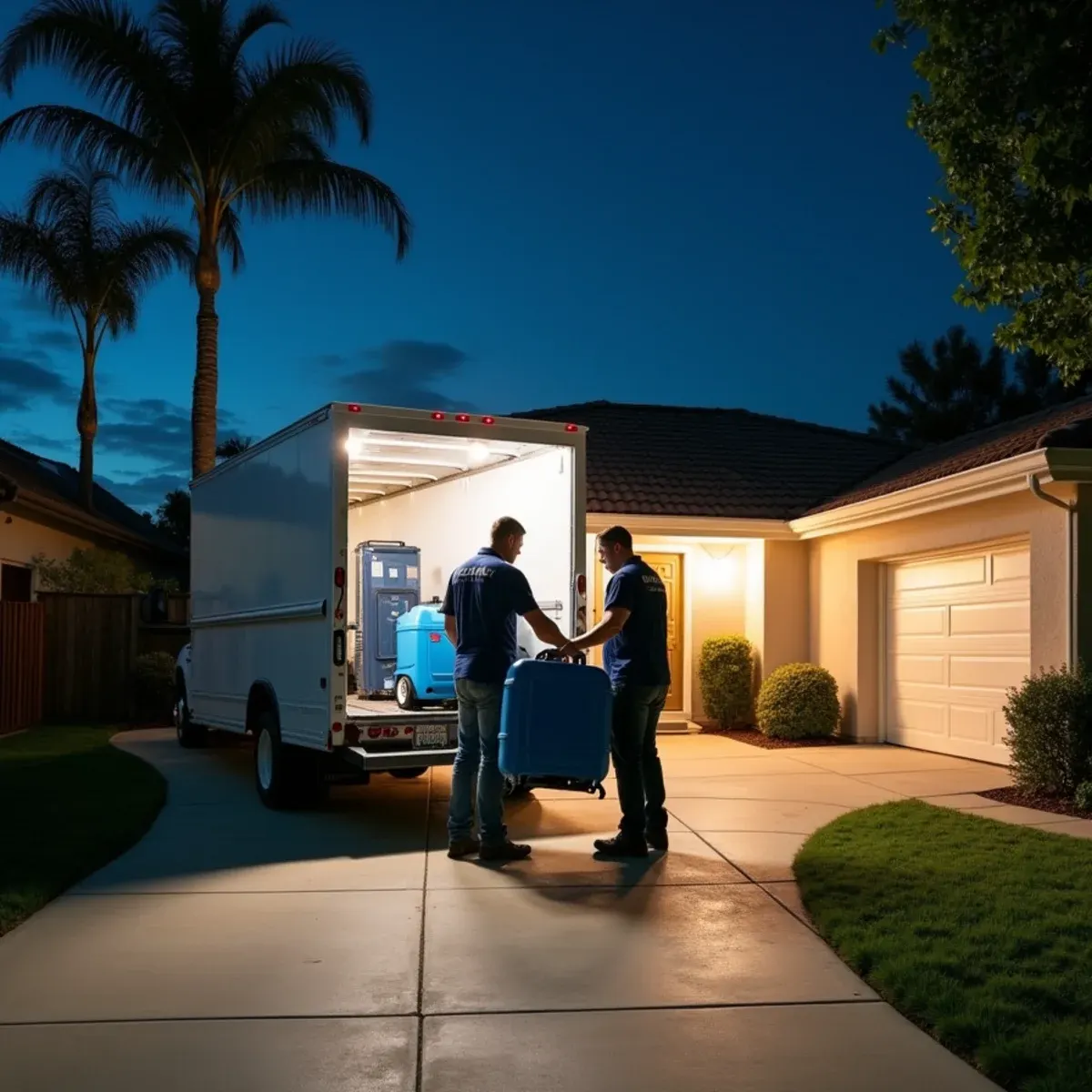
Narrow lots, alley garages and street parking that fills by five o'clock make equipment staging a genuine constraint down there. We ask about parking, alley access and stairs on the phone so the truck arrives set up for a long hose run. Ten minutes of planning beats an hour circling the block while your floors sit wet.
How the Work Runs
The method is the same one we use on every emergency restoration job, documented to the IICRC S500:2025 standard. Here it is in short — the full emergency water damage restoration process explains each stage in detail.
- Call answered and crew dispatched
- Arrival, safety check, and moisture mapping
- Documentation before anything is touched
- Extraction
- Controlled structural drying
- Cleaning, sanitizing, and final verification
The Long Beach Background Worth Knowing
The postwar tracts around El Dorado Park, Los Altos, and the neighborhoods near the Cypress border were built in the same era and largely the same way as the housing in our home city. Single-story slab construction, plumbing routed under the concrete, and a fifty-to-seventy-year age on the supply lines.
There is more on the housing stock, drainage and plumbing history of this city on our water damage restoration in Long Beach page.
Long Beach at a glance
- Dominant construction era
- 1920–1980
- Foundation type
- mixed on grade
- Supply piping found here
- original 1920s piping, galvanized steel, under-slab copper
- Drain line materials
- cast iron, clay
- Terrain and water table
- coastal-flat, shallow water table
- Most common local failure
- the approach changing entirely by neighborhood — a 1926 plaster wall and a 1955 drywall wall are different restoration problems
- Highest-value local prevention
- identifying the construction type before anyone starts cutting
What It Costs in Long Beach
We do not quote a number over the phone before seeing the property — anyone who does is guessing. The variables that actually move the price on a emergency restoration job are water category, affected square footage and number of rooms, how many days of equipment, and they are broken down in full on the emergency water damage restoration page. The assessment and the written estimate are free anywhere in Long Beach, day or night, with no obligation.
Emergency Restoration Questions from Long Beach Homeowners
Significantly. Plaster holds several times the water drywall does and releases it slowly, so it needs strong dehumidification and often a small cavity access rather than a row of fans pointed at the surface. It also fails differently: the keys gripping the wood lath soften while wet and can release, dropping a ceiling or wall days later. That's why we push to start the same day on plaster, and why we sound the wall instead of trusting how it looks.
We commit to being on-site within 60 minutes of a confirmed emergency call anywhere in Cypress, and we credit $100 off your invoice if we miss it. Most of the time we are there in 30 to 45 minutes because our trucks stage on Katella Avenue, right here in the city.
No. The emergency assessment and written estimate are free, 24 hours a day. You are not obligated to hire us after we walk the property, and we will tell you plainly if we think the damage is small enough to handle yourself.
All of it, with the fastest response to East Long Beach — El Dorado Park Estates, Los Altos, and the neighborhoods near the Cypress border, which are typically twenty to twenty-five minutes. Coastal and downtown areas run a little longer, and we will give you a realistic ETA when you call.