
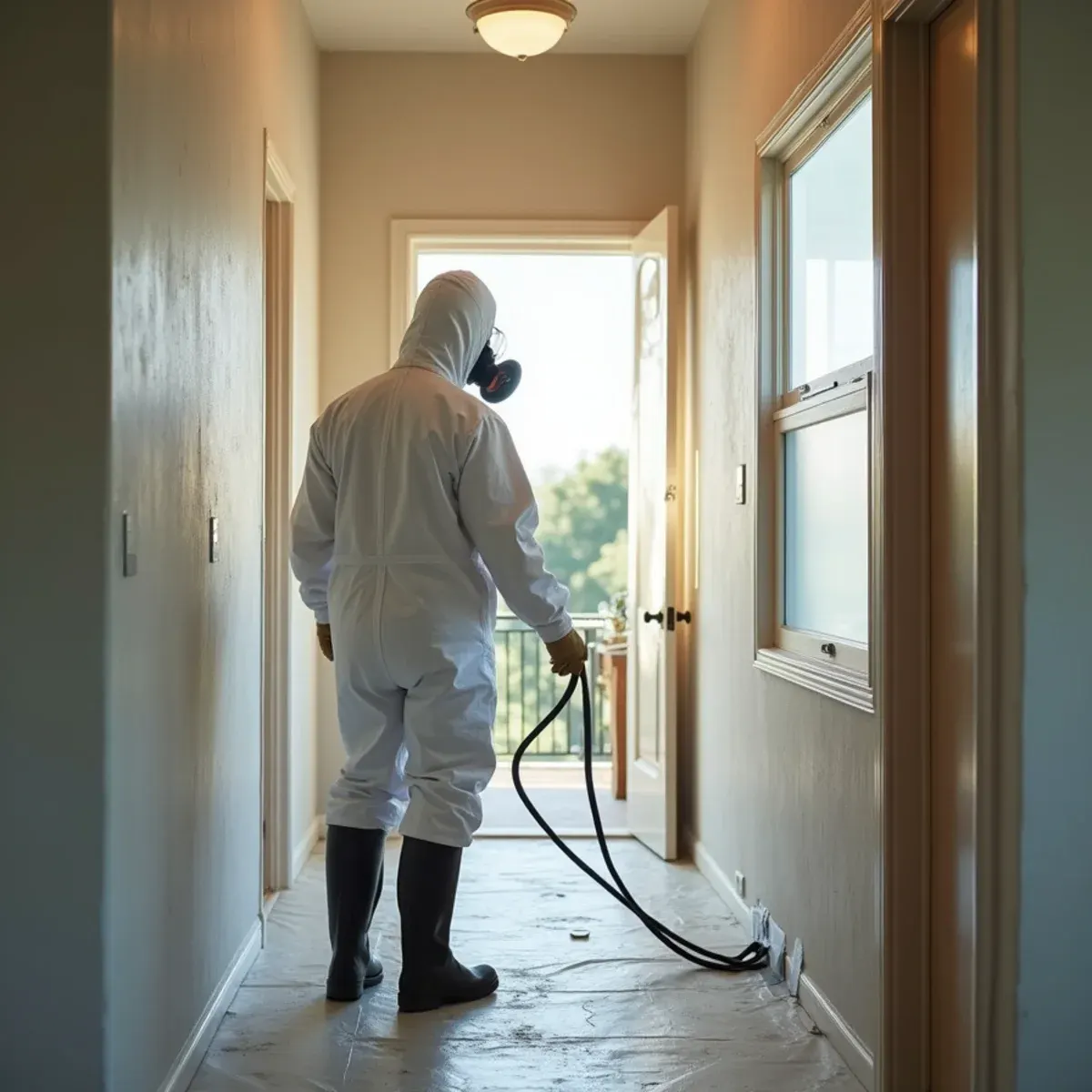
There is no single Long Beach approach, and pretending otherwise is how damage gets made worse. A 1926 Craftsman in California Heights or Bluff Park is lath and plaster over old-growth framing, with clay laterals and mature street trees over them. Category 3 water in a plaster wall is a removal, because the material is porous through its thickness and there is no reaching behind the lath. Four miles east in El Dorado Park Estates or Los Altos, the same loss is a postwar slab home with drywall, and it behaves almost exactly like the houses in our own city across the Cypress line.
Naples and the canal-front streets add a third condition: filled land with a shallow water table, where older laterals sit in groundwater and take infiltration in through failed joints. Belmont Shore adds a fourth, which is purely practical. Those lots are narrow, driveways are rare and street parking is scarce, so extraction hose runs and waste routing have to be worked out before the truck leaves rather than in front of your house at midnight. The first real decision on any Long Beach job is identifying which of these you are standing in.
What Long Beach Changes About Sewage Cleanup
1Identify the construction before cutting
A plaster wall and a drywall wall get cut differently, dried differently and cost differently, and Long Beach has both within a few miles. We confirm wall assembly, framing type and floor construction before the first cut goes in. Getting that wrong on a historic home means removing more original material than the loss required, and none of it comes back.
2Canal-front laterals sitting in groundwater
Naples is filled land with a high water table, and laterals down there run in wet ground. Failed joints take water in rather than leaking out, which keeps the line closer to capacity and turns a partial blockage into a backup. It also means the soil around the structure contributes nothing to drying. We scope the lateral after cleanup on these properties because infiltration will bring the same event back.
3Belmont Shore staging is planned in advance
Narrow lots, no driveway and tight street parking mean equipment access is the constraint, not equipment capacity. We work out truck position, hose routing and how contaminated material leaves the building before arriving, and we protect the path in and out. On these blocks, a plan made ahead of time saves more hours than an extra technician does.
How the Work Runs
The method is the same one we use on every sewage cleanup job, documented to the IICRC S500:2025 standard. Here it is in short — the full sewage backup cleanup process explains each stage in detail.
- Secure the area and set containment
- Full PPE and safe extraction
- Remove contaminated porous materials
- Clean and disinfect all remaining surfaces
- Deodorize at the source
- Dry, verify, and clear
The Long Beach Background Worth Knowing
The postwar tracts around El Dorado Park, Los Altos, and the neighborhoods near the Cypress border were built in the same era and largely the same way as the housing in our home city. Single-story slab construction, plumbing routed under the concrete, and a fifty-to-seventy-year age on the supply lines.
There is more on the housing stock, drainage and plumbing history of this city on our water damage restoration in Long Beach page.
Long Beach at a glance
- Dominant construction era
- 1920–1980
- Foundation type
- mixed on grade
- Supply piping found here
- original 1920s piping, galvanized steel, under-slab copper
- Drain line materials
- cast iron, clay
- Terrain and water table
- coastal-flat, shallow water table
- Most common local failure
- the approach changing entirely by neighborhood — a 1926 plaster wall and a 1955 drywall wall are different restoration problems
- Highest-value local prevention
- identifying the construction type before anyone starts cutting
What It Costs in Long Beach
We do not quote a number over the phone before seeing the property — anyone who does is guessing. The variables that actually move the price on a sewage cleanup job are affected square footage, volume of porous material removed, contents in the affected area, and they are broken down in full on the sewage backup cleanup page. The assessment and the written estimate are free anywhere in Long Beach, day or night, with no obligation.
Sewage Cleanup Questions from Long Beach Homeowners
On the street, with a plan made before we roll. We work out truck placement, how far the extraction hose has to run and the route contaminated material takes out of the building, and we lay protection down that path first. Long runs cost extraction rate, so we position pumps to compensate rather than accepting slower removal. If parking enforcement or a permit is involved on your block, tell us when you call and we will sort it while the crew is en route.
It depends on the source. A toilet that overflows with clean bowl water because of a stuck fill valve is Category 1 or 2 and is far less serious. A toilet that backs up from the main line is carrying waste from the whole system, and that is Category 3 — it needs the full protocol.
No. Standard practice for Category 3 water is removal and disposal of carpet and pad that were contacted. Porous materials cannot be reliably disinfected all the way through, and the health risk of leaving them is not worth the savings.
All of it, with the fastest response to East Long Beach — El Dorado Park Estates, Los Altos, and the neighborhoods near the Cypress border, which are typically twenty to twenty-five minutes. Coastal and downtown areas run a little longer, and we will give you a realistic ETA when you call.