
In Leisure World, a sewage backup is almost never one household's problem. Nine thousand units built in the early sixties, attached, sharing walls and sharing mains, means Category 3 water that starts in one kitchen can be under a neighbor's flooring within the hour. Three parties usually have a stake before the first piece of equipment goes down: the resident, the Mutual, and the management company. The residents are also older, and some are managing health conditions that make exposure to Category 3 water a real concern rather than a theoretical one, which changes how fast we get people out of the space.
Seal Beach is really three cities under one name, and the other two behave differently. Old Town lots off Main Street are tight and old, with mixed foundations and drain lines that predate most of what we work on. College Park sits inland and drier. Everywhere within a mile of the pier, the marine layer holds ambient humidity high for long stretches, so the drying phase after disinfection runs longer here than it does inland and needs more dehumidification capacity to reach the same endpoint.
What Seal Beach Changes About Sewage Cleanup
1Shared walls, separate files
When a loss crosses into an attached unit, each affected unit gets documented on its own from the first hour: its own photos, its own moisture map, its own material inventory. That is not extra paperwork for its own sake. Several policies and a Mutual end up reading these records, and a single combined report written for the association leaves individual residents arguing from someone else's file.
2Residents who should not be in the building
Category 3 water carries pathogens, and the exposure math is different for someone in their eighties, on immunosuppressants, or with a respiratory condition. We recommend relocation during containment and demolition more readily here than we do elsewhere, and we say why plainly. If somebody insists on staying, we tell them honestly which parts of the unit we can keep sealed and which we cannot.
3Marine air stretches the drying phase
Cleaning and disinfecting is the fast part. Drying near the pier is the slow part, because ambient humidity off the water stays high for days at a stretch and the air the equipment is working with is already loaded. We bring more dehumidification capacity to coastal jobs than to inland ones and plan for a longer schedule rather than pulling equipment early to hit a target date.
How the Work Runs
The method is the same one we use on every sewage cleanup job, documented to the IICRC S500:2025 standard. Here it is in short — the full sewage backup cleanup process explains each stage in detail.
- Secure the area and set containment
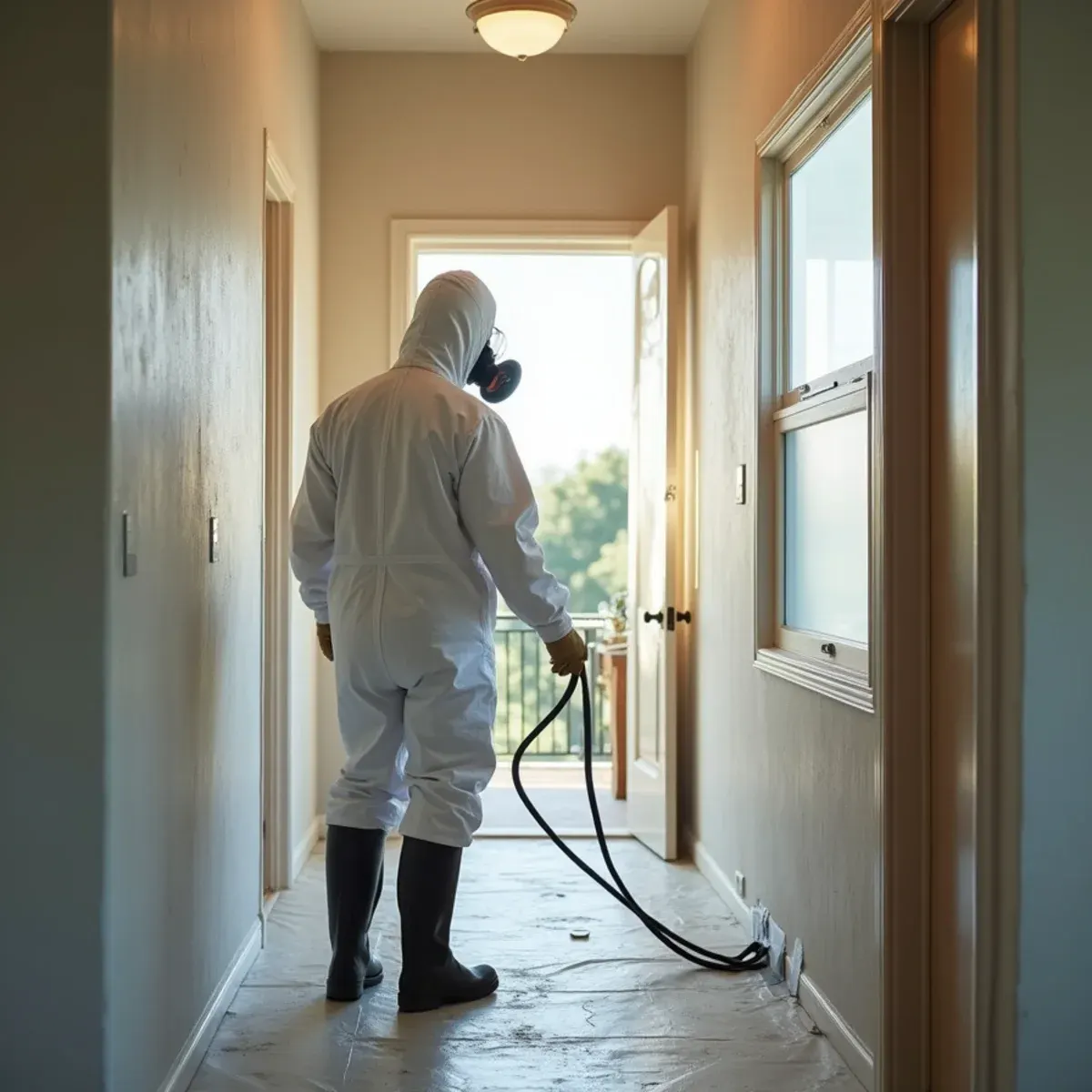
- Full PPE and safe extraction
- Remove contaminated porous materials
- Clean and disinfect all remaining surfaces
- Deodorize at the source
- Dry, verify, and clear
The Seal Beach Background Worth Knowing
Structural drying works by creating a vapor pressure differential — dry air pulls moisture out of wet materials. When the surrounding air is already carrying a heavy moisture load, that differential shrinks and everything slows down.
There is more on the housing stock, drainage and plumbing history of this city on our water damage restoration in Seal Beach page.
Seal Beach at a glance
- Dominant construction era
- 1920–1965
- Foundation type
- mixed on grade
- Supply piping found here
- galvanized steel, copper, shared community mains
- Drain line materials
- cast iron, clay
- Terrain and water table
- coastal-flat, shallow water table
- Most common local failure
- losses that cross shared walls between attached units, involving several policies and a mutual at once
- Highest-value local prevention
- documenting each affected unit separately from the first hour
What It Costs in Seal Beach
We do not quote a number over the phone before seeing the property — anyone who does is guessing. The variables that actually move the price on a sewage cleanup job are affected square footage, volume of porous material removed, contents in the affected area, and they are broken down in full on the sewage backup cleanup page. The assessment and the written estimate are free anywhere in Seal Beach, day or night, with no obligation.
Sewage Cleanup Questions from Seal Beach Homeowners
Start with management, because they control access and will need to authorize work in common areas, and notify your Mutual in writing the same day. Call your own carrier as well, even if you expect the association to handle it, since your interior finishes and belongings may sit on your policy. We work with whoever is authorized and we do not decide who pays. What we do is document your unit separately, so whichever way that shakes out, your file stands on its own.
It depends on the source. A toilet that overflows with clean bowl water because of a stuck fill valve is Category 1 or 2 and is far less serious. A toilet that backs up from the main line is carrying waste from the whole system, and that is Category 3 — it needs the full protocol.
No. Standard practice for Category 3 water is removal and disposal of carpet and pad that were contacted. Porous materials cannot be reliably disinfected all the way through, and the health risk of leaving them is not worth the savings.
Coastal marine layer conditions keep ambient humidity high for extended periods, which reduces the vapor pressure differential that drives drying. Jobs near the water need sealed chambers and more dehumidification capacity than an equivalent loss inland, and the equipment stays on longer.