
The sewage that comes up through a Los Alamitos floor drain almost always started somewhere nobody has ever looked. A large share of homes here went in before 1965, a full construction generation ahead of the tracts around them, and the drain lines under those older streets are clay or early cast iron. They were laid when the trees now shading Laurel Park were saplings. Roots find the joints, paper and grease catch on the roots, and the line closes down slowly until one ordinary flush has nowhere left to go.
Not all of this work is residential. The Los Alamitos Medical Center area and the Katella corridor put clinics, dental suites and restaurants on the same aging sewer infrastructure as the houses, and a Category 3 loss in a treatment room carries obligations a living room does not. Foundations vary here too. On the raised-floor homes, sewage never ponds where you can see it. It drops through the floor assembly and sits in the crawl space, which is why the smell often arrives days before anyone finds the source.
What Los Alamitos Changes About Sewage Cleanup
1Clay laterals almost nobody has scoped
Most homes here have never had a camera in the sewer lateral. After the cleanup is finished, we push hard for a scope before anything gets rebuilt, because laying new flooring over a line that is still half closed by roots buys you a second backup in the same room. It is a short job while access is already open.
2Medical and commercial work on the same block
A clinic on Katella cannot run HEPA negative air through a waiting room at ten in the morning. We schedule containment and demolition around patient hours where the schedule allows, seal the affected suite off from shared corridors and return air, and hand over written verification readings that the property manager and the tenant can both use.
3Raised floors send it underneath
On the older raised-foundation houses, Category 3 water soaks the soil, the vapor barrier and any batt insulation between the joists. Cleaning the finished floor above accomplishes nothing while that is still down there. We pull the contaminated barrier and insulation, remove the affected soil layer, clean and treat the framing, then dry and verify from below.
How the Work Runs
The method is the same one we use on every sewage cleanup job, documented to the IICRC S500:2025 standard. Here it is in short — the full sewage backup cleanup process explains each stage in detail.
- Secure the area and set containment
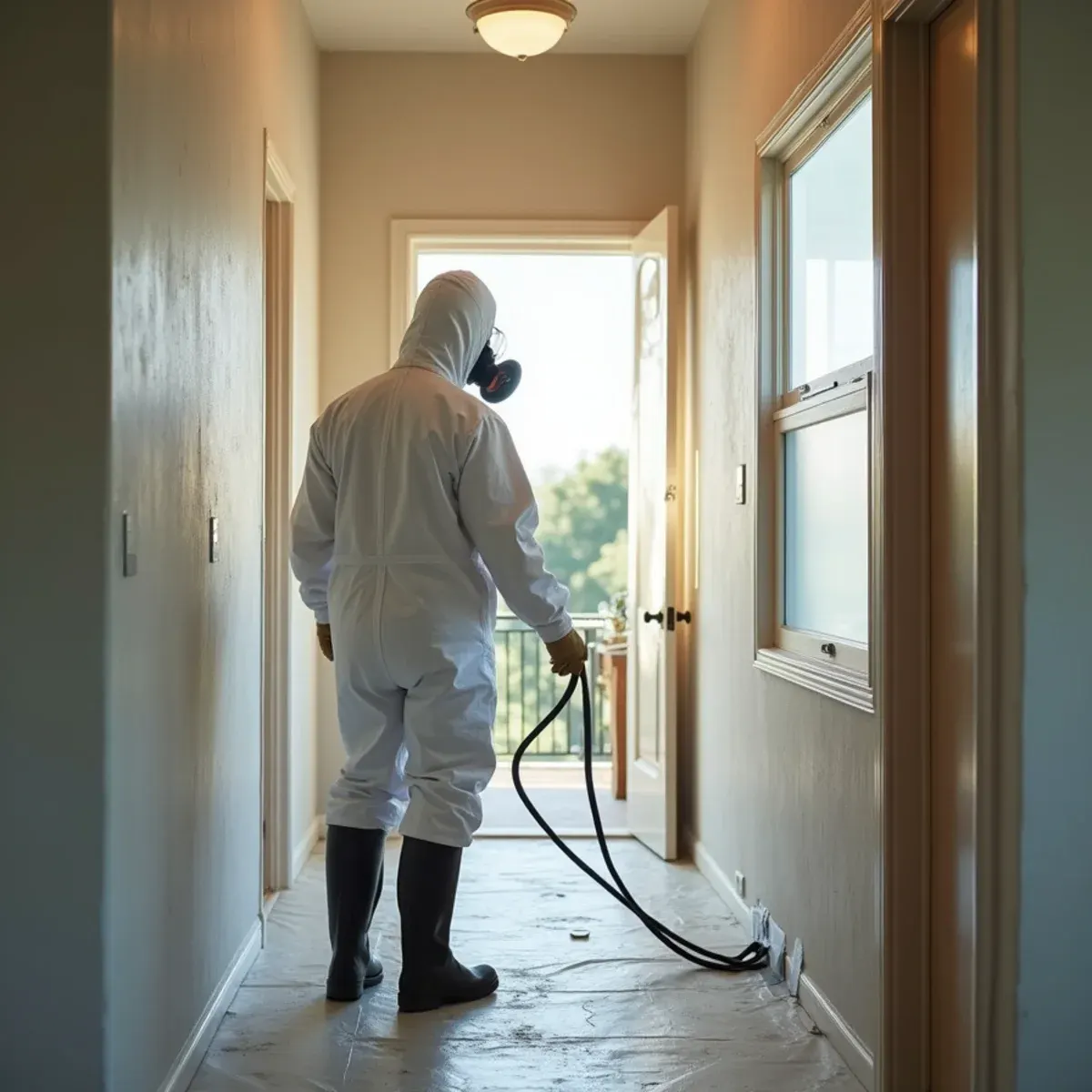
- Full PPE and safe extraction
- Remove contaminated porous materials
- Clean and disinfect all remaining surfaces
- Deodorize at the source
- Dry, verify, and clear
The Los Alamitos Background Worth Knowing
When a home has been standing since 1958, the plumbing question is not whether something will fail but which thing already has. We routinely find three generations of repair inside a single Los Alamitos wall: original galvanized, a copper section from a 1980s repair, and a PEX patch from last decade, all joined with whatever transition fitting was on the truck that day.
There is more on the housing stock, drainage and plumbing history of this city on our water damage restoration in Los Alamitos page.
Los Alamitos at a glance
- Dominant construction era
- 1950–1965
- Foundation type
- mixed on grade
- Supply piping found here
- galvanized steel, early copper, mixed-metal repair joints
- Drain line materials
- cast iron, clay
- Terrain and water table
- flat, moderate water table
- Most common local failure
- galvanic corrosion at mixed-metal joints where sixty years of piecemeal repairs meet
- Highest-value local prevention
- a camera inspection of the sewer lateral, which has never been scoped on most homes here
What It Costs in Los Alamitos
We do not quote a number over the phone before seeing the property — anyone who does is guessing. The variables that actually move the price on a sewage cleanup job are affected square footage, volume of porous material removed, contents in the affected area, and they are broken down in full on the sewage backup cleanup page. The assessment and the written estimate are free anywhere in Los Alamitos, day or night, with no obligation.
Sewage Cleanup Questions from Los Alamitos Homeowners
Usually yes, though we check rather than assume. If the backup came from a broken or blocked line under the house, or if enough volume went through the floor, contamination ends up on the soil, the vapor barrier and the insulation below. We open the crawl space and look first. If it is clean, we say so and leave it alone. If it isn't, that space gets stripped, cleaned, treated and dried like any other affected area.
It depends on the source. A toilet that overflows with clean bowl water because of a stuck fill valve is Category 1 or 2 and is far less serious. A toilet that backs up from the main line is carrying waste from the whole system, and that is Category 3 — it needs the full protocol.
No. Standard practice for Category 3 water is removal and disposal of carpet and pad that were contacted. Porous materials cannot be reliably disinfected all the way through, and the health risk of leaving them is not worth the savings.
Usually fifteen to twenty-five minutes — Los Alamitos is our closest neighbor, straight east on Katella from where our trucks stage. The 60-minute response commitment applies here the same as in Cypress.