
Open a wet wall in a Los Alamitos house from 1958 and you'll often find three generations of pipe in the same run: original galvanized, a copper repair from the 1980s, and a newer fitting someone added last decade. Where those metals meet, corrosion works quietly at the joint until it lets go, usually around two in the morning. That's the failure we see most here, and it's why we open the wall a little wider than the stain suggests. The wet area and the corroded area are rarely the same size.
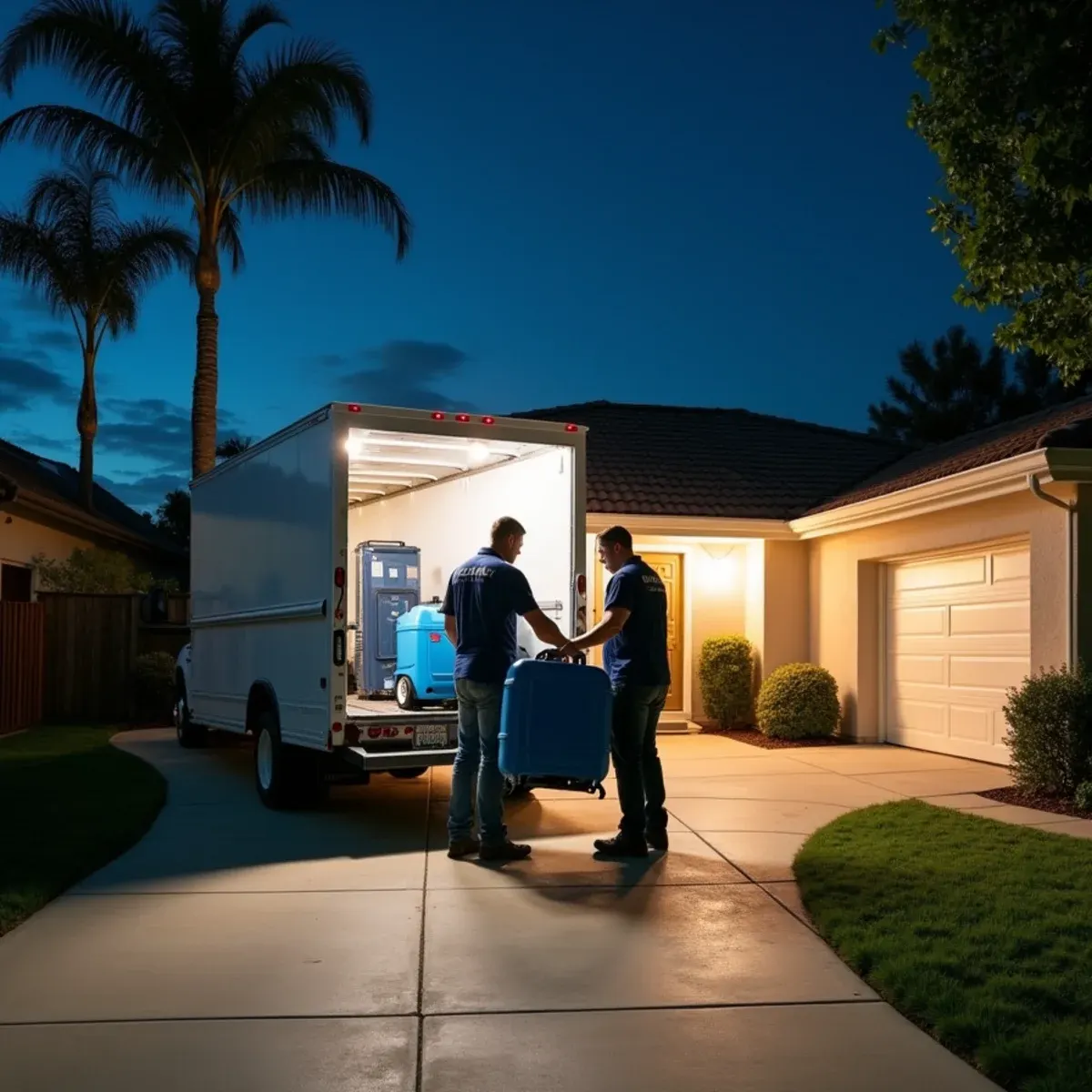
The other half of our work in this city isn't residential at all. Between Los Alamitos Medical Center, the medical offices along Katella and the light industrial buildings out toward the training base, a good share of calls come from property managers whose tenants open at seven the next morning. Those jobs get planned differently: quieter equipment, containment that patients and staff can walk past, and moisture documentation the building's carrier will accept without a second visit. We dispatch from Katella Avenue in Cypress, so the drive over here is short.
What Los Alamitos Changes About Emergency Restoration
1Three generations of pipe, one wall
Sixty years of piecemeal repairs left a lot of Los Alamitos homes with galvanized, copper and mixed-metal fittings spliced into the same line. Corrosion concentrates at those junctions, so the leak point and the weak point often sit a few feet apart. We map moisture past the obvious wet edge and photograph what the wall actually contains, which tends to matter later when an adjuster asks what failed.
2Medical and commercial suites stay open
Occupied medical offices and clinics near the hospital can't clear out for three days of drying. We build containment around the wet area, size equipment to the space rather than to the truck, and schedule the loud work around patient hours. Daily moisture readings go into a log the building owner, the tenant and the carrier can all read from the same page.
3Laterals no one has ever scoped
Cast iron and clay laterals under mature parkway trees are standard in the older parts of town, and on most homes here nobody has ever put a camera down one. After a sewage backup we treat the cause as unknown until it's scoped, because drying a floor that will flood again next month helps nobody. The scope also tells your insurer whether the failure was sudden.
How the Work Runs
The method is the same one we use on every emergency restoration job, documented to the IICRC S500:2025 standard. Here it is in short — the full emergency water damage restoration process explains each stage in detail.
- Call answered and crew dispatched
- Arrival, safety check, and moisture mapping
- Documentation before anything is touched
- Extraction
- Controlled structural drying
- Cleaning, sanitizing, and final verification
The Los Alamitos Background Worth Knowing
When a home has been standing since 1958, the plumbing question is not whether something will fail but which thing already has. We routinely find three generations of repair inside a single Los Alamitos wall: original galvanized, a copper section from a 1980s repair, and a PEX patch from last decade, all joined with whatever transition fitting was on the truck that day.
There is more on the housing stock, drainage and plumbing history of this city on our water damage restoration in Los Alamitos page.
Los Alamitos at a glance
- Dominant construction era
- 1950–1965
- Foundation type
- mixed on grade
- Supply piping found here
- galvanized steel, early copper, mixed-metal repair joints
- Drain line materials
- cast iron, clay
- Terrain and water table
- flat, moderate water table
- Most common local failure
- galvanic corrosion at mixed-metal joints where sixty years of piecemeal repairs meet
- Highest-value local prevention
- a camera inspection of the sewer lateral, which has never been scoped on most homes here
What It Costs in Los Alamitos
We do not quote a number over the phone before seeing the property — anyone who does is guessing. The variables that actually move the price on a emergency restoration job are water category, affected square footage and number of rooms, how many days of equipment, and they are broken down in full on the emergency water damage restoration page. The assessment and the written estimate are free anywhere in Los Alamitos, day or night, with no obligation.
Emergency Restoration Questions from Los Alamitos Homeowners
Usually, yes. Most of those suites are slab-on-grade with modular partitions, which dry faster than a house because there's less cavity to chase. We contain the affected rooms, keep exam and waiting areas usable where the moisture map allows, and run the noisier extraction after hours. IICRC S500 asks for a documented dry standard rather than a fixed number of days, so we set that standard from unaffected areas in your own suite and stop when readings match.
We commit to being on-site within 60 minutes of a confirmed emergency call anywhere in Cypress, and we credit $100 off your invoice if we miss it. Most of the time we are there in 30 to 45 minutes because our trucks stage on Katella Avenue, right here in the city.
No. The emergency assessment and written estimate are free, 24 hours a day. You are not obligated to hire us after we walk the property, and we will tell you plainly if we think the damage is small enough to handle yourself.
Usually fifteen to twenty-five minutes — Los Alamitos is our closest neighbor, straight east on Katella from where our trucks stage. The 60-minute response commitment applies here the same as in Cypress.