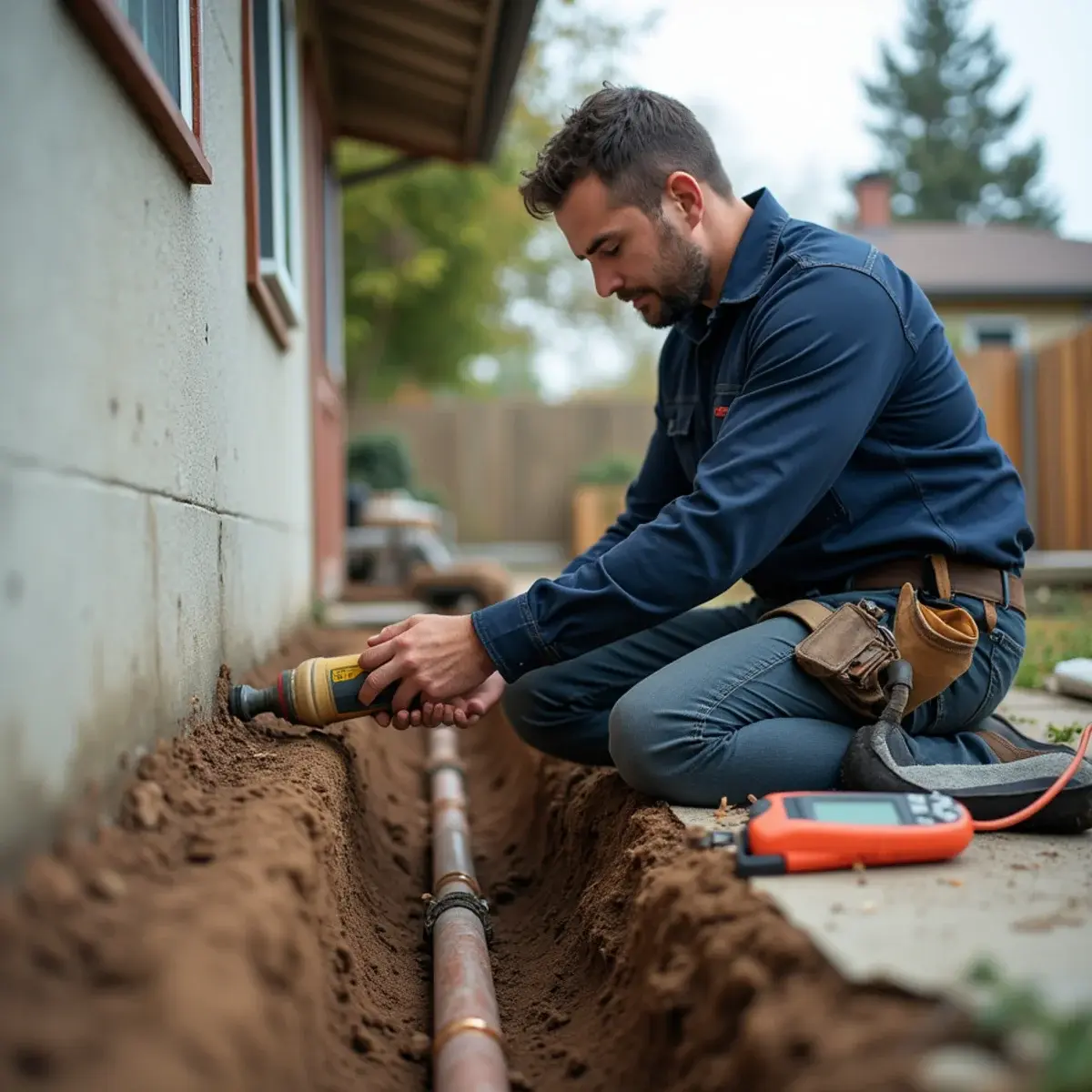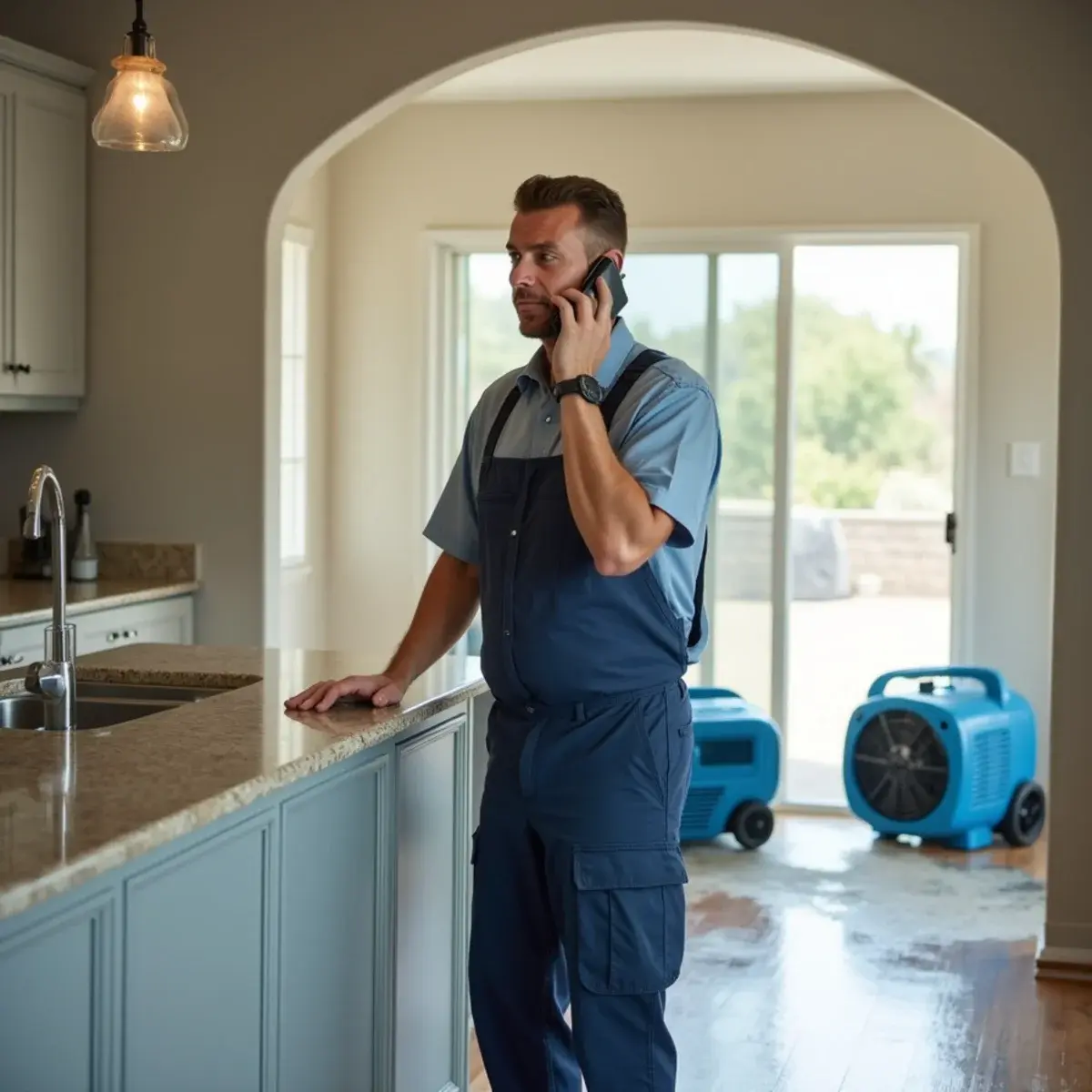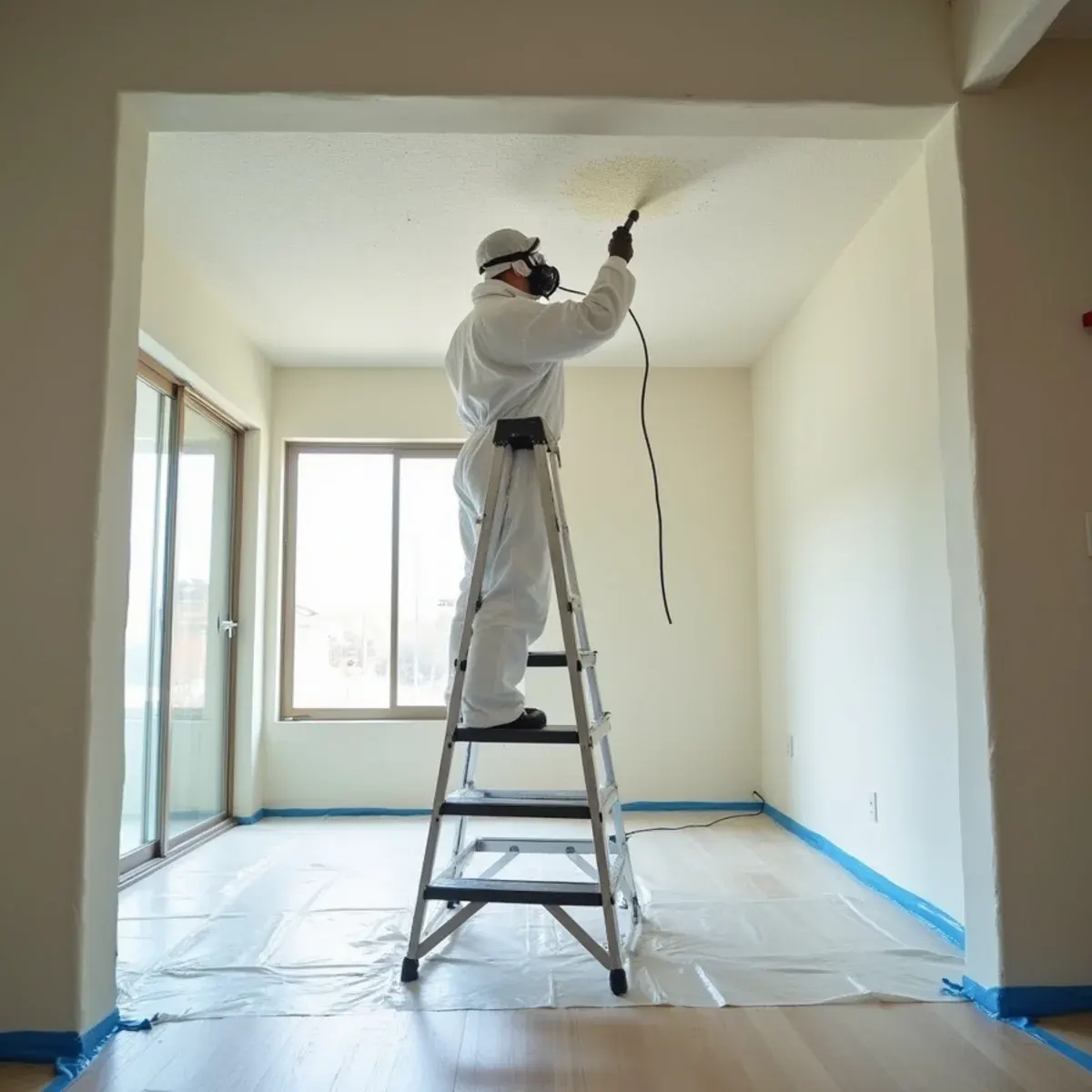
A pipe lets go in a 1972 Cypress tract house and the ceiling above the hallway is sagging by the time we arrive. The instinct — ours as much as anyone's — is to cut that wet section out immediately and start drying. In a house of that age we can't. Popcorn texture, the joint compound in the seams, the vinyl tile under the carpet and the wrap on the ducts overhead were all made with asbestos well into the early 1980s. Cutting first and asking later turns one wet ceiling into an airborne contamination problem across the whole floor, and there's no undoing it once the dust is in the air.
Lead is the other half, and it gets less attention because people picture peeling paint in an abandoned building. Lead-based paint was legal in homes until 1978, which covers most of what we work in. In a water loss it stops being a paint question and becomes a dust question. Swollen window sashes, a soaked door jamb, baseboard pulled off a wet wall — every one of those is a painted surface being broken, sanded or scraped. That's how lead gets into carpet and settles on the floor where a toddler crawls. A house can look immaculate and still have six layers of good paint over one bad one.
So testing comes first, and we're straight with you about what that costs in time. A certified inspector takes bulk samples of every distinct material we plan to disturb, an independent laboratory analyzes them, and nothing gets cut until the results are back. Meanwhile the drying doesn't stop — we can extract standing water, set containment, pull carpet and run equipment without touching a suspect material. If a result comes back positive, the abatement goes to a licensed contractor, with containment, negative air and clearance testing before we return. It adds days to a job. It's still cheaper and safer than the alternative, which is finding out afterward.
Signs Your Home Needs Testing First
These are the things we look for on the walk-through, roughly in the order you would notice them yourself.
A build date before 1980
This is the first thing we check, and in this service area it decides most jobs. The tracts through Cypress, Rossmoor, Lakewood and Norwalk went up between 1950 and 1980, and the older pockets in Fullerton, Whittier and the Anaheim Colony are older still. Age alone doesn't mean a material is present. It means we don't guess.
Popcorn or acoustic ceiling texture
Sprayed acoustic texture is the material we test most. It was applied in this area's tract housing into the early 1980s, and it's also the one homeowners are most tempted to scrape themselves after a ceiling leak. Wet popcorn comes off in sheets. Dry popcorn comes off as dust, and that's the version that matters.
Nine-inch floor tile under the carpet
Pull up carpet in a 1960s slab house and you often find hard tile squares underneath. If they measure nine by nine inches, treat them as asbestos until a lab says otherwise — that size stopped being made after the material was phased out. The black adhesive under them, cutback mastic, is a separate material and needs its own sample.
Fibrous wrap on ducts, pipes or the furnace
In attics and closets we look for a gray or white fibrous wrap on heating ducts, a cloth-like tape at duct joints, insulation on old water heater flues, and the plaster-like coating on elbows and fittings. This material sheds when it's disturbed or wet, and in a water loss it's often directly in the drying path.
Thick, layered paint on original wood trim
On the raised-foundation homes in Old Towne Orange, Uptown Whittier and Old Town Tustin, original window sashes, jambs and baseboards can carry a dozen coats. The one at the bottom is the one that matters. Alligatored cracking, chalking, or a sash that has been painted so many times it barely closes all point the same direction.
Paint peeling off a wall that got wet
Water pushes paint off from behind, and on a pre-1978 wall that peeling film is the hazard. Chips end up in carpet, on the floor and in the wet vacuum. This is the point where a straightforward drying job becomes a job that needs lead-safe work practices, and it's easy to miss because it looks like ordinary storm damage.
Flooring installed over older flooring
Slab houses here have often had three floors in sixty years, each one laid over the last. Vinyl sheet over tile over mastic. Nobody removed anything, so the original 1965 layer is still down there. When we cut a wet floor out, we're cutting through all of it, which means each layer gets sampled, not just the top one.
How We Handle Testing on a Water Loss
The sequence is built to protect the drying clock and the household at the same time.
- 1
Emergency stabilization without cutting
Water doesn't wait for a lab. On the first visit we do everything that doesn't disturb a suspect material: extract standing water, seal the affected rooms, set negative air, remove carpet and pad where the tack strip is the only thing being pulled, and get dehumidification running. IICRC S500:2025 treats time as the central variable in drying, and this is how we protect that clock without creating a second problem.
- 2
Define exactly what gets disturbed
Testing is driven by the scope of work, not by the whole house. We mark the specific ceiling area, the wall sections, the flooring and the mechanical components the drying and repair plan will actually cut, scrape or remove. That list is what gets sampled. Materials that stay intact and stay dry generally stay where they are, and we'll tell you when that's the better call.
- 3
A certified inspector takes the samples
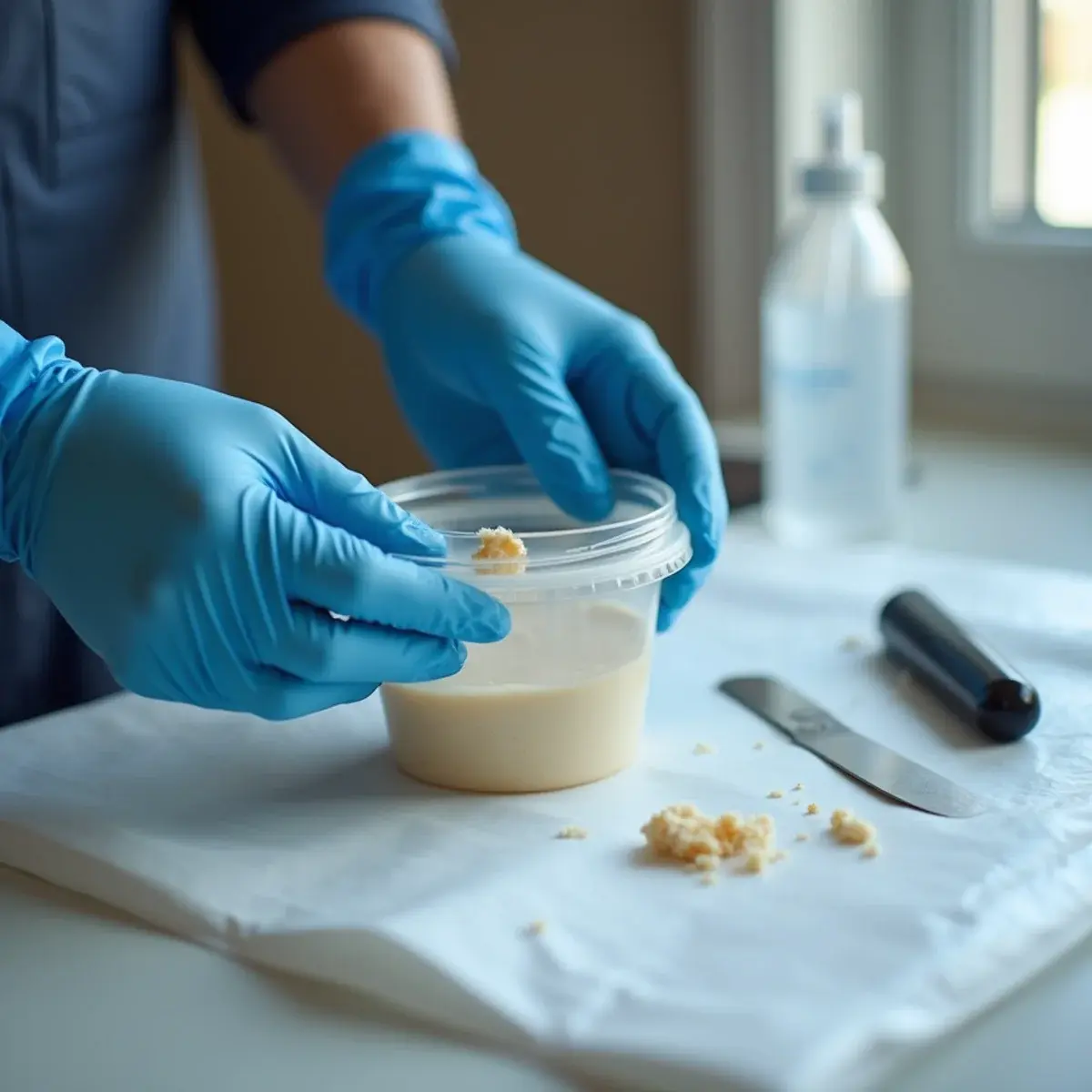
Sampling is done by a certified asbestos inspector under wet methods, with the sample point sealed afterward, so collecting the sample doesn't release what we're looking for. Each distinct material gets its own samples — ceiling texture separately from the joint compound behind it, tile separately from the mastic under it. Surfacing materials get multiple samples, because asbestos is not evenly distributed through a sprayed ceiling.
- 4
Independent laboratory analysis
Samples go to an accredited laboratory that has no stake in the outcome. Bulk analysis is by polarized light microscopy, and where a result lands near the one percent regulatory threshold we ask for point counting rather than accepting an estimate. In California, material above one tenth of one percent is still regulated for construction work, so a trace result is not automatically a green light.
- 5
Lead assessment on painted surfaces
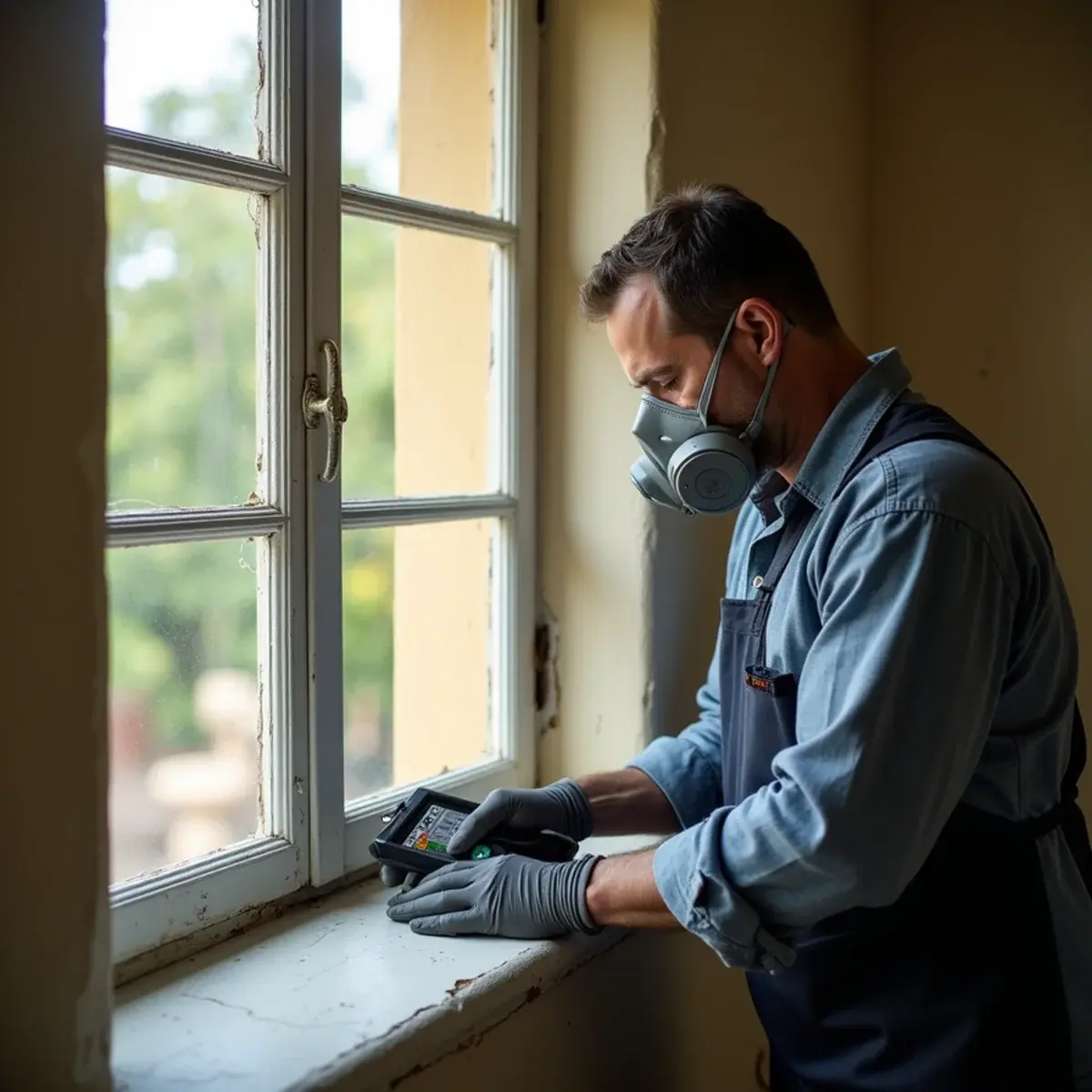
Painted components in a pre-1978 home get assessed separately. Readings can be taken on site with an XRF analyzer on intact surfaces, or paint chip samples sent to the lab where the surface is already damaged. We test the specific components in the work area — the window casing, the jamb, the baseboard, the door — because one room's trim can read positive while the next room's reads clean.
- 6
Abatement, clearance, then restoration
A negative result means we cut and dry as planned that day. A positive result means the work goes to a licensed abatement contractor: full containment, negative air machines exhausting through HEPA, wet removal and sealed disposal. Southern California work also carries an air district notification requirement before demolition or renovation begins. Clearance air testing by an independent party comes before we bring drying equipment back into the room.
When You Don't Need Us to Test
Plenty of homes we work in don't need any of this. If the house was built after the mid-1980s, the materials in question weren't being installed. If the damage is confined to something that isn't a suspect material — new laminate flooring, a modern drywall wall with post-1990 texture, an FRP panel — there's nothing to sample. And if a suspect material is intact, undamaged and staying put, it is generally safer left alone than removed. Asbestos in a sealed ceiling that nobody touches is not releasing fibers. Testing exists to answer one question: is this material about to be disturbed.
We say this because the incentive runs the other way. A restoration company that also sells abatement has a reason to find something, and we'd rather tell you that your 1994 house doesn't need a sample than run one to look thorough. The other side of that honesty is that we won't cut into a pre-1980 ceiling on a homeowner's assurance that it was tested years ago, or that a previous owner said it was fine. If there's no report with a lab name and a sample location on it, there's no test.
The Mistake That Makes People Pay Twice
The most expensive version of this job starts with a homeowner or a handyman opening the ceiling on a Saturday. The leak came through Friday night, the popcorn is sagging, and scraping it down looks like helping. By Sunday the dust has settled across the carpet, the furniture, the return air grille and the rest of the floor. Now the question isn't whether the ceiling contains asbestos. It's whether the whole house does, and answering that costs more than the ceiling ever would have.
The second version is subtler and we see it more often. A material gets tested, comes back clean, and the crew treats that result as covering everything in the room. Ceiling texture and the joint compound behind it are two different products, mixed by different manufacturers in different years. Nine-inch tile and the black mastic gluing it down are two different products. A clean result on one says nothing about the other, and a composite sample that blends them can dilute a positive material below the reporting threshold entirely.
So ask for the report, not the verdict. A usable report lists each material by name and location, the sample identifiers, the analytical method and the result for every sample, on laboratory letterhead. A one-line text saying the house came back clear tells you nothing you can rely on, and it won't hold up with an insurer, a buyer or a building inspector two years from now. Keep the report with your house records. In a service area this old, you will be asked for it again.
- Ceiling texture, and the joint compound in the seams above it
- Nine-inch vinyl tile, and the black cutback mastic holding it down
- Sheet vinyl flooring, and the felt backing bonded to its underside
- Duct wrap, the tape at the joints, and the fitting cement on elbows
- Each flooring layer separately in a slab house that has been refloored twice
What the Housing Here Means for Testing
Almost everything we work on locally falls inside the window. The Cypress, Rossmoor, Lakewood, Norwalk and La Palma tracts went up between roughly 1950 and 1980. Cerritos runs a little later but still overlaps. That is a service area where the default assumption on a slab house with a textured ceiling has to be that testing comes first. It isn't caution for its own sake — it's what the building stock is. The newer construction in the area is real, but it's the exception on our schedule, not the rule.
The older pockets change the emphasis. In Old Towne Orange, Uptown Whittier, Old Town Tustin, Eastside Costa Mesa, the Anaheim Colony and Santa Ana's historic districts, the houses predate the war, and lead paint becomes the bigger of the two concerns. Those homes have original double-hung wood windows and thick painted trim, and the friction surfaces — sashes, jambs, door edges — generate lead dust every time they move, before anyone cuts anything. When water swells that wood and a restoration crew starts pulling casing, the dust problem arrives whether anyone tested or not.
Two other groups deserve a note. The manufactured homes in Stanton, Midway City and Carson from that era used their own set of materials, including sheet flooring and furnace components that test positive often enough that we treat them as suspect by default. And in the dense multi-family stock in Hawaiian Gardens and Buena Park, one unit's ceiling is the same material as the units beside it, built the same week by the same crew. A result from a neighboring unit is useful information, but it is not a substitute for sampling yours.
What Testing and Abatement Cost Depends On
Testing itself is one of the smaller line items on a restoration invoice; what follows a positive result is not.
The number of distinct materials
Every material that will be disturbed is priced as its own item, because each one gets its own samples and its own line at the laboratory. A single wet ceiling in one bedroom is one material. A ceiling, the joint compound in the walls, two layers of flooring and a duct wrap is five, and the lab bills accordingly.
How many samples each needs
Sprayed ceiling texture takes several samples across the area, because the fibers were never mixed evenly and one sample can miss what the next one finds. A vinyl tile or a section of pipe wrap is usually a single sample. Sampling thin is the false economy here — a missed positive costs far more than the extra sample.
How fast you need results
Standard laboratory turnaround is the least expensive and works fine when the affected area is already contained and drying. Rush and same-day analysis cost more, and on an active water loss they're usually worth it, because every day the assembly stays wet is a day closer to a mold problem you'd rather not add.
The size of the lead survey
Lead assessment is priced by the number of painted components tested, not by the house. Four window units and a door casing in one damaged room is a short visit. A whole-house survey for a pre-1940 home with original trim throughout is a different job, and it's rarely what a water loss actually calls for.
Whether abatement follows the result
Testing is a small number. Abatement is not. If a result comes back positive, the cost is driven by the area involved, the containment required, how long the crew is in the building and the disposal of regulated waste. A wet popcorn ceiling in one hallway and the same ceiling across four rooms are very different projects.
Insurance note: Carriers generally treat testing and abatement as part of the cost of repairing covered damage — if a covered leak wet an asbestos ceiling, safely removing that ceiling is the repair. What they push back on is testing materials the loss never touched, and abating a whole house when one room was wet. Some policies also carry pollution exclusions that complicate it. We document which materials the water reached, and we bill insurance directly.
Why Cypress Homeowners Call Us for Asbestos & Lead Testing
Plenty of companies list this service. Fewer can tell you what equipment they will bring, what standard the work is measured against, or what happens if they are wrong. Here is what you are actually buying.
Tested before demolition, not after
Pre-1980 Cypress housing routinely contains both. Cutting drywall or scraping ceiling texture first is how a water job becomes a regulated abatement.
Independent lab results, not an in-house opinion
Samples go to an accredited lab and you receive the report. A contractor who both tests and abates should not be the only word on whether abatement is needed.
A clear answer either way
Most of the time the result is negative and the restoration continues normally. That is the outcome we expect and the one we hope for.
- 20+ years restoring Orange County homes
- IICRC Certified Firm
- Licensed, Bonded & Insured
- We bill your insurance company directly
- IICRC S500:2025 compliant on every job
- 100% satisfaction guarantee — in writing, on every job
Frequently Asked Questions
No, and that's the whole point of testing. Plenty of ceilings from that decade come back clean — the manufacturers were mixed, the formulas changed year to year, and two houses on the same street can give different results. What we can't do is assume either way. A 1974 ceiling is a suspect material, which means one sample and a lab report separates a routine repair from a regulated one. Guessing in either direction is the expensive choice.
Usually less than people fear, and we design around it. Extraction, containment and dehumidification all start on the first visit, because none of that disturbs a suspect material. Sampling happens the same day where we can get an inspector out, and rush lab analysis is available when the clock matters. What genuinely adds time is a positive result, since abatement, containment and clearance testing have to finish before we cut. We'll give you a realistic date rather than an optimistic one.
Please don't. Wet texture comes off in soft sheets and feels harmless, but it dries where it lands, and then it's dust on the carpet, in the furniture and in the return air. If the material turns out to be positive, you've converted a one-room job into a whole-floor cleanup, and there's no way to reverse it. Pull furniture out, put down plastic, catch drips in a bucket, and leave the ceiling alone until we've sampled it.
No. Asbestos abatement goes to a licensed abatement contractor, and where the job calls for oversight or clearance testing, that's a third party with no financial interest in the outcome. We're not going to grade our own homework on a health question. What we do is manage the sequence: hold the drying safely while testing runs, coordinate the abatement contractor's schedule, confirm clearance, then take the restoration and reconstruction from there on one file.
Often not, but it depends on where the work is and how contained it can be. Lead-safe work practices — plastic containment, wet methods, HEPA vacuuming, no dry sanding, and a cleaning verification at the end — are built to keep dust inside the work area. If the affected rooms include where children sleep and play, or if the containment can't be kept sealed from them, we'll say so directly and recommend staying elsewhere while that phase runs.
Related Reading
- Why Cypress Homes Built Before 1980 Face Higher Water Damage Risk — Cypress built out in about twenty years, which means most of its plumbing is reaching end of life at the same time. Here is what fails and when.
- How to File a Water Damage Insurance Claim (Step by Step) — Most people file exactly one water damage claim in their life, while doing it under stress. Here is the process, in order, with the mistakes flagged.