
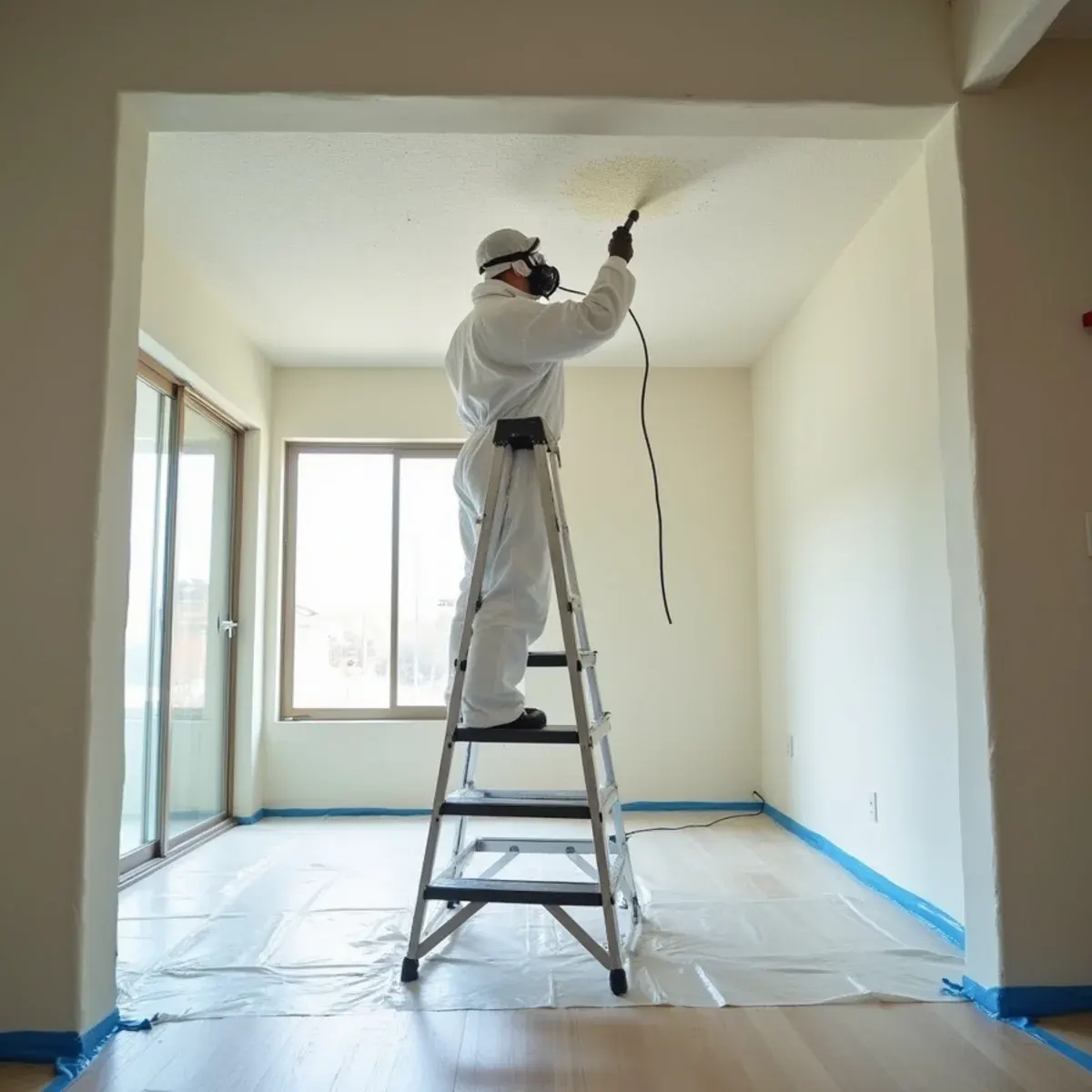
The Eastside is where this service earns its keep in Costa Mesa. Small 1920s through 1940s cottages on raised foundations, under heavy tree canopy, with crawl spaces that were plumbed and re-plumbed by hand over eighty years. Old pipe and duct insulation down there is friable — it breaks apart under a knee or a dragged hose. Add a marine layer that keeps humidity high and slows natural drying, and you get long-standing crawl-space moisture that eventually has to be dried mechanically.
That is the part people miss. Setting fans and a dehumidifier under a raised floor moves a lot of air across whatever is hanging off those pipes. We sample the wrap first, and if it comes back positive the drying plan changes before any equipment goes under. West of Newport Boulevard the mix shifts to industrial buildings sitting next to housing, and Mesa Verde is 1960s slab tract where the concern is ordinary ceiling texture and floor tile instead. Same city, three different scopes.
What Costa Mesa Changes About Asbestos & Lead Testing
1Crawl-space wrap comes first, drying second
On an Eastside cottage the order matters more than anywhere else we work. Air movers under a raised floor with damaged asbestos insulation on the lines will distribute fibers through the crawl space and up into the house through floor penetrations. We sample, wait for the lab, and stage the drying around the result. It costs a day and prevents a much larger job.
2Marine humidity stretches the timeline
The shallow water table and constant marine influence mean crawl spaces here never really dry on their own. Homeowners often live with a damp underfloor for years, so by the time we see it the insulation is already degraded and shedding. Older wrap in that condition is the material most likely to come back positive anywhere in this city.
3Westside industrial neighbors, different rules
On the Westside, houses sit beside shops and light industrial buildings, and the two follow different requirements. Commercial renovation and demolition carry survey obligations regardless of the building's age. If your loss involves a mixed-use property or a converted industrial space, we scope the commercial side separately from the residential side rather than blending them.
How the Work Runs
The method is the same one we use on every asbestos & lead testing job, documented to the IICRC S500:2025 standard. Here it is in short — the full asbestos & lead paint testing process explains each stage in detail.
- Emergency stabilization without cutting
- Define exactly what gets disturbed
- A certified inspector takes the samples
- Independent laboratory analysis
- Lead assessment on painted surfaces
- Abatement, clearance, then restoration
The Costa Mesa Background Worth Knowing
Under a raised Eastside cottage there is bare soil, and that soil is supposed to stay dry because the foundation vents exchange air with the outside. That system depends on the outside air being drier than the space under the house. For a good part of the year in Costa Mesa it is not. The marine layer holds humidity high through the night and well into the morning, so the crawl space never gets the dry stretch it needs, and moisture that arrives from a plumbing drip, a downspout, or an irrigation line just accumulates.
There is more on the housing stock, drainage and plumbing history of this city on our water damage restoration in Costa Mesa page.
Costa Mesa at a glance
- Dominant construction era
- 1920–1980
- Foundation type
- mixed on grade
- Supply piping found here
- original 1920s–1940s piping on the Eastside, galvanized steel, under-slab copper
- Drain line materials
- cast iron, clay
- Terrain and water table
- coastal-flat, shallow water table
- Most common local failure
- crawl-space moisture under Eastside cottages, held in by a marine layer that slows every natural drying process
- Highest-value local prevention
- confirming crawl-space vents are actually open and that the ground under the house is dry
What It Costs in Costa Mesa
We do not quote a number over the phone before seeing the property — anyone who does is guessing. The variables that actually move the price on a asbestos & lead testing job are the number of distinct materials, how many samples each needs, how fast you need results, and they are broken down in full on the asbestos & lead paint testing page. The assessment and the written estimate are free anywhere in Costa Mesa, day or night, with no obligation.
Asbestos & Lead Testing Questions from Costa Mesa Homeowners
Drying is the disturbance in this case. Running air movers under an Eastside cottage pushes moving air directly across old pipe insulation that is already fragile from years of damp. If that wrap is positive, the equipment spreads it. A few samples before the first fan goes under is the difference between a normal dry-out and a containment job underneath your floor.
No, and that's the whole point of testing. Plenty of ceilings from that decade come back clean — the manufacturers were mixed, the formulas changed year to year, and two houses on the same street can give different results. What we can't do is assume either way. A 1974 ceiling is a suspect material, which means one sample and a lab report separates a routine repair from a regulated one. Guessing in either direction is the expensive choice.
Usually less than people fear, and we design around it. Extraction, containment and dehumidification all start on the first visit, because none of that disturbs a suspect material. Sampling happens the same day where we can get an inspector out, and rush lab analysis is available when the clock matters. What genuinely adds time is a positive result, since abatement, containment and clearance testing have to finish before we cut. We'll give you a realistic date rather than an optimistic one.
Almost always the crawl space. On these raised 1920s to 1940s houses the soil under the floor stays damp when the foundation vents are blocked and the marine layer keeps outside air humid overnight. That moisture moves up through the subfloor and into the rooms above it. Before assuming anything, walk your perimeter and see whether a planter, a poured patio or landscaping has covered the vents that are supposed to be breathing.