
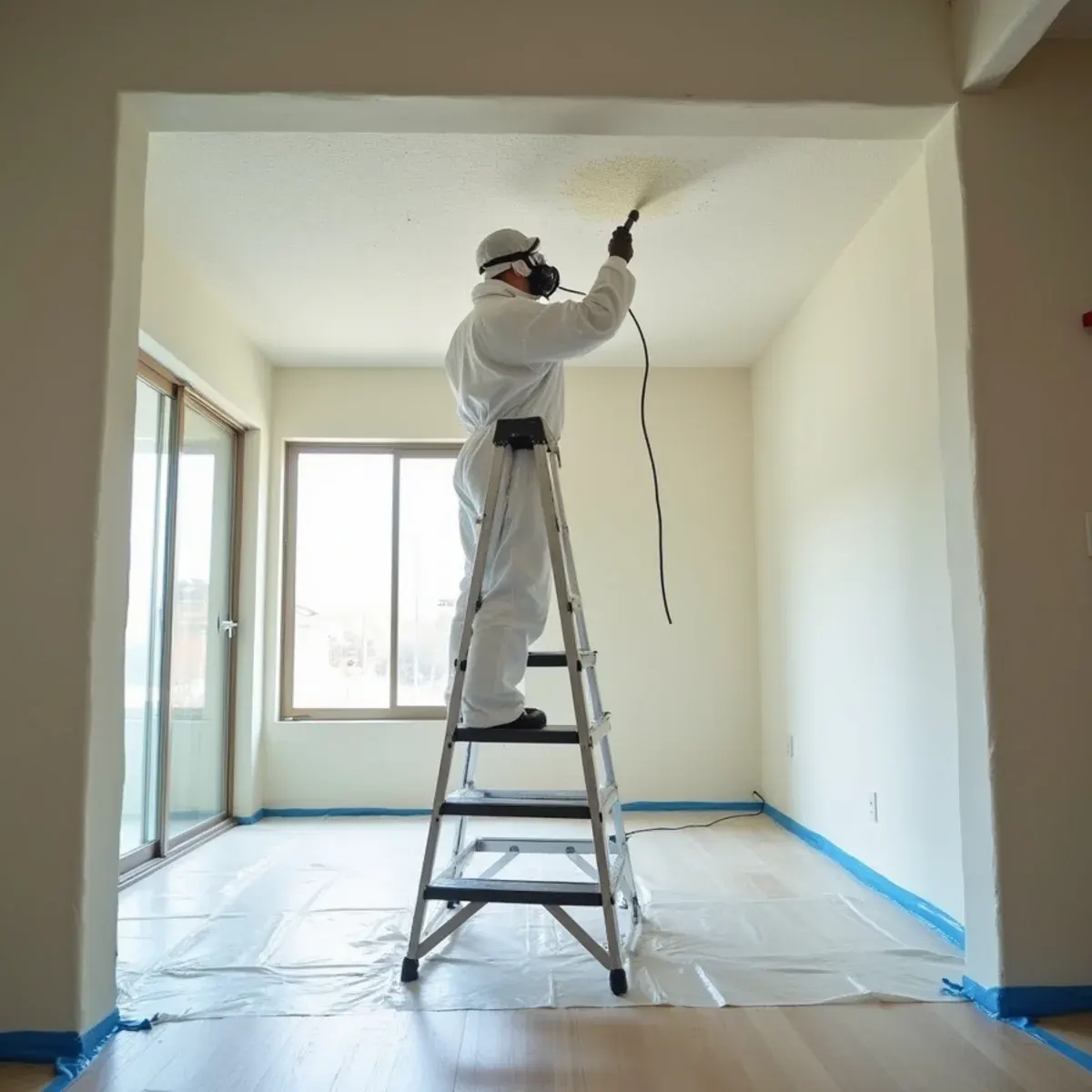
Counterintuitive but true in this city: the flooring failure that brought you here is probably not a leak. Fountain Valley is dead flat, built on the former wetland people still call Gospel Swamp, and it has the shallowest water table in Orange County. Slab vapor is a background condition, not an event. Homeowners chase a phantom plumbing leak for weeks while the real answer is a slab that was never tested before the floor went down. The repair, though, is identical either way. The floor comes up, and that is when testing matters.
Homes here went in between 1960 and 1980 on slab, and under whatever floor is failing now there is often the original resilient tile still bonded in black cutback adhesive. Take up three layers of flooring and the bottom one predates almost everyone living in the house. Lead is a live question only for the earlier half of that range, mostly on painted trim and sash, and we say so rather than selling both tests by default. The asbestos question on the floor and the ceiling texture is the one that applies almost everywhere in this city.
What Fountain Valley Changes About Asbestos & Lead Testing
1Vapor, not a leak, but the same demolition
Whether the cause is groundwater vapor coming through the slab or an actual supply failure, the corrective work looks the same: the floor comes out to bare concrete. That means the same materials get disturbed and the same testing applies. It is worth knowing the difference because it changes the insurance conversation entirely, and we will tell you which one you have before anyone starts a claim.
2Cutback adhesive under three generations of floor
A typical Fountain Valley slab has carried tile, then carpet, then laminate or plank. The bottom layer is where findings show up, and it is the layer that requires grinding to remove. Each flooring generation is a separate material and gets sampled separately. Skipping straight to a grinder because the top layers looked modern is how a routine floor job turns into a contaminated house.
3Sequence the slab moisture test after clearance
There is no point testing slab moisture and then abating, because the abatement work changes the slab surface. The order that works here is survey, abatement and clearance if needed, then relative humidity probes or calcium chloride on the bare clean slab, then flooring selected to match the reading. Get that sequence backwards in this city and the new floor fails the same way the old one did.
How the Work Runs
The method is the same one we use on every asbestos & lead testing job, documented to the IICRC S500:2025 standard. Here it is in short — the full asbestos & lead paint testing process explains each stage in detail.
- Emergency stabilization without cutting
- Define exactly what gets disturbed
- A certified inspector takes the samples
- Independent laboratory analysis
- Lead assessment on painted surfaces
- Abatement, clearance, then restoration
The Fountain Valley Background Worth Knowing
Groundwater beneath Fountain Valley sits close enough to the surface that moisture vapor migration up through concrete slabs is a routine background condition rather than an anomaly. Homeowners here regularly describe a slab that feels cool and damp, or a closet on an exterior wall that never quite feels dry, without any leak at all.
There is more on the housing stock, drainage and plumbing history of this city on our water damage restoration in Fountain Valley page.
Fountain Valley at a glance
- Dominant construction era
- 1960–1980
- Foundation type
- slab on grade
- Supply piping found here
- under-slab copper
- Drain line materials
- cast iron
- Terrain and water table
- flat, shallow water table
- Most common local failure
- slab vapor emission mistaken for a leak, and flooring failures caused by installing over an untested slab
- Highest-value local prevention
- clearing the yard and area drains before the season, because a blocked drain on dead-flat ground ponds water against the house
What It Costs in Fountain Valley
We do not quote a number over the phone before seeing the property — anyone who does is guessing. The variables that actually move the price on a asbestos & lead testing job are the number of distinct materials, how many samples each needs, how fast you need results, and they are broken down in full on the asbestos & lead paint testing page. The assessment and the written estimate are free anywhere in Fountain Valley, day or night, with no obligation.
Asbestos & Lead Testing Questions from Fountain Valley Homeowners
If the removal reaches the original layer bonded to the slab, yes. Vapor damage does not change what is under the floor, and in a Fountain Valley home from the 1960s or 70s that bottom layer is often old resilient tile in black adhesive. Two samples answer it. If they are clean the tear-out and grind proceed normally. If not, that layer comes off wet under containment before the slab gets tested for moisture and a new floor gets chosen.
No, and that's the whole point of testing. Plenty of ceilings from that decade come back clean — the manufacturers were mixed, the formulas changed year to year, and two houses on the same street can give different results. What we can't do is assume either way. A 1974 ceiling is a suspect material, which means one sample and a lab report separates a routine repair from a regulated one. Guessing in either direction is the expensive choice.
Usually less than people fear, and we design around it. Extraction, containment and dehumidification all start on the first visit, because none of that disturbs a suspect material. Sampling happens the same day where we can get an inspector out, and rush lab analysis is available when the clock matters. What genuinely adds time is a positive result, since abatement, containment and clearance testing have to finish before we cut. We'll give you a realistic date rather than an optimistic one.
The city sits on former wetland with one of the shallowest water tables in Orange County, so moisture vapor migrating up through slabs is a normal background condition here rather than a defect. It matters most when installing flooring over the slab, which is why we test with in-situ RH probes before anything goes back down.