
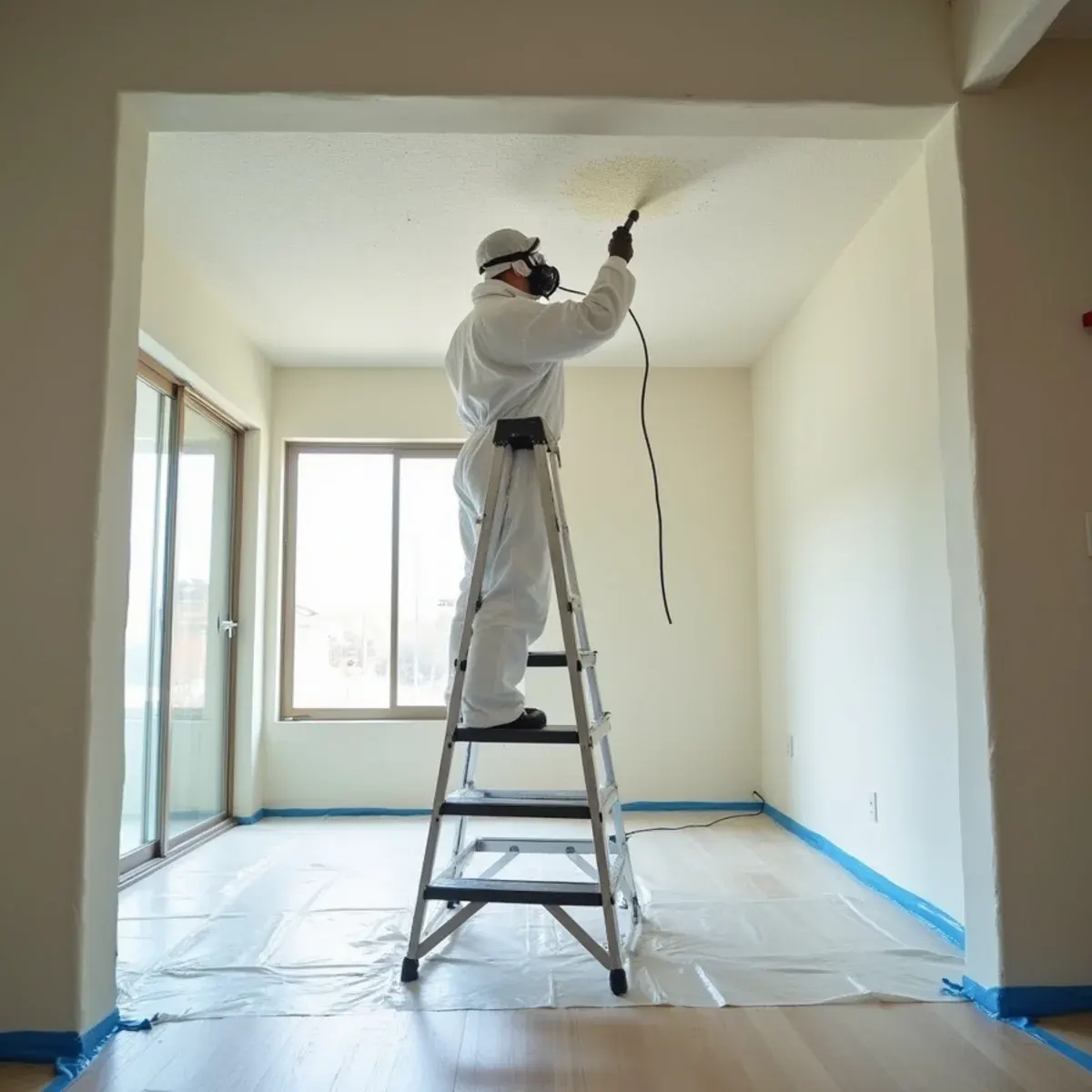
The honest version of this page: in Artesia, most of this work is commercial. The Pioneer Boulevard blocks hold one of the densest concentrations of independent restaurants and retail in the region, almost all of it in 1950s buildings that were never designed for commercial kitchens. Those spaces get rebuilt constantly, and every rebuild cuts the ceiling for hood and duct, the walls for gas and waste, and the floor for drains. Each of those cuts crosses material that has been in place since the building went up.
The other Artesia trigger is the waste line. Grease-loaded cast iron under these buildings restricts and backs up into kitchens, and replacing it means breaking the floor. That is slab work through whatever flooring layers have accumulated, including the original tile and black adhesive at the bottom. The residential side of the city is modest postwar slab housing from 1950 to 1970, where the standard survey applies, but the volume and the urgency here sit on Pioneer Boulevard, where a closed kitchen is a closed business.
What Artesia Changes About Asbestos & Lead Testing
1Kitchen build-outs cut everything at once
A restaurant fit-out in a 1950s Artesia building is not one trade making one opening. Hood and duct go through the ceiling, gas and waste go through walls, floor drains go into the slab, all inside a couple of weeks. That is three or four different original materials disturbed in parallel by crews who are not thinking about any of this. The survey has to cover all of it before the first one starts.
2Grease line replacement means breaking the floor
When cast iron under the kitchen is grease-restricted past cleaning, the fix is replacement, and that means saw-cutting the slab through every flooring layer above it. The bottom layer in a building this age is often old resilient tile in black cutback adhesive. Sampling that before the concrete saw runs is straightforward. Discovering it mid-cut is not, and it stops the job cold.
3The business has to keep trading
Independent restaurants on Pioneer Boulevard do not have a second location to fall back on. We phase work to the smallest footprint that gets progress, run the dusty and loud stages overnight, and get clearance testing back before food service resumes. Sampling early is the single biggest lever on that timeline, because lab time overlaps with planning instead of adding to it.
How the Work Runs
The method is the same one we use on every asbestos & lead testing job, documented to the IICRC S500:2025 standard. Here it is in short — the full asbestos & lead paint testing process explains each stage in detail.
- Emergency stabilization without cutting
- Define exactly what gets disturbed
- A certified inspector takes the samples
- Independent laboratory analysis
- Lead assessment on painted surfaces
- Abatement, clearance, then restoration
The Artesia Background Worth Knowing
A commercial kitchen is one of the hardest things you can ask a building to accommodate. High water use, continuous drainage, grease loading, floor drains, and equipment connections that get added and modified over the years. When that kitchen is in a building from the 1950s with original cast-iron waste lines, the failure is a matter of time.
There is more on the housing stock, drainage and plumbing history of this city on our water damage restoration in Artesia page.
Artesia at a glance
- Dominant construction era
- 1950–1970
- Foundation type
- slab on grade
- Supply piping found here
- galvanized steel, copper
- Drain line materials
- cast iron
- Terrain and water table
- flat, moderate water table
- Most common local failure
- grease-loaded cast-iron waste lines restricting until a commercial kitchen backs up
- Highest-value local prevention
- hydro-jetting the waste line rather than snaking it, so the pipe wall actually gets cleaned
What It Costs in Artesia
We do not quote a number over the phone before seeing the property — anyone who does is guessing. The variables that actually move the price on a asbestos & lead testing job are the number of distinct materials, how many samples each needs, how fast you need results, and they are broken down in full on the asbestos & lead paint testing page. The assessment and the written estimate are free anywhere in Artesia, day or night, with no obligation.
Asbestos & Lead Testing Questions from Artesia Homeowners
Anything the saw cut and the demolition will pass through. That means the flooring layers above the slab, particularly whatever is bonded directly to the concrete, and any ceiling or wall material opened to reroute the line. Buildings from the 1950s along that stretch frequently have old resilient tile and black adhesive under two later floors. We sample it, the independent lab runs it, and the answer determines whether the cut is routine or needs containment.
No, and that's the whole point of testing. Plenty of ceilings from that decade come back clean — the manufacturers were mixed, the formulas changed year to year, and two houses on the same street can give different results. What we can't do is assume either way. A 1974 ceiling is a suspect material, which means one sample and a lab report separates a routine repair from a regulated one. Guessing in either direction is the expensive choice.
Usually less than people fear, and we design around it. Extraction, containment and dehumidification all start on the first visit, because none of that disturbs a suspect material. Sampling happens the same day where we can get an inspector out, and rush lab analysis is available when the clock matters. What genuinely adds time is a positive result, since abatement, containment and clearance testing have to finish before we cut. We'll give you a realistic date rather than an optimistic one.
Yes, and on Pioneer Boulevard that is usually how we schedule it. Overnight crews cost somewhat more in labor and almost always cost dramatically less than lost revenue from closing during operating hours.