
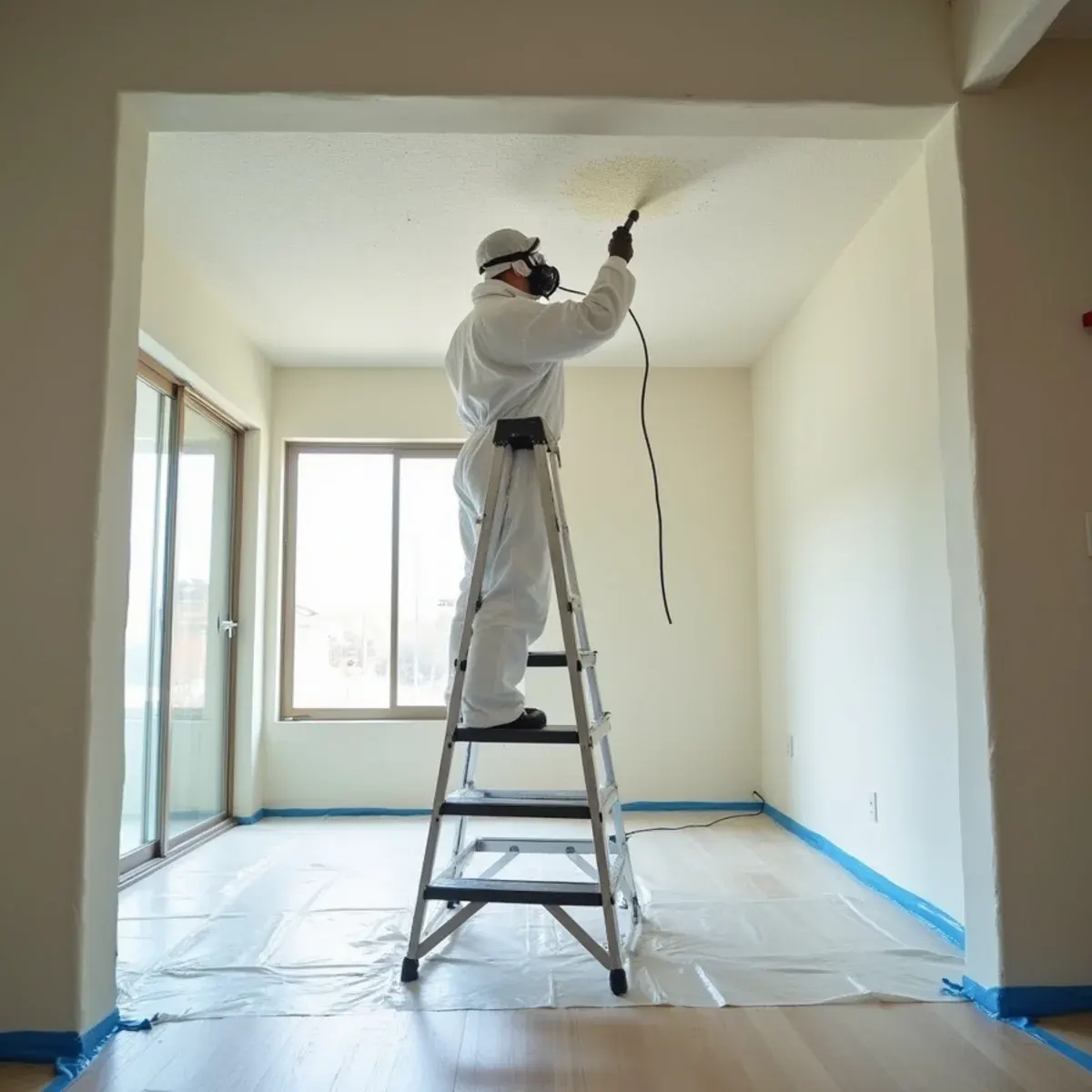
The call usually starts with rust-colored water or a pinhole spraying inside a wall. Norwalk still has a lot of original galvanized supply, scaled shut from the inside after seventy years, and once one section lets go the rest is on the same clock. The repair is not a patch. It is a repipe, and a repipe means cutting drywall in every room with a fixture. That is the moment asbestos and lead stop being paperwork and start being the thing that decides how the job runs.
Norwalk filled in between 1945 and 1960, farmland to finished city in about fifteen years. That puts the housing stock squarely inside both the asbestos and the lead paint windows, and the oldest blocks carry the highest lead content in the original paint. Lots are small and houses sit close, which matters more than people expect: containment, negative air exhaust and worker decontamination all have to fit in a side yard that may be six feet wide, sometimes with a neighbor's bedroom window on the far side of it.
What Norwalk Changes About Asbestos & Lead Testing
1Repiping is what triggers the testing
Cutting drywall releases whatever is in the joint compound and the texture. On a whole-house repipe that is dozens of openings in one day. We sample the compound, the ceiling texture and any flooring in the trench path before the first cut, so the plumber knows on day one whether he is working under normal conditions or under containment.
2Small lots complicate containment setup
There is very little permeable ground between the street and the house here, and almost no side yard. Where a sample comes back positive, the abatement crew has to stage decontamination and negative-air discharge without pushing exhaust at the house next door. We plan that before the equipment arrives, and on the tightest lots it changes the sequence of rooms.
3Pre-1950 blocks carry heavier lead
Paint made in the 1940s generally carried more lead than paint made in the 1960s, and Norwalk's earliest postwar blocks fall on the wrong side of that. Window sashes and door jambs, the friction surfaces, are where the dust comes from. If we are already opening walls for pipe, testing the trim in the same visit costs little and settles the question for the whole repair.
How the Work Runs
The method is the same one we use on every asbestos & lead testing job, documented to the IICRC S500:2025 standard. Here it is in short — the full asbestos & lead paint testing process explains each stage in detail.
- Emergency stabilization without cutting
- Define exactly what gets disturbed
- A certified inspector takes the samples
- Independent laboratory analysis
- Lead assessment on painted surfaces
- Abatement, clearance, then restoration
The Norwalk Background Worth Knowing
The homes built in Norwalk during the postwar surge were built to be affordable and built fast, which was exactly the right priority at the time. Seventy years later, some of those choices have consequences.
There is more on the housing stock, drainage and plumbing history of this city on our water damage restoration in Norwalk page.
Norwalk at a glance
- Dominant construction era
- 1945–1960
- Foundation type
- slab on grade
- Supply piping found here
- original galvanized steel
- Drain line materials
- cast iron
- Terrain and water table
- flat, moderate water table
- Most common local failure
- original galvanized supply lines failing after decades of internal scaling and erosion at fittings
- Highest-value local prevention
- clearing yard and area drains before the season, since small lots leave little ground between the street and the house
What It Costs in Norwalk
We do not quote a number over the phone before seeing the property — anyone who does is guessing. The variables that actually move the price on a asbestos & lead testing job are the number of distinct materials, how many samples each needs, how fast you need results, and they are broken down in full on the asbestos & lead paint testing page. The assessment and the written estimate are free anywhere in Norwalk, day or night, with no obligation.
Asbestos & Lead Testing Questions from Norwalk Homeowners
He can, if he treats every material he cuts as positive and works to the stricter standard — which most repipe crews will not do. In Norwalk, where the house is almost certainly pre-1978, the honest options are test or presume. Testing takes a sampling visit and independent lab time. It usually clears the joint compound, and where it does not, you find out before there is dust in every room.
No, and that's the whole point of testing. Plenty of ceilings from that decade come back clean — the manufacturers were mixed, the formulas changed year to year, and two houses on the same street can give different results. What we can't do is assume either way. A 1974 ceiling is a suspect material, which means one sample and a lab report separates a routine repair from a regulated one. Guessing in either direction is the expensive choice.
Usually less than people fear, and we design around it. Extraction, containment and dehumidification all start on the first visit, because none of that disturbs a suspect material. Sampling happens the same day where we can get an inspector out, and rush lab analysis is available when the clock matters. What genuinely adds time is a positive result, since abatement, containment and clearance testing have to finish before we cut. We'll give you a realistic date rather than an optimistic one.
If it is original galvanized from the postwar build-out, it has exceeded any reasonable service life. If you have had one failure, a second is a matter of when. The cheapest moment to repipe is while walls are already open for a repair — the demolition and patching are already in the scope.