
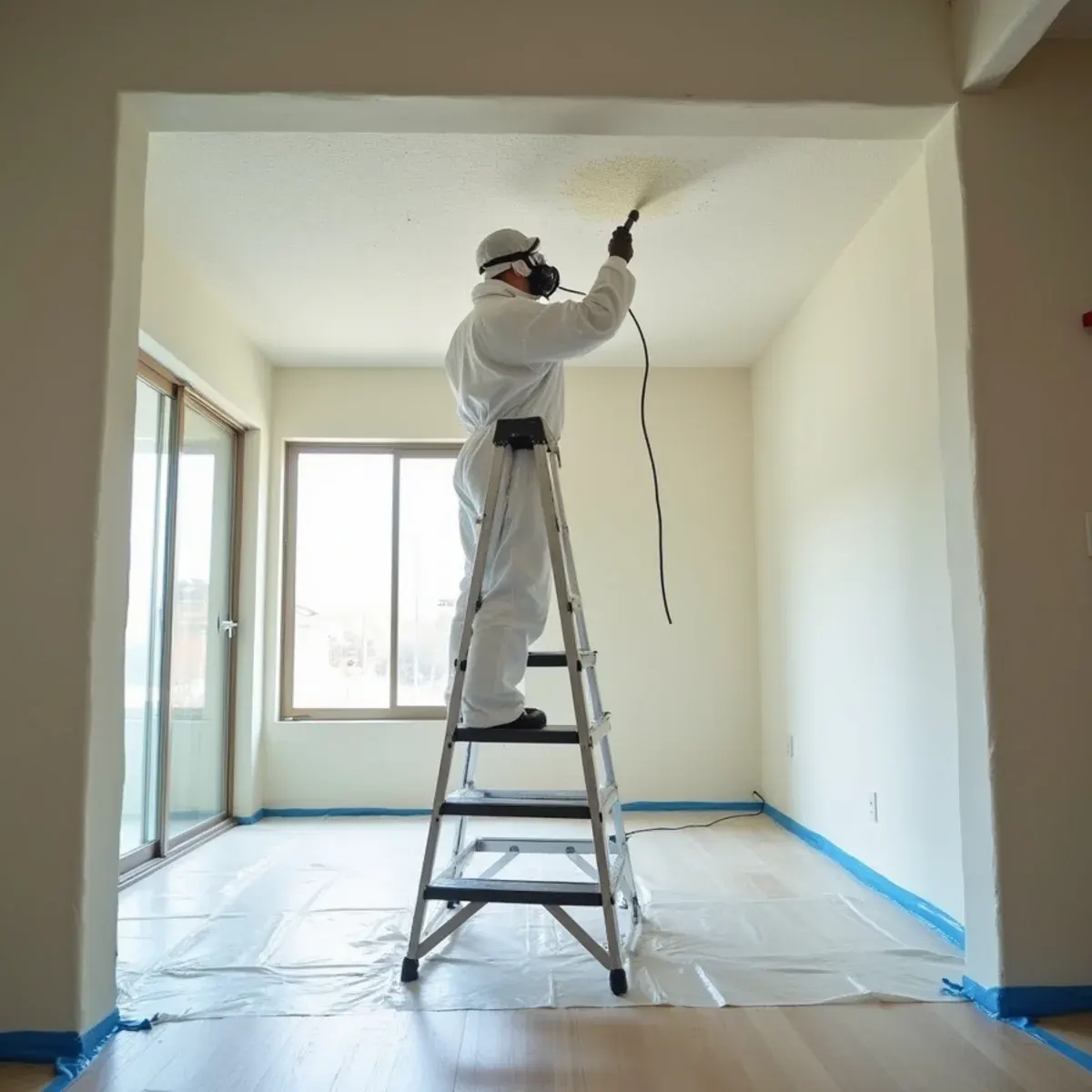
Anaheim is really three testing problems wearing one city name. In the Colony District the houses are lath-and-plaster with original wood windows, and the lead question is live on every sash, casing and porch rail, alongside asbestos in later skim and patch coats. Across the vast West Anaheim postwar tract it is the standard postwar list: ceiling texture, joint compound, resilient floor tile and the black adhesive under it. Up in Anaheim Hills the tracts largely postdate lead paint entirely, which narrows the survey to the asbestos side and usually to the ceiling.
What sends us into Colony District homes is the plaster. Plaster holds several times the water drywall does and gives it up far more slowly, so a loss that would have meant one cut-out in a newer house often ends in plaster removal here. That removal is the disturbance event, and it wants an answer beforehand. In the Resort District the work is hotel and hospitality, occupied buildings with guests on the floor, where sampling, containment and clearance have to fit around a room block that cannot all go dark at once.
What Anaheim Changes About Asbestos & Lead Testing
1Colony District windows carry the lead risk
Original double-hung sashes in the Colony District have friction surfaces that grind paint into dust every time the window moves, and sills within reach of small children. Scraping or sanding them during a repair is the highest-exposure activity in an old Anaheim house. Testing the paint film first decides whether the window gets stabilized in place or comes out to be handled properly.
2Plaster removal is the disturbance moment
Wet plaster comes off the lath in sheets, and the crew doing it is generating dust from the base coat, the finish coat, whatever skim was added later and every layer of paint on top. Those are separate materials and they get sampled separately. Doing this after a soaking is normal in Anaheim, which is why we sample during the dry-out rather than waiting for demolition day.
3Anaheim Hills usually needs less than you think
The hillside tracts were built after lead-based paint left the market, so unless there is an older structure on the property the lead side is often a short conversation. Asbestos in ceiling texture and joint compound persisted into the early 1980s, so the earlier hillside homes still need that answered. We would rather narrow the scope honestly than sell you a survey line you do not need.
How the Work Runs
The method is the same one we use on every asbestos & lead testing job, documented to the IICRC S500:2025 standard. Here it is in short — the full asbestos & lead paint testing process explains each stage in detail.
- Emergency stabilization without cutting
- Define exactly what gets disturbed
- A certified inspector takes the samples
- Independent laboratory analysis
- Lead assessment on painted surfaces
- Abatement, clearance, then restoration
The Anaheim Background Worth Knowing
The Anaheim Colony Historic District and the older streets around downtown contain homes built from the early 1900s through the 1930s, and they are constructed differently in ways that matter enormously during a water loss.
There is more on the housing stock, drainage and plumbing history of this city on our water damage restoration in Anaheim page.
Anaheim at a glance
- Dominant construction era
- 1900–2000
- Foundation type
- mixed on grade
- Supply piping found here
- galvanized steel, under-slab copper, original early-century piping in the Colony
- Drain line materials
- cast iron, clay
- Terrain and water table
- hillside-mixed, moderate water table
- Most common local failure
- lath-and-plaster assemblies that hold several times the water drywall does and release it far more slowly
- Highest-value local prevention
- acting immediately on any plaster-wall loss, because wet plaster keys soften and release from the lath
What It Costs in Anaheim
We do not quote a number over the phone before seeing the property — anyone who does is guessing. The variables that actually move the price on a asbestos & lead testing job are the number of distinct materials, how many samples each needs, how fast you need results, and they are broken down in full on the asbestos & lead paint testing page. The assessment and the written estimate are free anywhere in Anaheim, day or night, with no obligation.
Asbestos & Lead Testing Questions from Anaheim Homeowners
For lead, almost certainly, since the house postdates it. For asbestos it is a closer call than people expect, because joint compound and ceiling texture containing asbestos were still going up in the early 1980s and leftover stock got used after that. One or two samples settles it before anyone cuts. If it comes back clean the repair proceeds the same day with no extra handling, and you have documentation on file for the next time something opens.
No, and that's the whole point of testing. Plenty of ceilings from that decade come back clean — the manufacturers were mixed, the formulas changed year to year, and two houses on the same street can give different results. What we can't do is assume either way. A 1974 ceiling is a suspect material, which means one sample and a lab report separates a routine repair from a regulated one. Guessing in either direction is the expensive choice.
Usually less than people fear, and we design around it. Extraction, containment and dehumidification all start on the first visit, because none of that disturbs a suspect material. Sampling happens the same day where we can get an inspector out, and rush lab analysis is available when the clock matters. What genuinely adds time is a positive result, since abatement, containment and clearance testing have to finish before we cut. We'll give you a realistic date rather than an optimistic one.
Yes, and we approach them differently. Lath and plaster holds much more water than drywall and dries far more slowly, so it needs more equipment and considerably more patience — but it can usually be saved in place, and original plaster is not something a repair can replace.