
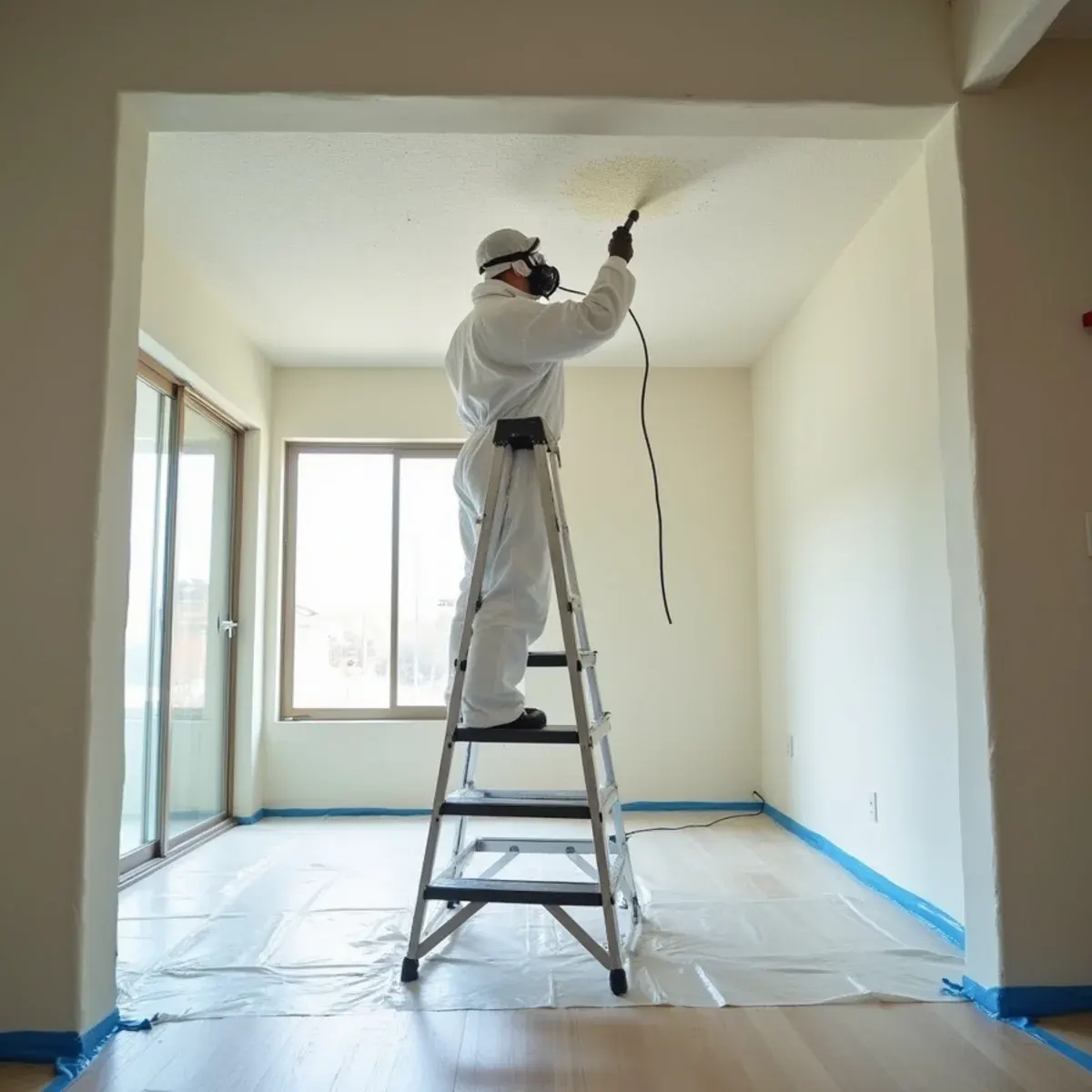
Straight talk about fit: if you picture asbestos testing as a certified inspector on a ladder scraping popcorn ceiling, that is only half the job in Stanton. A large share of this city's housing is manufactured and mobile homes, and coaches from the 1960s and 70s were not built from the same catalog. The materials worth sampling in a coach are the sheet vinyl flooring and its backing, the furnace and duct components, the flue, and some interior panel products. Interior walls are often vinyl-covered gypsum panel rather than painted drywall, which changes the lead conversation considerably.
The failure that brings us out is usually the underfloor one. Water gets into the belly wrap under the particleboard decking and sits there for months with nothing showing above. By the time the floor goes soft, repairing it means opening the belly, pulling saturated insulation and decking, and working right next to duct runs and furnace connections. That is disturbance, and it is why the sampling happens before the belly opens. Stanton's older apartment buildings from the same era get the conventional survey, ceilings, compound and floor tile.
What Stanton Changes About Asbestos & Lead Testing
1A coach needs a coach-specific scope
Sampling a manufactured home the way you would sample a tract house misses the point. There may be no popcorn texture at all, and the materials that matter are underfoot and inside the mechanical chase. Sheet flooring backing, duct connectors, furnace components and exterior board products are where findings turn up. We scope from what the home actually contains, not from a residential checklist.
2Belly-wrap repairs disturb insulation and duct
Opening the belly to dry a long-standing underfloor leak puts hands directly on insulation and on the duct running through it. In an older coach that is the single most likely place to disturb something without meaning to. Getting samples back before the wrap comes open means the crew knows what they are opening into, and the repair is not stopped halfway with the floor already off.
3Dense lots leave nowhere to stage
Stanton is a tight city, and in a mobile home park there is no side yard to put a decontamination unit or a waste staging area. Containment and negative air exhaust get sited off the carport or the coach entry, and access routes get agreed with park management before the first day. Planning that in advance is the difference between a two-day job and a week of interruptions.
How the Work Runs
The method is the same one we use on every asbestos & lead testing job, documented to the IICRC S500:2025 standard. Here it is in short — the full asbestos & lead paint testing process explains each stage in detail.
- Emergency stabilization without cutting
- Define exactly what gets disturbed
- A certified inspector takes the samples
- Independent laboratory analysis
- Lead assessment on painted surfaces
- Abatement, clearance, then restoration
The Stanton Background Worth Knowing
Mobile and manufactured homes need a genuinely different restoration approach, and the reason is what they are built from. The floor system is typically particleboard or OSB over a wood frame with insulation and a vapor barrier belly wrap underneath — and particleboard exposed to water swells, loses structural integrity, and does not recover. It cannot be dried back to serviceable the way plywood often can.
There is more on the housing stock, drainage and plumbing history of this city on our water damage restoration in Stanton page.
Stanton at a glance
- Dominant construction era
- 1950–1975
- Foundation type
- mixed on grade
- Supply piping found here
- galvanized steel, copper, manufactured-home PEX and poly
- Drain line materials
- cast iron
- Terrain and water table
- flat, moderate water table
- Most common local failure
- underfloor leaks in manufactured homes, sealed inside the belly wrap where they cannot evaporate
- Highest-value local prevention
- checking for soft spots underfoot, because a manufactured-home floor gives no other warning
What It Costs in Stanton
We do not quote a number over the phone before seeing the property — anyone who does is guessing. The variables that actually move the price on a asbestos & lead testing job are the number of distinct materials, how many samples each needs, how fast you need results, and they are broken down in full on the asbestos & lead paint testing page. The assessment and the written estimate are free anywhere in Stanton, day or night, with no obligation.
Asbestos & Lead Testing Questions from Stanton Homeowners
It should be checked, yes. In a coach that age the sheet vinyl and its backing are the usual finding, and a soft-floor repair means cutting through exactly that layer, then opening the belly wrap where insulation and duct sit. Sampling takes very little time and the lab does the rest. If the results are clean, the floor repair is straightforward. If not, that material gets removed properly before the new decking goes down.
No, and that's the whole point of testing. Plenty of ceilings from that decade come back clean — the manufacturers were mixed, the formulas changed year to year, and two houses on the same street can give different results. What we can't do is assume either way. A 1974 ceiling is a suspect material, which means one sample and a lab report separates a routine repair from a regulated one. Guessing in either direction is the expensive choice.
Usually less than people fear, and we design around it. Extraction, containment and dehumidification all start on the first visit, because none of that disturbs a suspect material. Sampling happens the same day where we can get an inspector out, and rush lab analysis is available when the clock matters. What genuinely adds time is a positive result, since abatement, containment and clearance testing have to finish before we cut. We'll give you a realistic date rather than an optimistic one.
Yes, and we say so explicitly because a lot of companies will not. Manufactured homes need a different approach — opening the belly wrap to dry the floor cavity, removing saturated insulation, and honestly assessing particleboard decking, which usually cannot be dried back to serviceable.