
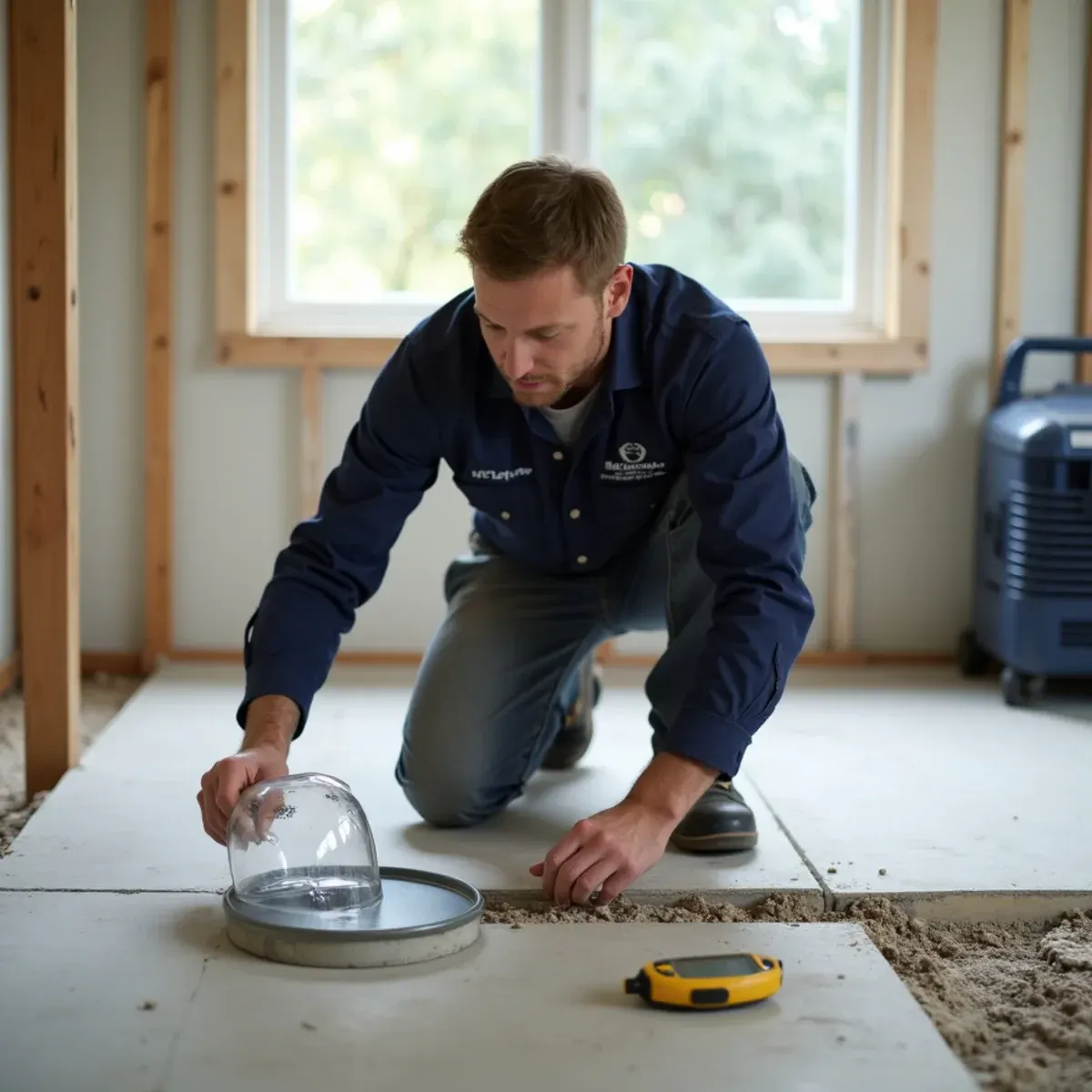
Fountain Valley has the most distinctive ground conditions of anywhere we serve, and it is written into the city's history. The area was known as Gospel Swamp before it was developed — genuinely marshy, low-lying land that had to be drained and filled before the tract housing of the 1960s and 1970s could go in.
That history is still under the houses. Fountain Valley's water table is among the shallowest in Orange County, which is precisely why the city's name is what it is. In practical restoration terms it means slabs here carry more baseline moisture than almost anywhere else in the county, and it means the ground reaches saturation faster during a storm.
None of that is a problem for a well-built, well-drained home most of the time. It matters when there is a loss — because a slab that already sits at elevated moisture takes longer to dry to standard, and because flooring installed over an untested slab here is far more likely to fail than the same installation inland.
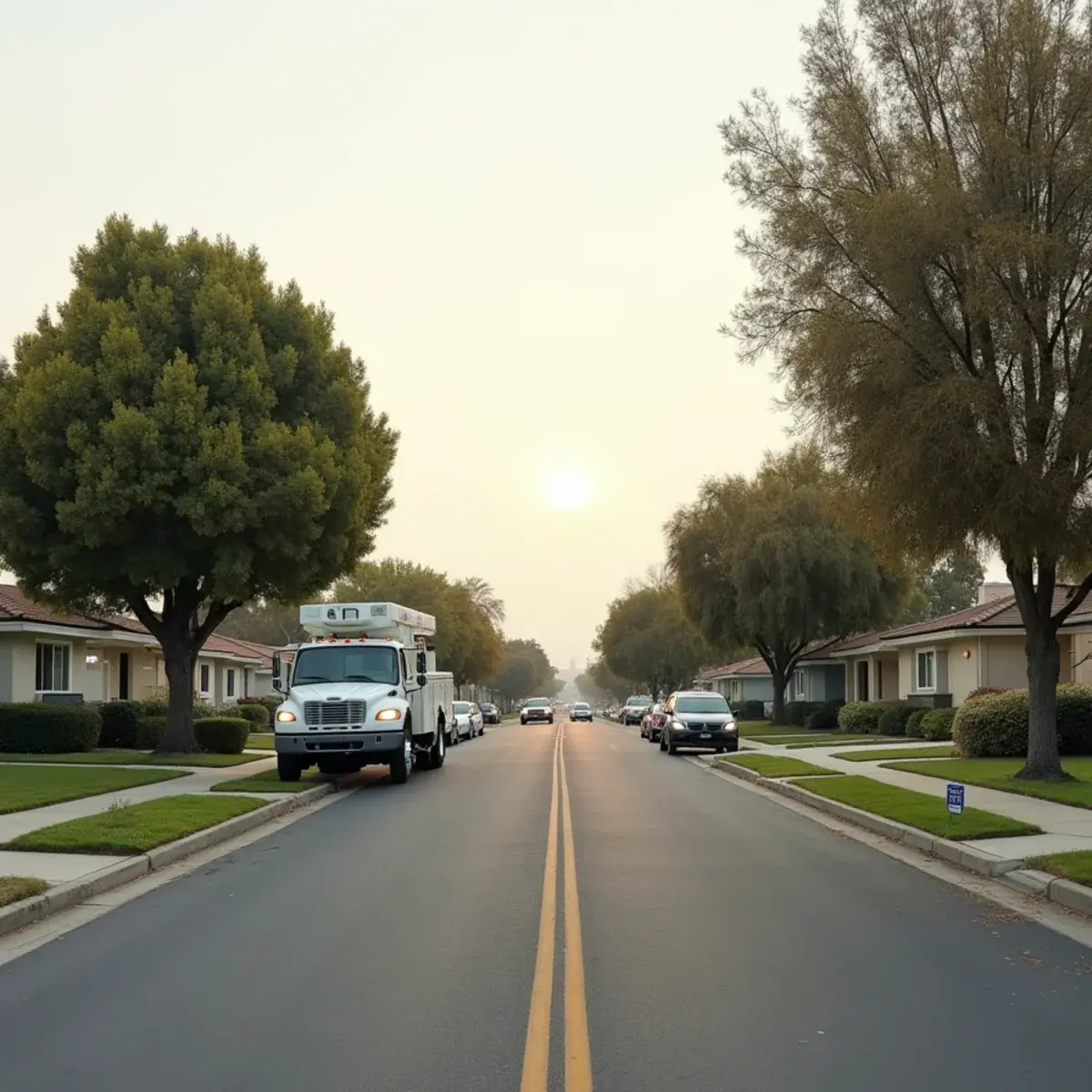
The Shallowest Water Table in the County
Groundwater beneath Fountain Valley sits close enough to the surface that moisture vapor migration up through concrete slabs is a routine background condition rather than an anomaly. Homeowners here regularly describe a slab that feels cool and damp, or a closet on an exterior wall that never quite feels dry, without any leak at all.
The single most important consequence is for flooring. Vinyl, engineered wood, sheet goods, and adhesive-set products all specify a maximum slab moisture condition, and in Fountain Valley that specification is frequently exceeded without testing. Installing over a slab that is releasing vapor leads to adhesive failure, lifting planks, and trapped moisture underneath — which is a mold problem waiting on a timeline.
So when we reinstall flooring after a loss here, we test slab relative humidity with in-situ probes set into the concrete rather than relying on a surface reading. It adds a day or two of waiting. It also prevents the far more expensive outcome of a floor that fails eighteen months later, which nobody's insurance covers.
Storm Saturation and Mile Square Drainage
Because the water table is already high, Fountain Valley soil reaches saturation faster than higher-elevation areas during sustained rainfall. Once the ground stops accepting water, everything moves across the surface — and the city's very flat terrain means it moves slowly and ponds.
The regional drainage infrastructure and the large open expanse of Mile Square Park absorb a good deal, but the neighborhoods that get into trouble are the ones where local grading has changed over five decades. Added patios, raised planters, and settled hardscape all redirect water, and in a city this flat a two-inch grade change decides whether water leaves the property or pools against the house.
The seasonal maintenance list here is the highest-value hour a Fountain Valley homeowner can spend: clear the yard and area drains, which silt up completely over a dry summer; confirm downspouts discharge well away from the foundation; and stand outside during the first real rain to watch where water actually goes. In a city this flat the problem is almost always visible in ten minutes.
Neighborhoods and Landmarks We Cover in Fountain Valley
We work throughout Fountain Valley — every neighborhood, every street, residential and commercial. If your address is in the city, we cover it.
Neighborhoods & corridors
- Mile Square area
- Talbert Avenue corridor
- Brookhurst corridor
- Warner Avenue area
- Los Caballeros area
Landmarks nearby
- Mile Square Regional Park
- Fountain Valley Regional Hospital
- Fountain Valley Sports Park
- Talbert Nature Preserve
- Brookhurst Street corridor
Why Fountain Valley Residents Call Us First
Any restoration company can put Fountain Valley on a service-area list. What matters at 2 a.m. is how far the truck has to come and whether the crew has opened a wall in a house like yours before.
About 15 minutes southeast
We dispatch from 6122-6182 Katella Ave in Cypress — not from a regional depot and not from a call centre that sells your job to whoever bids for it. That is the whole reason the 60-minute commitment is one we can put in writing.
Slab vapor is mistaken for a leak here constantly
Dead-flat ground, a high water table and untested slabs produce moisture readings that look like plumbing failures and are not. We test before anyone opens concrete.
Blocked area drains pond water against the house
On ground this flat there is nowhere for it to go. Clearing them before the season prevents most of what we are called out for.
- 20+ years restoring Orange County homes
- IICRC Certified Firm
- Licensed, Bonded & Insured
- We bill your insurance company directly
- IICRC S500:2025 compliant on every job
- 100% satisfaction guarantee — in writing, on every job
Fountain Valley Water Damage Questions
The city sits on former wetland with one of the shallowest water tables in Orange County, so moisture vapor migrating up through slabs is a normal background condition here rather than a defect. It matters most when installing flooring over the slab, which is why we test with in-situ RH probes before anything goes back down.
Not necessarily — in Fountain Valley it is frequently slab vapor rather than a leak. Testing distinguishes them definitively: a leak produces a localized moisture pattern, while slab vapor produces an elevated reading across the whole floor. Our inspection is free either way.
The high water table means soil saturates quickly during sustained rain, and the very flat terrain means surface water ponds rather than draining away. Neighborhoods with settled hardscape or blocked area drains are the ones that get water against the house. Clearing drains before the season is the highest-value prevention here.
That is very likely slab vapor emission rather than a plumbing failure, and Fountain Valley produces more of these calls than anywhere else we serve. Dead-flat ground and a high water table push moisture up through concrete continuously, which reads as elevated moisture without a drop of water having escaped a pipe. Before anyone opens concrete, we run in-situ relative humidity testing to tell the two apart. Getting this wrong costs a slab you did not need to break.