
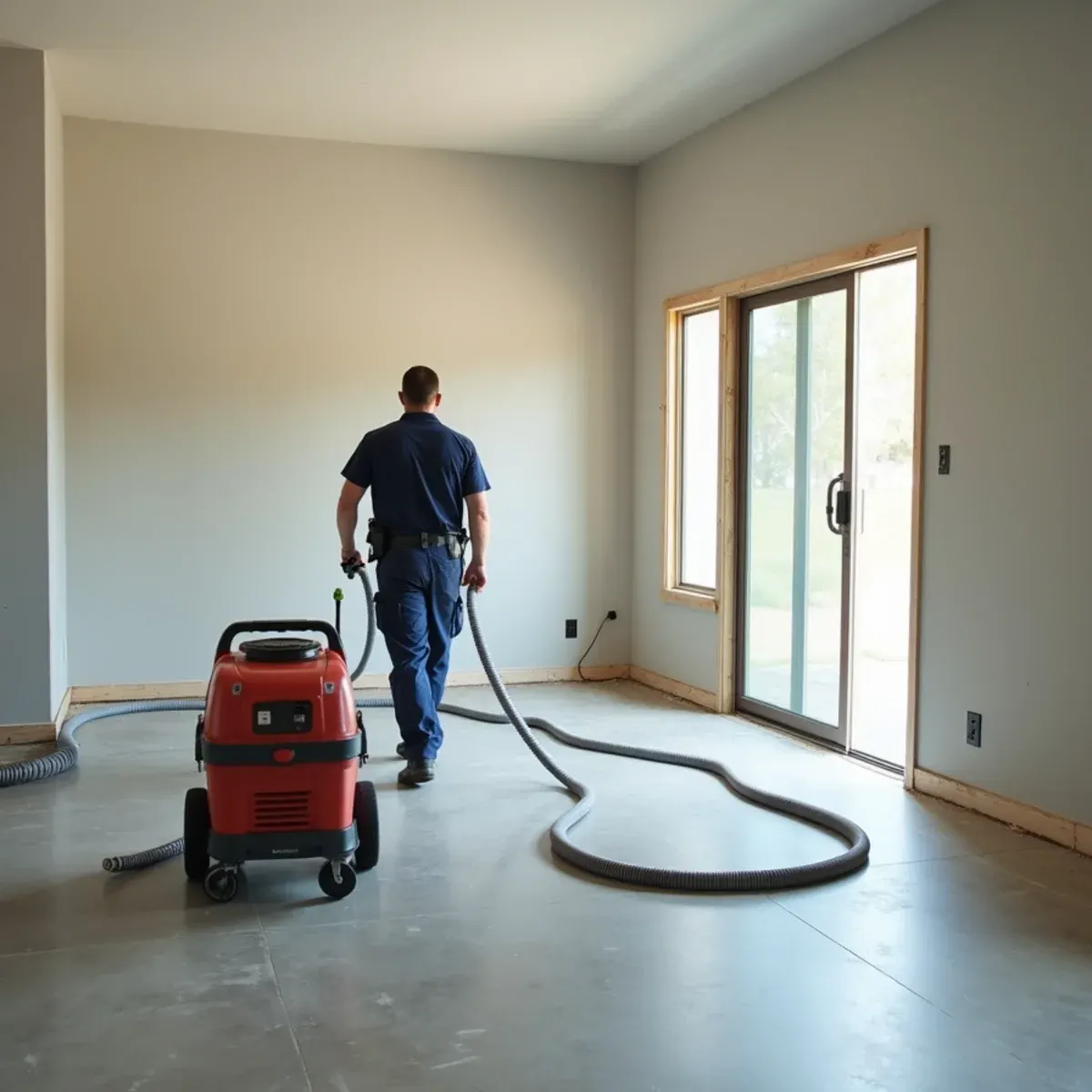
Homeowners here call us after the second or third deodorizing attempt. The carpet was cleaned, the room was fogged, the smell was gone for a week, and then it came back damp and sour on the first warm afternoon. Fountain Valley sits dead flat on ground that used to be called Gospel Swamp, and the water table under it is the shallowest in Orange County. Your slab is passing moisture vapor upward every day of the year. That is normal here. It also changes what odor work has to account for.
So we test before we treat. If a slab is emitting at a high rate, sealing the surface or running a hydroxyl generator buys you a few weeks and nothing more, because the residue in the pad, the adhesive and the bottom plate stays wet enough to keep feeding bacteria. We pull flooring where the numbers say to, dry the slab and the wall base, then deodorize what is left. Sometimes the honest answer is that the odor is a flooring assembly problem, not a residue problem, and we will say so.
What Fountain Valley Changes About Odor Removal
1Slab vapor keeps the odor alive
Vapor drive through a Fountain Valley slab is a background condition, not a defect. It means a floor assembly that got wet stays marginally damp underneath long after the visible water is gone. Microbial VOC odor comes back on warm days because the residue never fully dried. We take moisture readings at the slab, not just the carpet, before we call a room deodorized.
2Flat lots mean water sits
There is almost no fall across a Fountain Valley lot. Yard water, irrigation overflow and street runoff pond against the stem wall instead of draining away, and that wet perimeter soil keeps the bottom of the wall cavity humid. Odor along an exterior wall base often traces to grade, not plumbing. Fixing the smell inside without addressing the outside grade just resets the clock.
3Attic ducts pull the smell around
Most 1960s and 1970s houses here are single story with the air handler and ducts in the attic. Once a musty room has run its system for a few days, the odor is in the duct interior and the return, and it reappears in rooms that never got wet. We check ducts before treating air, because deodorizing a house while the ductwork keeps reseeding it is wasted work.
How the Work Runs
The method is the same one we use on every odor removal job, documented to the IICRC S500:2025 standard. Here it is in short — the full odor removal & deodorization process explains each stage in detail.
- Locate the residue
- Remove what holds it
- Clean the surfaces that stay
- Filter the air while we work
- Seal only what cannot be cleaned
- Treat the air, then verify
The Fountain Valley Background Worth Knowing
Groundwater beneath Fountain Valley sits close enough to the surface that moisture vapor migration up through concrete slabs is a routine background condition rather than an anomaly. Homeowners here regularly describe a slab that feels cool and damp, or a closet on an exterior wall that never quite feels dry, without any leak at all.
There is more on the housing stock, drainage and plumbing history of this city on our water damage restoration in Fountain Valley page.
Fountain Valley at a glance
- Dominant construction era
- 1960–1980
- Foundation type
- slab on grade
- Supply piping found here
- under-slab copper
- Drain line materials
- cast iron
- Terrain and water table
- flat, shallow water table
- Most common local failure
- slab vapor emission mistaken for a leak, and flooring failures caused by installing over an untested slab
- Highest-value local prevention
- clearing the yard and area drains before the season, because a blocked drain on dead-flat ground ponds water against the house
What It Costs in Fountain Valley
We do not quote a number over the phone before seeing the property — anyone who does is guessing. The variables that actually move the price on a odor removal job are how much material comes out, where the residue ended up, the type of odor involved, and they are broken down in full on the odor removal & deodorization page. The assessment and the written estimate are free anywhere in Fountain Valley, day or night, with no obligation.
Odor Removal Questions from Fountain Valley Homeowners
Because the carpet was rarely the whole source. Under it, the pad crumbs, adhesive residue and the bottom few inches of drywall and framing hold the material that produces the smell, and a Fountain Valley slab keeps that zone damp enough for it to stay active. New carpet over an untreated slab smells fine for a few weeks, then sours again. We check slab moisture, remove residue at the base of the wall, and treat air last.
It may mask it for a few weeks. Rental units are usually undersized for a whole structure, and they treat air rather than the material producing the odor. They also should not run with anyone home, and long heavy cycles can degrade rubber seals, leather, and paint sheen. If the residue sits in a wall cavity or under the flooring, no amount of ozone reaches it.
Because residue was left somewhere. That is the answer nearly every time. The usual spots are attic insulation, the inside of flex duct, the wall cavity behind drywall that was replaced but never cleaned, the subfloor under new flooring, and the back of a cabinet run. Drying a structure to standard does not remove residue, so a job dried correctly can still smell if cleaning stopped at visible surfaces.
The city sits on former wetland with one of the shallowest water tables in Orange County, so moisture vapor migrating up through slabs is a normal background condition here rather than a defect. It matters most when installing flooring over the slab, which is why we test with in-situ RH probes before anything goes back down.