
The city is named for the reason it floods. This was Gospel Swamp — wetland drained and filled before the 1960s and 1970s tracts went in — and the water table underneath is among the shallowest in Orange County. Combine that with ground so flat that runoff has no direction to take, and storm water does not run off a Fountain Valley property so much as sit on it. Once it ponds against the house, it takes very little time to find a door threshold, a slider track, or the low corner of the garage.
That history also complicates the question every adjuster asks first: where did the water come from. Slabs here emit vapor as a background condition, not an anomaly, so a damp floor near Mile Square Park might be a flood, a failed under-slab line, or concrete doing exactly what concrete over a shallow table always does. We test instead of assuming — in-situ slab relative humidity, moisture mapping, and a hard look at whether the yard and area drains were carrying anything at all when this started.
What Fountain Valley Changes About Flood Cleanup
1Dead-flat ground ponds against the house
There is no slope to help you here. A single blocked area drain or a planter that has settled toward the foundation turns an ordinary storm into standing water at the wall. Clearing yard and area drains before the season does more for a Fountain Valley home than any interior measure. After a loss we walk the exterior with you and show you where water actually stood, using the debris line rather than guesswork.
2Vapor emission versus a real intrusion
A wet slab in this city is not automatically a flood. High-emission slabs are routine over a shallow table, and flooring here fails regularly because it went down over concrete nobody tested. In-situ relative humidity probes tell us what the slab is genuinely doing, which decides whether you are looking at a claim, a drainage repair, or a flooring specification problem.
3Drying goals set against a wet baseline
IICRC S500:2025 sets the drying goal by comparison with unaffected material in the same building, and in Fountain Valley that baseline is wetter than most published numbers. This is not a shortcut, it is the correct standard, and it keeps equipment from running extra days chasing a target this ground will never permit. We show you the comparison readings so the stopping point is not just our word.
How the Work Runs
The method is the same one we use on every flood cleanup job, documented to the IICRC S500:2025 standard. Here it is in short — the full flood damage cleanup process explains each stage in detail.
- Safety assessment and utility check
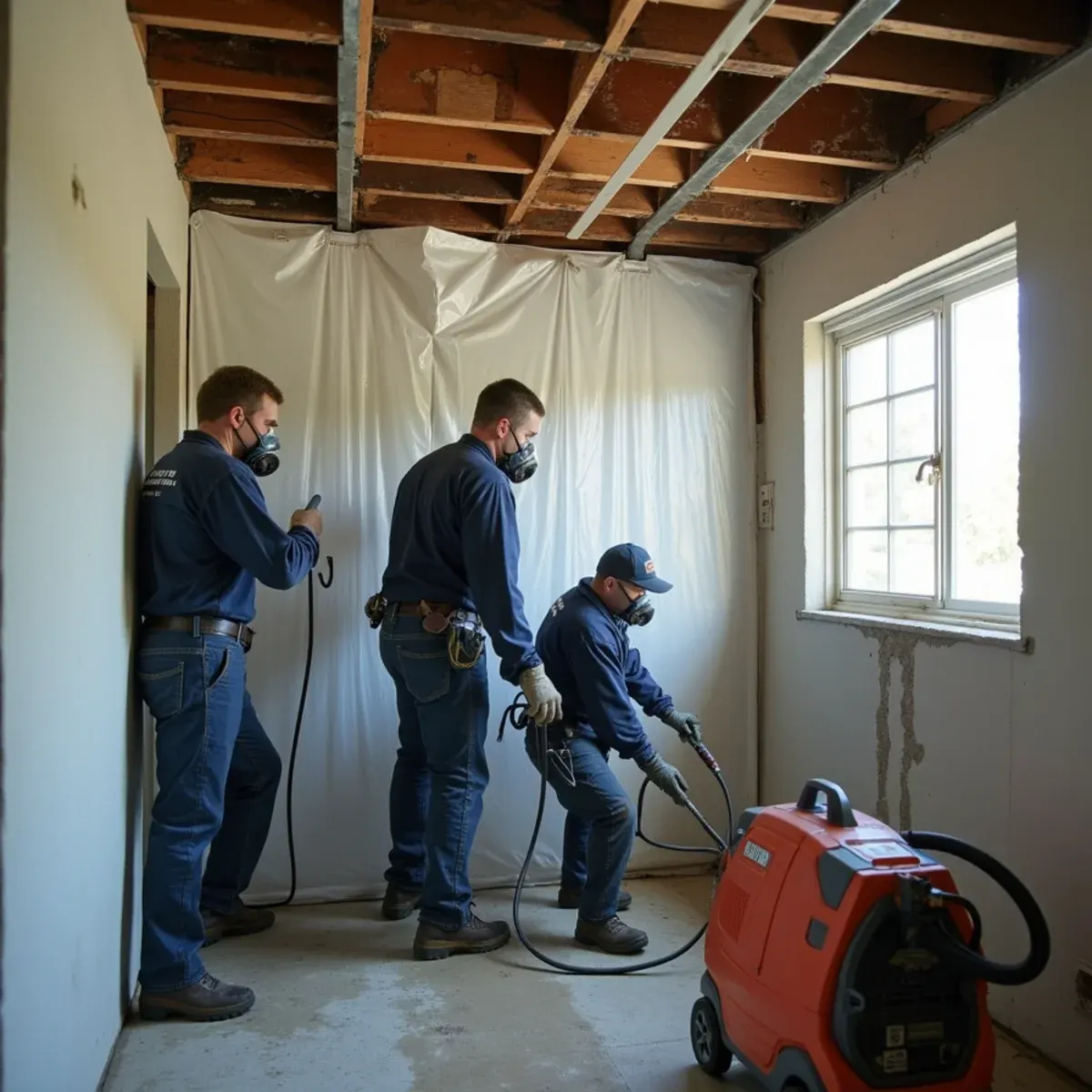
- Containment and negative air
- Documentation and contents triage
- Extraction and controlled demolition
- Cleaning and disinfection
- Structural drying and clearance
The Fountain Valley Background Worth Knowing
Groundwater beneath Fountain Valley sits close enough to the surface that moisture vapor migration up through concrete slabs is a routine background condition rather than an anomaly. Homeowners here regularly describe a slab that feels cool and damp, or a closet on an exterior wall that never quite feels dry, without any leak at all.
There is more on the housing stock, drainage and plumbing history of this city on our water damage restoration in Fountain Valley page.
Fountain Valley at a glance
- Dominant construction era
- 1960–1980
- Foundation type
- slab on grade
- Supply piping found here
- under-slab copper
- Drain line materials
- cast iron
- Terrain and water table
- flat, shallow water table
- Most common local failure
- slab vapor emission mistaken for a leak, and flooring failures caused by installing over an untested slab
- Highest-value local prevention
- clearing the yard and area drains before the season, because a blocked drain on dead-flat ground ponds water against the house
What It Costs in Fountain Valley
We do not quote a number over the phone before seeing the property — anyone who does is guessing. The variables that actually move the price on a flood cleanup job are how high the water reached, how long it sat before extraction, contents volume in the flooded area, and they are broken down in full on the flood damage cleanup page. The assessment and the written estimate are free anywhere in Fountain Valley, day or night, with no obligation.
Flood Cleanup Questions from Fountain Valley Homeowners
It is ground-source water, so the cleanup is Category 3 either way. Coverage is the harder part: standard homeowners policies exclude surface water, and whether a failed drainage system on your own property changes that depends on the policy language and the carrier. What we can do is establish the sequence — drain condition, ponding depth, entry point, interior spread — and document it properly, since these determinations turn on evidence collected in the first day.
Yes. Water that crossed soil, pavement, or a storm drain is Category 3 by IICRC classification regardless of appearance — it carries bacteria, fuel and oil residue, lawn chemicals, and whatever else was on the ground. Do not walk through it in open shoes, and keep children and pets out of the area entirely.
If the water came from outside across the ground, almost certainly not — that requires separate flood insurance. If it came from a failed water heater, a burst pipe, or a supply line inside the garage, it is usually covered. We document the source carefully because that distinction determines everything.
The city sits on former wetland with one of the shallowest water tables in Orange County, so moisture vapor migrating up through slabs is a normal background condition here rather than a defect. It matters most when installing flooring over the slab, which is why we test with in-situ RH probes before anything goes back down.