
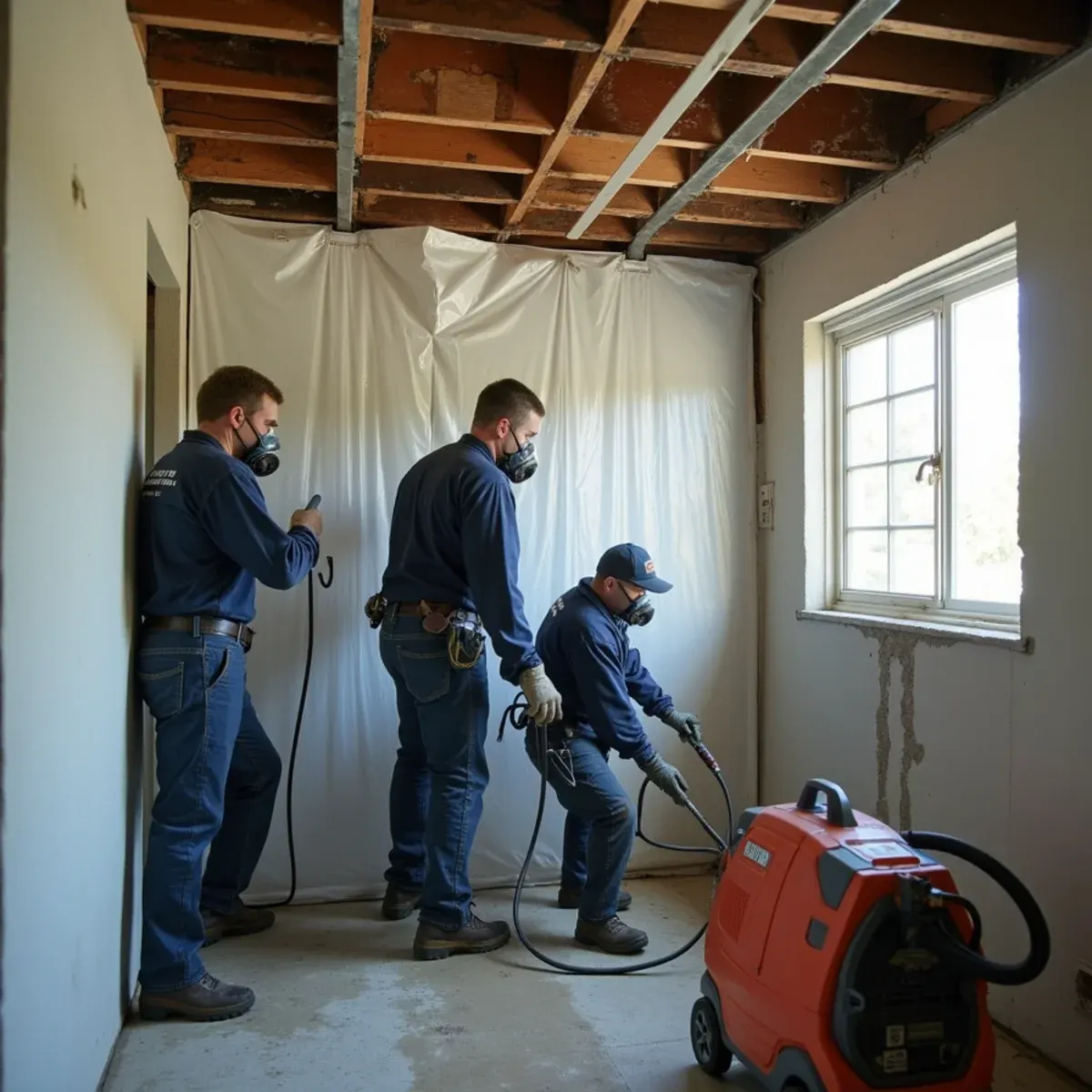
Six inches of street water in a Bolsa Avenue kitchen at four in the morning, and the owner's first question is when they can serve again. That is the Westminster flood job. Little Saigon holds one of the densest concentrations of independent restaurants in Southern California, almost all of it in older buildings with floor sinks, wood-framed prep counters and walk-in coolers sitting directly on the slab. Contaminated ground water in a food-service space means porous material leaves the building, everything gets disinfected, and the health inspection becomes part of the timeline.
Then there is what sits under all of it. Westminster is low and flat near the Bolsa Chica channel with one of the shallower water tables in the county, so slabs here carry more baseline moisture than slabs a few miles inland. After a flood, that concrete will not dry down to the numbers an inland job reaches, and pushing for them just burns days of equipment rental. We measure an unaffected area of the same building, set the drying goal against it, and test slab relative humidity in place before any new flooring goes down.
What Westminster Changes About Flood Cleanup
1Reopening a Little Saigon kitchen
Food-service restoration has a second authority involved. Beyond drying, everything porous that touched the water goes — gaskets, wood shelving, insulation inside the walk-in curb, open packaging, damaged FRP seams — and surfaces are cleaned and disinfected in a documented sequence. We write the cleanup so the record can be handed to an inspector, because reopenings usually stall on documentation rather than on the actual condition of the room.
2A shallow table changes drying targets
Slabs sitting close to groundwater keep releasing vapor no matter how much dehumidification goes into the room. Chasing an arbitrary number here just runs equipment extra days on your bill. IICRC S500:2025 sets the drying goal against a comparable unaffected area, which in Westminster is usually wetter than the textbook figure, and that is the honest standard to dry to.
3Older buildings and tenant improvements
Much of the Bolsa corridor is 1960s and 1970s commercial where the tenant paid for the buildout. When floodwater takes out flooring, base cabinetry and the lower walls, the landlord's policy and the tenant's policy each cover a different slice, and neither covers ground water without flood coverage. We scope and document tenant improvements separately from the shell so the split is clear on day one.
How the Work Runs
The method is the same one we use on every flood cleanup job, documented to the IICRC S500:2025 standard. Here it is in short — the full flood damage cleanup process explains each stage in detail.
- Safety assessment and utility check
- Containment and negative air
- Documentation and contents triage
- Extraction and controlled demolition
- Cleaning and disinfection
- Structural drying and clearance
The Westminster Background Worth Knowing
Westminster's shallow groundwater means many slabs here carry a higher baseline moisture load than slabs a few miles inland. In an undamaged home with breathable flooring that is usually a non-issue. It becomes an issue in two situations.
There is more on the housing stock, drainage and plumbing history of this city on our water damage restoration in Westminster page.
Westminster at a glance
- Dominant construction era
- 1950–1970
- Foundation type
- slab on grade
- Supply piping found here
- under-slab copper, galvanized steel
- Drain line materials
- cast iron
- Terrain and water table
- coastal-flat, shallow water table
- Most common local failure
- flooring installed over a slab that was never tested and is still releasing vapor
- Highest-value local prevention
- in-situ slab relative humidity testing before any new floor goes down
What It Costs in Westminster
We do not quote a number over the phone before seeing the property — anyone who does is guessing. The variables that actually move the price on a flood cleanup job are how high the water reached, how long it sat before extraction, contents volume in the flooded area, and they are broken down in full on the flood damage cleanup page. The assessment and the written estimate are free anywhere in Westminster, day or night, with no obligation.
Flood Cleanup Questions from Westminster Homeowners
Honestly, it depends on how much porous material has to come out and how quickly the health inspection can be scheduled — not on drying speed alone. Once removal and disinfection are done we can usually dry the structure while you handle inspection and equipment servicing in parallel. What kills timelines is discovering wet material behind base cabinetry a week in, so we open the suspect assemblies on the first day and price from what is actually there.
Yes. Water that crossed soil, pavement, or a storm drain is Category 3 by IICRC classification regardless of appearance — it carries bacteria, fuel and oil residue, lawn chemicals, and whatever else was on the ground. Do not walk through it in open shoes, and keep children and pets out of the area entirely.
If the water came from outside across the ground, almost certainly not — that requires separate flood insurance. If it came from a failed water heater, a burst pipe, or a supply line inside the garage, it is usually covered. We document the source carefully because that distinction determines everything.
Westminster has a shallow water table, so slabs here carry more baseline moisture than slabs further inland. Normally that is harmless, but it matters when installing flooring over the slab and it means drying after a loss takes longer. We test with in-situ relative humidity probes before any new floor goes down.