
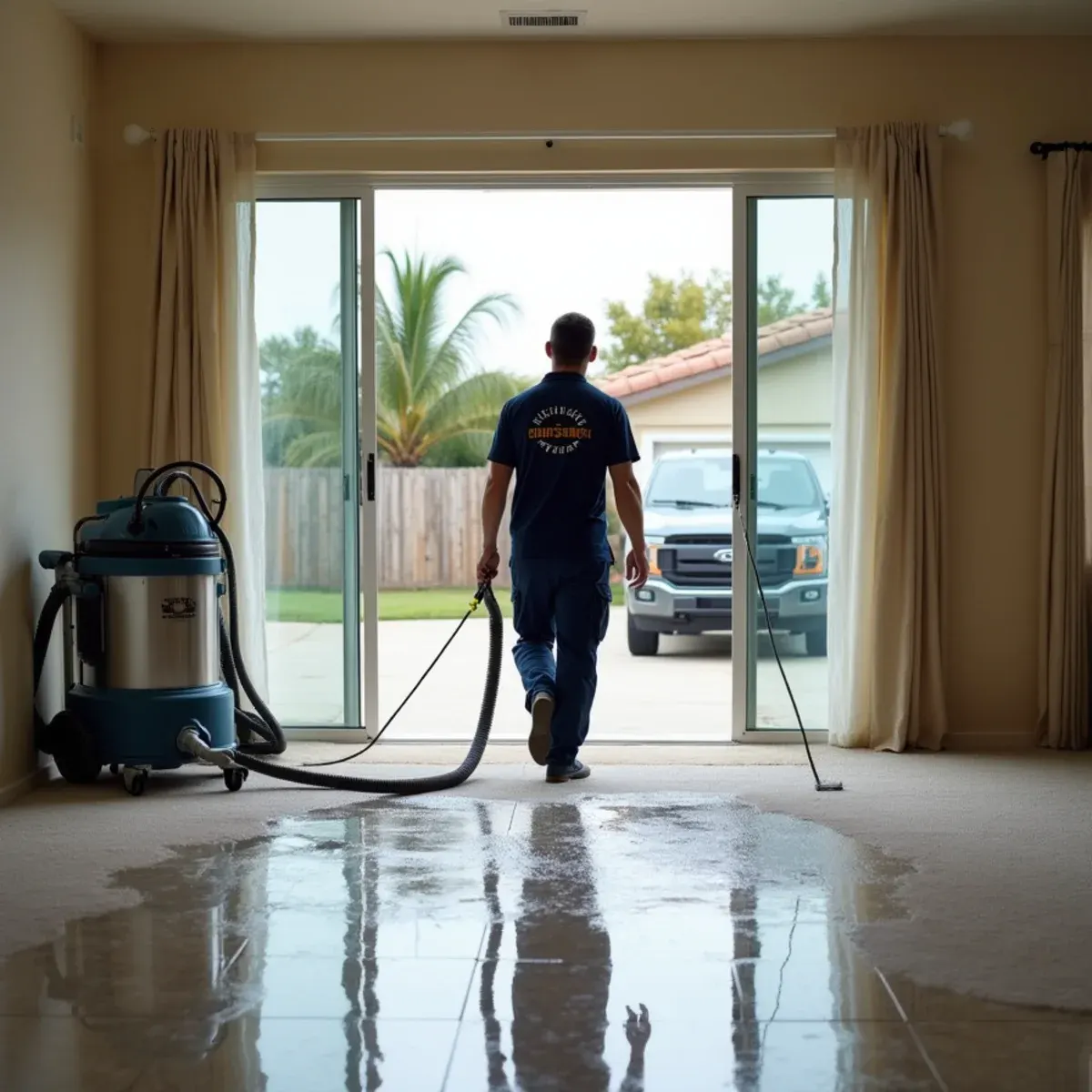
Westminster sits low and flat near the Bolsa Chica channel, and the water table underneath is shallow enough that slabs here carry a higher baseline moisture load than slabs a few miles inland. That matters for extraction in a specific way: the concrete under your floor is not going to absorb your problem, and it isn't going to help carry it away either. Every gallon we don't physically pull out has to leave as vapor, in a building already dealing with moisture pushing up from below.
The other half of the work here is Bolsa Avenue. Little Saigon holds one of the densest concentrations of independent restaurants in Southern California, most of them in older buildings with quarry tile, floor sinks and equipment lines never designed for the volume they now carry. Extracting a flooded kitchen means pulling water from under fixed equipment, out of cove base, and through tile joints — not squeegeeing toward a drain. These are independent owners with no corporate reserve for a long closure, so we work around service where the category of water allows it.
What Westminster Changes About Water Extraction
1Shallow groundwater slows every drying hour
With a high water table under the slab, the drying phase that follows extraction runs longer here than it would inland on an identical loss. That's arithmetic, not a scare tactic: the slab keeps contributing vapor while your equipment tries to remove it. The practical response is to extract far more aggressively up front, because water removed mechanically never has to be dried out later.
2Quarry tile hides water underneath
Restaurant kitchens on Bolsa look dry within minutes because tile sheds water off the surface. Underneath, water sits in the mortar bed, in the cove base joint, and under equipment curbs where it can stay for weeks. We meter the perimeter and the equipment lines, extract through joints and access points, and remove base where readings justify it. A dry-looking kitchen floor is the most common false all-clear we see here.
3Test the slab before new flooring goes down
Because slab vapor is a routine background condition in this city, flooring installed over an untested slab fails — adhesive releases, planks cup, and everyone blames the installer. After extraction and drying, we recommend in-situ relative humidity testing before any new floor is laid. It's a small cost against replacing a floor twice, and it's the step most often skipped in Westminster.
How the Work Runs
The method is the same one we use on every water extraction job, documented to the IICRC S500:2025 standard. Here it is in short — the full water extraction & removal process explains each stage in detail.
- Bulk removal with submersible pumps
- Truck-mounted extraction on carpet and pad
- Hard-surface and specialty extraction
- Cavity and void extraction
- Removing what cannot be saved
- Post-extraction moisture reading
The Westminster Background Worth Knowing
Westminster's shallow groundwater means many slabs here carry a higher baseline moisture load than slabs a few miles inland. In an undamaged home with breathable flooring that is usually a non-issue. It becomes an issue in two situations.
There is more on the housing stock, drainage and plumbing history of this city on our water damage restoration in Westminster page.
Westminster at a glance
- Dominant construction era
- 1950–1970
- Foundation type
- slab on grade
- Supply piping found here
- under-slab copper, galvanized steel
- Drain line materials
- cast iron
- Terrain and water table
- coastal-flat, shallow water table
- Most common local failure
- flooring installed over a slab that was never tested and is still releasing vapor
- Highest-value local prevention
- in-situ slab relative humidity testing before any new floor goes down
What It Costs in Westminster
We do not quote a number over the phone before seeing the property — anyone who does is guessing. The variables that actually move the price on a water extraction job are volume and depth of water, flooring type, contamination level, and they are broken down in full on the water extraction & removal page. The assessment and the written estimate are free anywhere in Westminster, day or night, with no obligation.
Water Extraction Questions from Westminster Homeowners
It depends entirely on the water's category. Clean supply water usually means extraction, base removal in spots, and drying with equipment placed around service. A drain or sewer backup is Category 3 under IICRC S500:2025 and porous materials in the affected zone come out — that isn't negotiable when you're feeding people. We scope it on the first visit and tell you honestly what closure looks like rather than starting work and revising the answer later.
For a typical single-room residential loss, extraction runs one to three hours. Multi-room losses or Category 3 water can take most of a day because of containment setup and material removal. We will give you a realistic timeframe after the walkthrough, before we start.
Often we can save the carpet and only replace the pad, which is the cheaper and less disruptive path. The deciding factors are water category, how long it sat, and whether the pad is a moisture barrier type. Clean water caught quickly usually means the carpet stays.
Westminster has a shallow water table, so slabs here carry more baseline moisture than slabs further inland. Normally that is harmless, but it matters when installing flooring over the slab and it means drying after a loss takes longer. We test with in-situ relative humidity probes before any new floor goes down.