
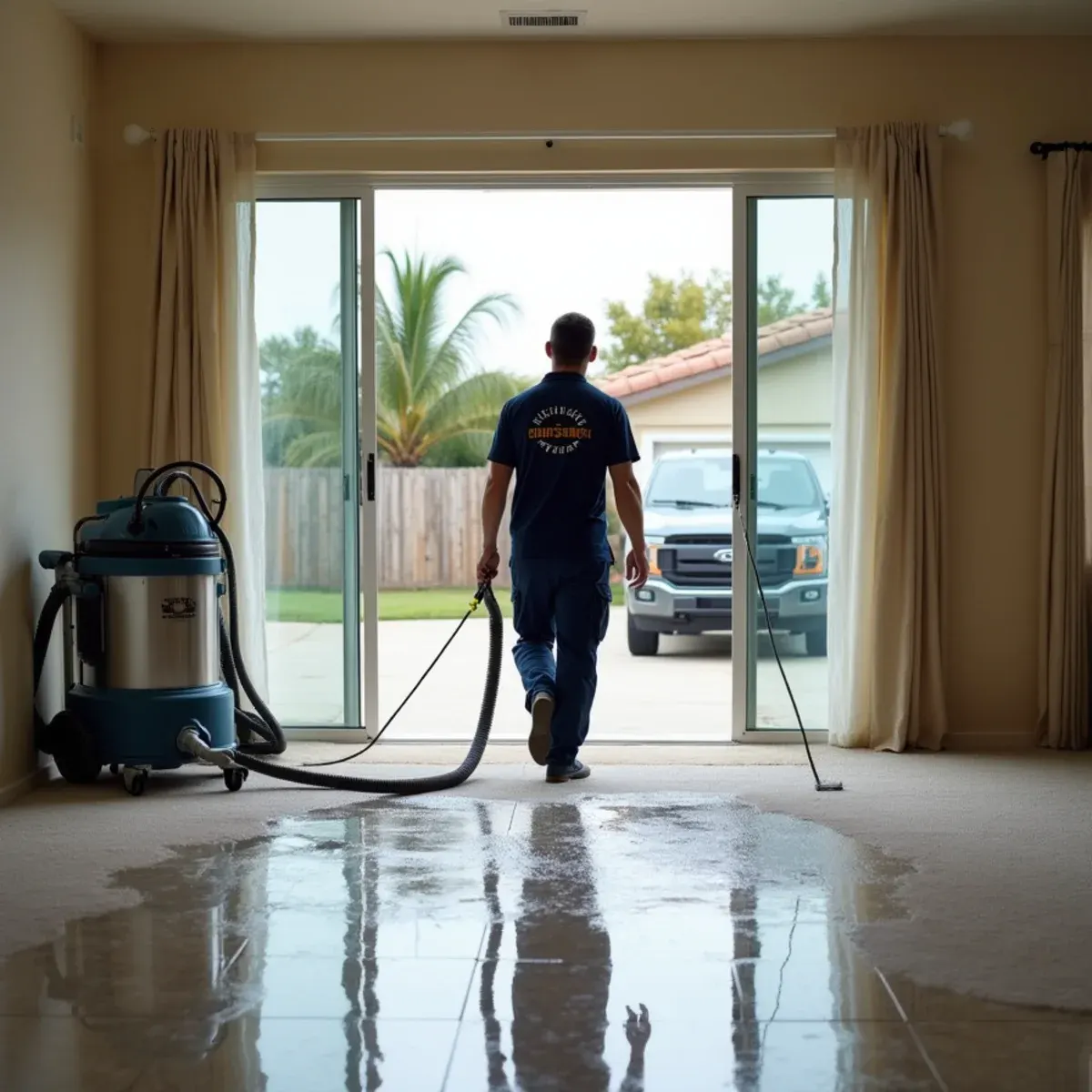
A wet plaster wall is not a wet drywall wall, and in the Anaheim Colony Historic District that distinction decides how the first hour goes. Lath-and-plaster assemblies hold several times the water drywall does and give it up far more slowly. Worse, as plaster soaks, the keys that lock it to the wood lath soften and release — the wall can be sound at noon and sagging by dinner. Extraction in those homes means getting standing water off the floor immediately and getting air into the cavity behind it.
Drive twenty minutes east and it's a different job entirely. Anaheim Hills homes are built on grade across two and three levels, with engineered drainage and retaining walls, so water loose on an upper floor works down through every level and ends up standing in a lower family room or garage. Long driveways mean long hose lays from the truck. Out in the West Anaheim tracts it's straightforward postwar slab work, and around the Resort District it's hotel and hospitality extraction on a schedule that doesn't bend.
What Anaheim Changes About Water Extraction
1Plaster keys fail while you wait
In Colony District homes the risk isn't only the water, it's the weight. Saturated plaster gets heavy and the keys gripping the lath soften until sections release in sheets. That's a safety issue for anyone standing underneath and a preservation loss you can't undo. We prioritize floor extraction and airflow on any plaster loss within hours, and we plan for desiccant dehumidification rather than assuming refrigerant units will keep up.
2Hillside homes drain downward through levels
In Anaheim Hills, gravity does the spreading for you. A second-floor failure sends water through the floor assembly, down stair stringers, and into the lowest finished level, which is often a garage or media room with no floor drain. We extract from the bottom up, because water still arriving from above will simply refill anything we clear first. Steep, long driveways also mean planning the hose route before we unload.
3Resort District rooms can't stay closed
Hotel and hospitality extraction near the convention corridor runs against occupancy. Water in a corridor moves under multiple room doors, and every affected room is revenue out the door. We work overnight where possible, keep hoses off guest routes, and give an honest read on which rooms return to service quickly and which need flooring removed. Guessing optimistically costs an operator far more than a straight answer.
How the Work Runs
The method is the same one we use on every water extraction job, documented to the IICRC S500:2025 standard. Here it is in short — the full water extraction & removal process explains each stage in detail.
- Bulk removal with submersible pumps
- Truck-mounted extraction on carpet and pad
- Hard-surface and specialty extraction
- Cavity and void extraction
- Removing what cannot be saved
- Post-extraction moisture reading
The Anaheim Background Worth Knowing
The Anaheim Colony Historic District and the older streets around downtown contain homes built from the early 1900s through the 1930s, and they are constructed differently in ways that matter enormously during a water loss.
There is more on the housing stock, drainage and plumbing history of this city on our water damage restoration in Anaheim page.
Anaheim at a glance
- Dominant construction era
- 1900–2000
- Foundation type
- mixed on grade
- Supply piping found here
- galvanized steel, under-slab copper, original early-century piping in the Colony
- Drain line materials
- cast iron, clay
- Terrain and water table
- hillside-mixed, moderate water table
- Most common local failure
- lath-and-plaster assemblies that hold several times the water drywall does and release it far more slowly
- Highest-value local prevention
- acting immediately on any plaster-wall loss, because wet plaster keys soften and release from the lath
What It Costs in Anaheim
We do not quote a number over the phone before seeing the property — anyone who does is guessing. The variables that actually move the price on a water extraction job are volume and depth of water, flooring type, contamination level, and they are broken down in full on the water extraction & removal page. The assessment and the written estimate are free anywhere in Anaheim, day or night, with no obligation.
Water Extraction Questions from Anaheim Homeowners
Not automatically, and we try hard to avoid it. Plaster is often best dried through the cavity from a discreet location — behind a baseboard, from inside a closet, or through an existing opening — rather than by removing wall surface. What decides it is the meter and how long the water sat. If plaster has already softened at the keys, that section is failing regardless and removal becomes the safe option. We'll show you the readings before anything is cut.
For a typical single-room residential loss, extraction runs one to three hours. Multi-room losses or Category 3 water can take most of a day because of containment setup and material removal. We will give you a realistic timeframe after the walkthrough, before we start.
Often we can save the carpet and only replace the pad, which is the cheaper and less disruptive path. The deciding factors are water category, how long it sat, and whether the pad is a moisture barrier type. Clean water caught quickly usually means the carpet stays.
Yes, and we approach them differently. Lath and plaster holds much more water than drywall and dries far more slowly, so it needs more equipment and considerably more patience — but it can usually be saved in place, and original plaster is not something a repair can replace.