
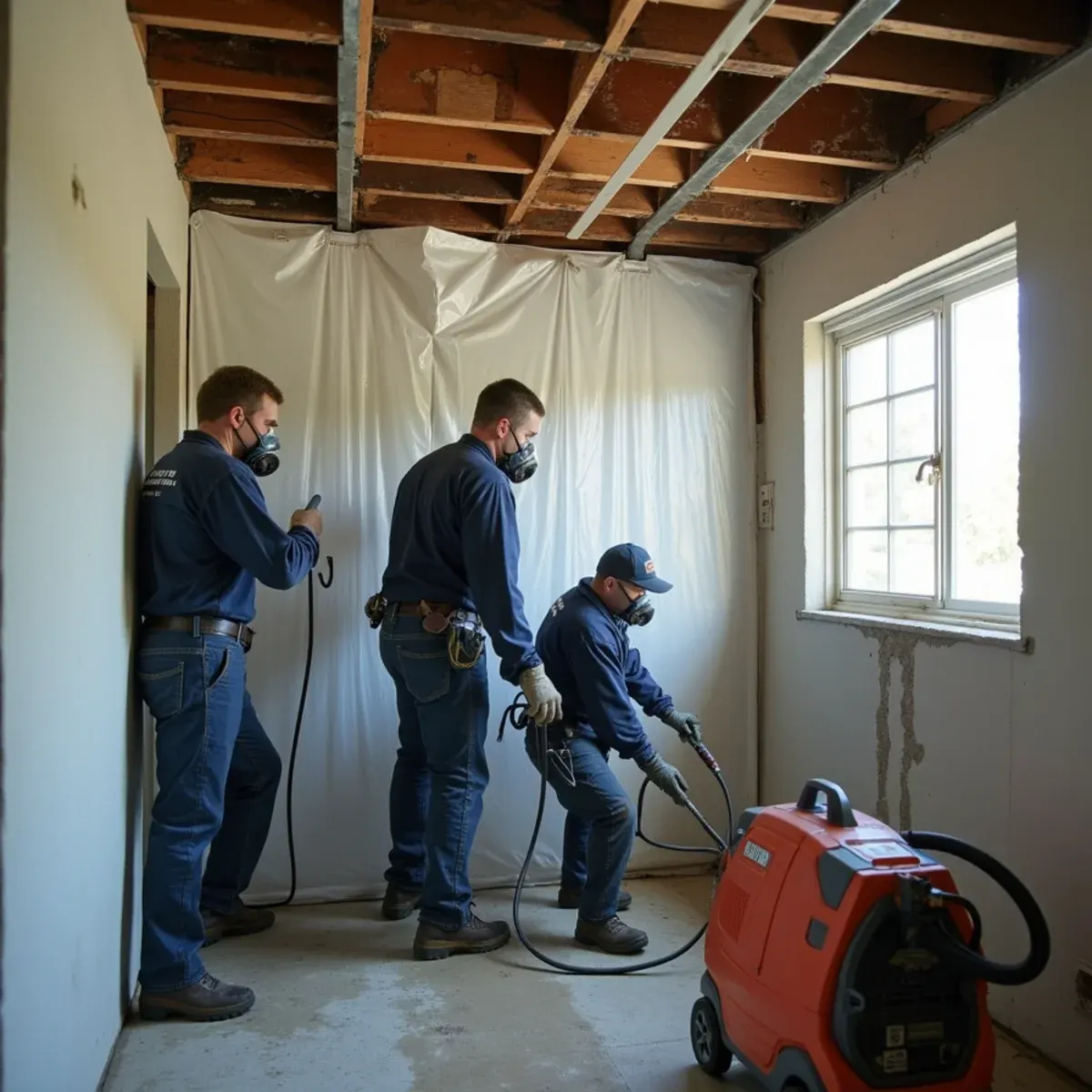
In Huntington Harbour the water does not always come in the door. Groundwater under those slabs moves with the tide, and during a storm at high water it pushes up at the slab edge and through cold joints, so the garage floor gets wet from below while the street outside stays passable. Homeowners describe it as a mystery leak. It is a flood, it is Category 3 once it has passed through soil, and the timing of the tide usually explains more about what happened than the rainfall total does.
Everything else about coastal Huntington Beach makes drying harder and slower. Sustained marine humidity means outside air is no help and dehumidification carries the whole load. Salt attacks flashing, fasteners and sealant faster than anything inland, so wind-driven rain finds gaps that were sound two years ago. And downtown, the narrow lots off Main Street have no driveway, so truck-mounted extraction runs long hose lines from the street and staging has to be worked out before the crew leaves rather than on the sidewalk.
What Huntington Beach Changes About Flood Cleanup
1Tidal groundwater under canal-front slabs
Along the Harbour, slab moisture can rise and fall with the tide, which is why a single meter reading proves very little. We take readings across a tide cycle before concluding anything, check the seawall and the slab perimeter, and separate a true intrusion event from ordinary vapor drive. Getting that wrong sends a claim down the wrong path and leaves the actual entry point unaddressed.
2Narrow downtown lots limit equipment access
Between Main Street and the pier, homes sit shoulder to shoulder with no driveway and tight street parking. Long hose runs cost extraction efficiency, and equipment has to be carried through finished space rather than rolled in. We plan the staging and the debris route before dispatch, and tell you in advance where the truck has to sit and roughly how long it will be there.
3Salt residue outlasts the water
Once salt water has been in a wall cavity, drying alone leaves chloride on the framing and the fasteners. It holds humidity, keeps materials from stabilizing, and corrodes connectors and hardware over the following years. On coastal losses we rinse the affected assemblies and check for residue rather than stopping at a dry meter reading and handing you a certificate.
How the Work Runs
The method is the same one we use on every flood cleanup job, documented to the IICRC S500:2025 standard. Here it is in short — the full flood damage cleanup process explains each stage in detail.
- Safety assessment and utility check
- Containment and negative air
- Documentation and contents triage
- Extraction and controlled demolition
- Cleaning and disinfection
- Structural drying and clearance
The Huntington Beach Background Worth Knowing
Salt does not damage buildings directly. It damages the details that keep water out, and then water does the rest.
There is more on the housing stock, drainage and plumbing history of this city on our water damage restoration in Huntington Beach page.
Huntington Beach at a glance
- Dominant construction era
- 1960–1990
- Foundation type
- slab on grade
- Supply piping found here
- under-slab copper
- Drain line materials
- cast iron, ABS
- Terrain and water table
- coastal-flat, shallow water table
- Most common local failure
- wind-driven rain entering through salt-corroded window flashing and failed exterior sealant
- Highest-value local prevention
- renewing exterior caulking and flashing on a far shorter cycle than inland guidance suggests
What It Costs in Huntington Beach
We do not quote a number over the phone before seeing the property — anyone who does is guessing. The variables that actually move the price on a flood cleanup job are how high the water reached, how long it sat before extraction, contents volume in the flooded area, and they are broken down in full on the flood damage cleanup page. The assessment and the written estimate are free anywhere in Huntington Beach, day or night, with no obligation.
Flood Cleanup Questions from Huntington Beach Homeowners
That is usually tidal groundwater finding the slab edge, a cold joint or a penetration, and it is more common along the Harbour than most owners expect. It is still ground-source water, so it is handled as contaminated, and the real fix involves the perimeter and seawall drainage as much as the interior. We monitor across a tide cycle, map where the moisture enters, and give you the pattern in writing before recommending any repair.
Yes. Water that crossed soil, pavement, or a storm drain is Category 3 by IICRC classification regardless of appearance — it carries bacteria, fuel and oil residue, lawn chemicals, and whatever else was on the ground. Do not walk through it in open shoes, and keep children and pets out of the area entirely.
If the water came from outside across the ground, almost certainly not — that requires separate flood insurance. If it came from a failed water heater, a burst pipe, or a supply line inside the garage, it is usually covered. We document the source carefully because that distinction determines everything.
Ambient humidity near the coast stays high enough for long enough that materials dry slowly on their own, which widens the window in which growth can establish after any moisture event. Combined with salt-accelerated failures of exterior sealants and flashings, coastal homes simply get more moisture intrusion and dry from it more slowly.