
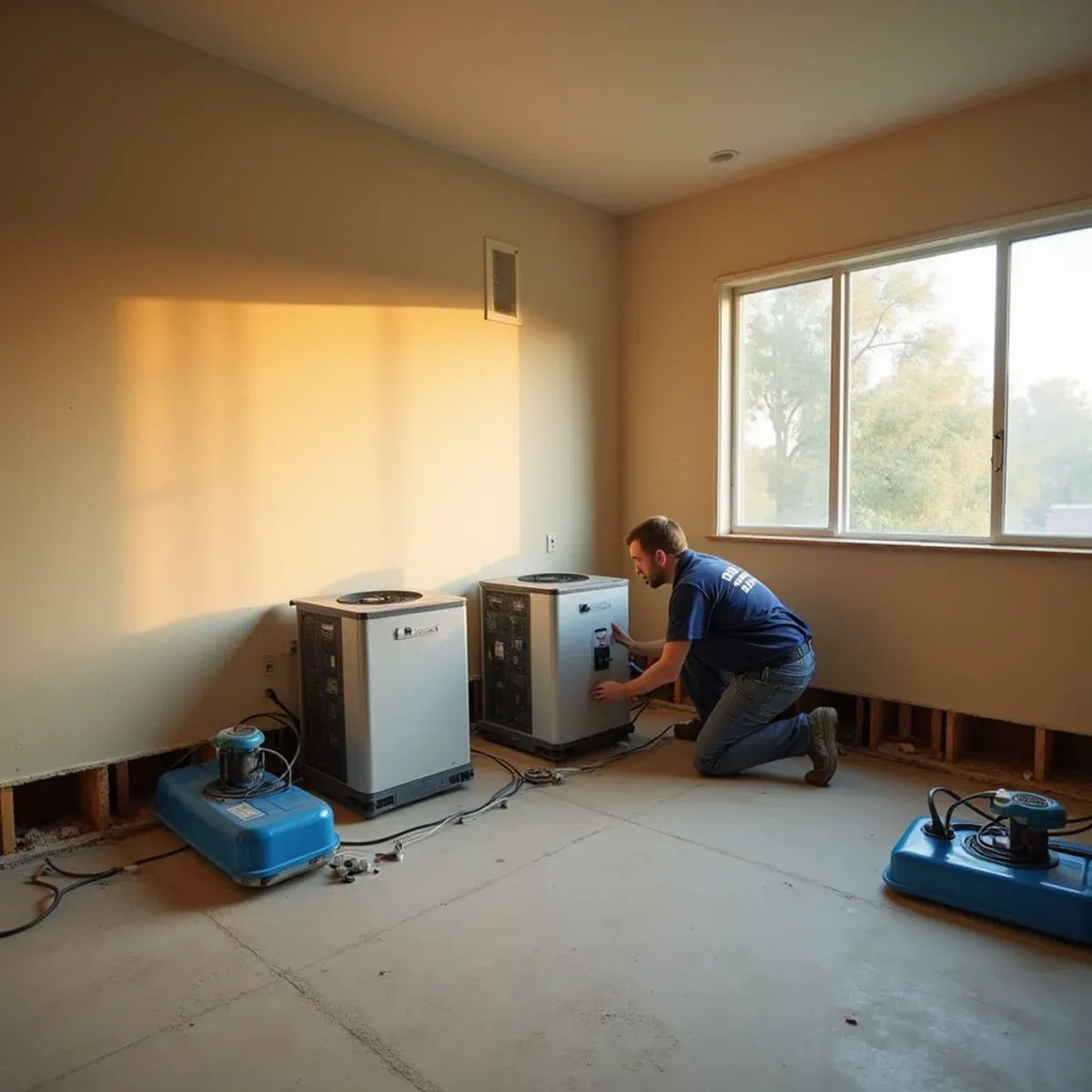
Downtown Huntington Beach lots run narrow and deep, no driveway, street parking gone by mid-morning. That's a genuine constraint on drying, not a detail. Extraction needs long hose runs from the truck, every piece of equipment is carried in by hand, and the power the house can offer decides how many air movers run at once. We plan staging before we arrive instead of working it out at the curb, and on the tightest blocks off Main Street we'll stage from the alley and run hose the length of the lot.
The air is the second constraint. This is the most coastal-exposed city we serve, and sustained marine humidity means a loss that dries in three days inland can take four or five here, with more dehumidification to get there. Out in Huntington Harbour the groundwater moves with the tide, so slab-edge and lower-level readings shift through the day and a single measurement proves nothing. A good share of what we dry started as wind-driven rain through salt-corroded window flashing, which puts the source outside the wall and means it has to be closed first.
What Huntington Beach Changes About Structural Drying
1Narrow lots decide the equipment plan
On a downtown lot with no driveway, the limits are hose length, cord routing and how much of the house we can seal without blocking the only stair. We walk the access before unloading and set the chamber where equipment can actually be serviced daily. That planning is why the first hour on a Main Street block looks slower and the whole job finishes sooner.
2Tidal groundwater moves your readings
Along the Harbour, slab and lower-wall moisture numbers change with the tide, and a single reading tells you almost nothing. We take readings at consistent times of day and judge the trend across the drying log instead of reacting to one measurement. It's the only way to know whether the structure is genuinely giving up water or the ground outside is loading it back in.
3Rain intrusion dries differently than a pipe
Wind-driven rain through failed flashing wets the window assembly, the sill, the sheathing and the insulation in that bay, often without much showing on the drywall. Drying it means opening the bay, drying the assembly from inside, and getting the exterior sealed before the next storm. Running equipment while the flashing is still open just resets the clock every time it rains.
How the Work Runs
The method is the same one we use on every structural drying job, documented to the IICRC S500:2025 standard. Here it is in short — the full structural drying & dehumidification process explains each stage in detail.
- Establish the dry standard
- Calculate the load and build the chamber
- Place air movers for surface evaporation
- Run LGR dehumidification to capture the moisture
- Monitor and adjust daily
- Verify, document, and demobilize
The Huntington Beach Background Worth Knowing
Salt does not damage buildings directly. It damages the details that keep water out, and then water does the rest.
There is more on the housing stock, drainage and plumbing history of this city on our water damage restoration in Huntington Beach page.
Huntington Beach at a glance
- Dominant construction era
- 1960–1990
- Foundation type
- slab on grade
- Supply piping found here
- under-slab copper
- Drain line materials
- cast iron, ABS
- Terrain and water table
- coastal-flat, shallow water table
- Most common local failure
- wind-driven rain entering through salt-corroded window flashing and failed exterior sealant
- Highest-value local prevention
- renewing exterior caulking and flashing on a far shorter cycle than inland guidance suggests
What It Costs in Huntington Beach
We do not quote a number over the phone before seeing the property — anyone who does is guessing. The variables that actually move the price on a structural drying job are size of the drying chamber, class of water intrusion, material types involved, and they are broken down in full on the structural drying & dehumidification page. The assessment and the written estimate are free anywhere in Huntington Beach, day or night, with no obligation.
Structural Drying Questions from Huntington Beach Homeowners
Yes, with planning. We stage from the nearest legal spot or the alley, run extended extraction hose, and hand-carry equipment down the lot. The real limit is usually electrical, since older downtown houses can't feed a full equipment load on the circuits available, so we distribute across breakers and occasionally accept an extra day rather than tripping power all night. We'll tell you at the walkthrough which of those applies to your house.
Three to five days covers most residential losses. Saturated hardwood, plaster, or a concrete slab can run seven or more. We will give you an estimated window after the first readings and update you daily — and equipment comes out when the numbers say so, not on a fixed schedule.
We would rather you did not. Drying is a continuous process, and every hour off extends the total run — which usually costs more than the sleep is worth. If noise is genuinely unmanageable we can often reconfigure the chamber or reposition units to reduce it. Talk to us instead of unplugging them.
Ambient humidity near the coast stays high enough for long enough that materials dry slowly on their own, which widens the window in which growth can establish after any moisture event. Combined with salt-accelerated failures of exterior sealants and flashings, coastal homes simply get more moisture intrusion and dry from it more slowly.