
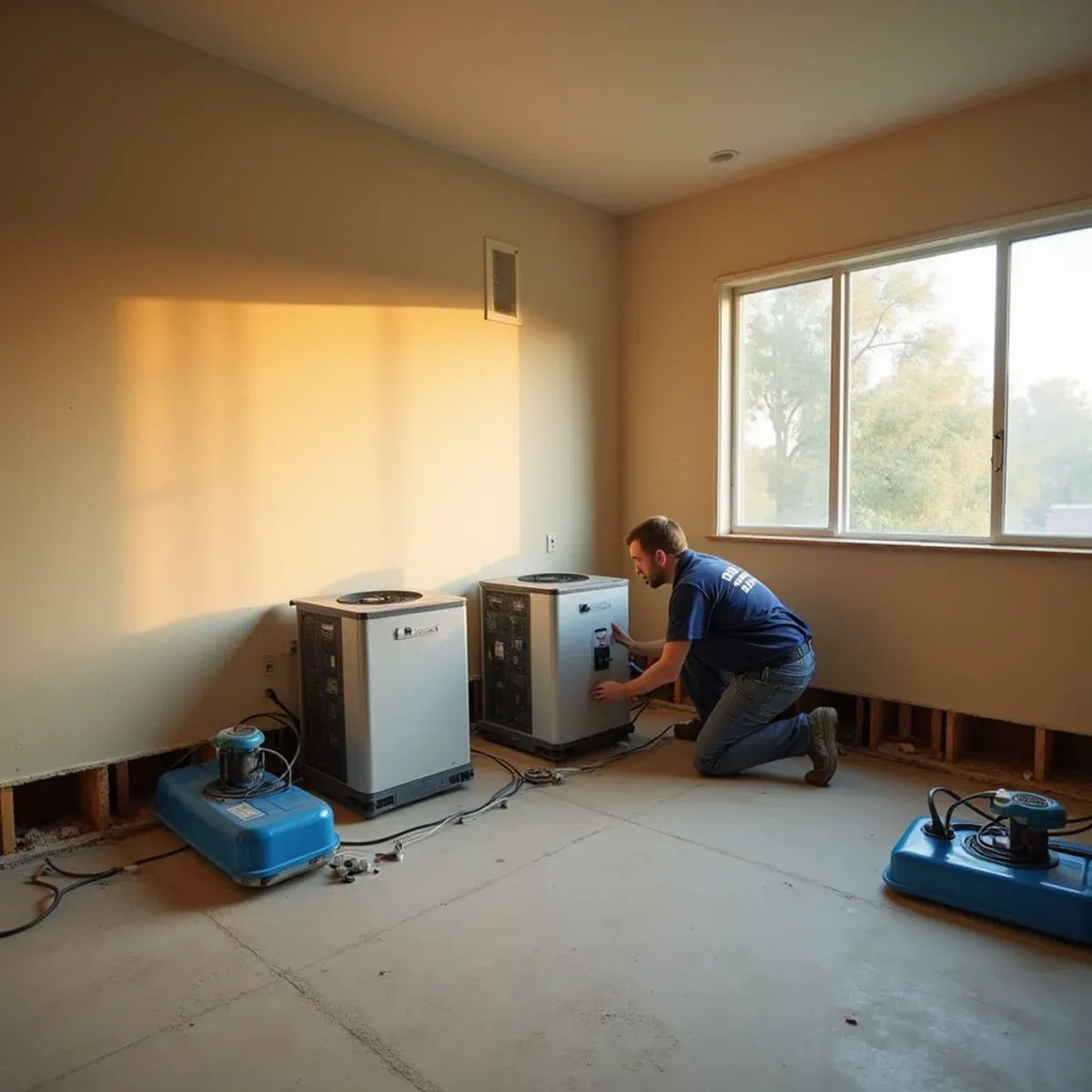
An independent restaurant on Pioneer Boulevard cannot close for three weeks. There's no corporate reserve behind it, and every dark day is payroll against no revenue. So the drying plan starts from that constraint: hard containment between the kitchen and the dining room, equipment that runs overnight and gets pulled back before service, and a written log both the health inspector and the adjuster can read. Little India packs a remarkable amount of independent business into 1950s buildings never designed to carry commercial kitchens in the first place.
Most of what backs up here comes out of cast iron loaded with decades of grease, and that changes the job before drying begins. Category 3 water means the porous materials come out first, because drying contaminated material in place isn't restoration, it's warm contamination. Once removal and cleaning are done, the chamber goes up and the log starts. Residential Artesia is quieter work: modest 1950s and 60s slab homes near Artesia Park, where the same cast iron and galvanized ages without a grease load pushing it over the edge.
What Artesia Changes About Structural Drying
1Contain the kitchen, keep the dining room open
Sealed barriers with the wet zone held under negative pressure let a restaurant keep serving while the back of house dries. We route hose and cords away from service paths, verify the dining side with readings rather than assumption, and work around your health inspection requirements. For an owner with no second location, staying open through the job is usually the whole point.
2Category 3 water changes the sequence
A grease-loaded sewer backup is contaminated water, and IICRC S500:2025 is clear that affected porous materials get removed rather than dried. Drywall, insulation and most flooring underlayment come out first, hard surfaces get cleaned, and only then does drying equipment go in. Anyone who sets fans in a backup without that removal step is simply circulating the problem around the room.
31950s buildings under commercial loads
These storefronts were built for retail, then filled with kitchens. Floors are often tile over one or two older coverings on the original slab, and those sealed layers hold water no surface airflow will reach. We open a small section to see what's under there instead of guessing, because a floor that reads dry on top can be soaked two layers down.
How the Work Runs
The method is the same one we use on every structural drying job, documented to the IICRC S500:2025 standard. Here it is in short — the full structural drying & dehumidification process explains each stage in detail.
- Establish the dry standard
- Calculate the load and build the chamber
- Place air movers for surface evaporation
- Run LGR dehumidification to capture the moisture
- Monitor and adjust daily
- Verify, document, and demobilize
The Artesia Background Worth Knowing
A commercial kitchen is one of the hardest things you can ask a building to accommodate. High water use, continuous drainage, grease loading, floor drains, and equipment connections that get added and modified over the years. When that kitchen is in a building from the 1950s with original cast-iron waste lines, the failure is a matter of time.
There is more on the housing stock, drainage and plumbing history of this city on our water damage restoration in Artesia page.
Artesia at a glance
- Dominant construction era
- 1950–1970
- Foundation type
- slab on grade
- Supply piping found here
- galvanized steel, copper
- Drain line materials
- cast iron
- Terrain and water table
- flat, moderate water table
- Most common local failure
- grease-loaded cast-iron waste lines restricting until a commercial kitchen backs up
- Highest-value local prevention
- hydro-jetting the waste line rather than snaking it, so the pipe wall actually gets cleaned
What It Costs in Artesia
We do not quote a number over the phone before seeing the property — anyone who does is guessing. The variables that actually move the price on a structural drying job are size of the drying chamber, class of water intrusion, material types involved, and they are broken down in full on the structural drying & dehumidification page. The assessment and the written estimate are free anywhere in Artesia, day or night, with no obligation.
Structural Drying Questions from Artesia Homeowners
Sometimes the first phase happens overnight, but a grease backup is contaminated water and that isn't a one-night job. Removal and cleaning of affected porous material comes first, then drying runs a few days. What we can usually do is contain the kitchen so the dining room keeps operating, and schedule the loudest and most disruptive work between close and open. We'll be straight with you about which parts of the kitchen are usable each day.
Three to five days covers most residential losses. Saturated hardwood, plaster, or a concrete slab can run seven or more. We will give you an estimated window after the first readings and update you daily — and equipment comes out when the numbers say so, not on a fixed schedule.
We would rather you did not. Drying is a continuous process, and every hour off extends the total run — which usually costs more than the sleep is worth. If noise is genuinely unmanageable we can often reconfigure the chamber or reposition units to reduce it. Talk to us instead of unplugging them.
Yes, and on Pioneer Boulevard that is usually how we schedule it. Overnight crews cost somewhat more in labor and almost always cost dramatically less than lost revenue from closing during operating hours.