
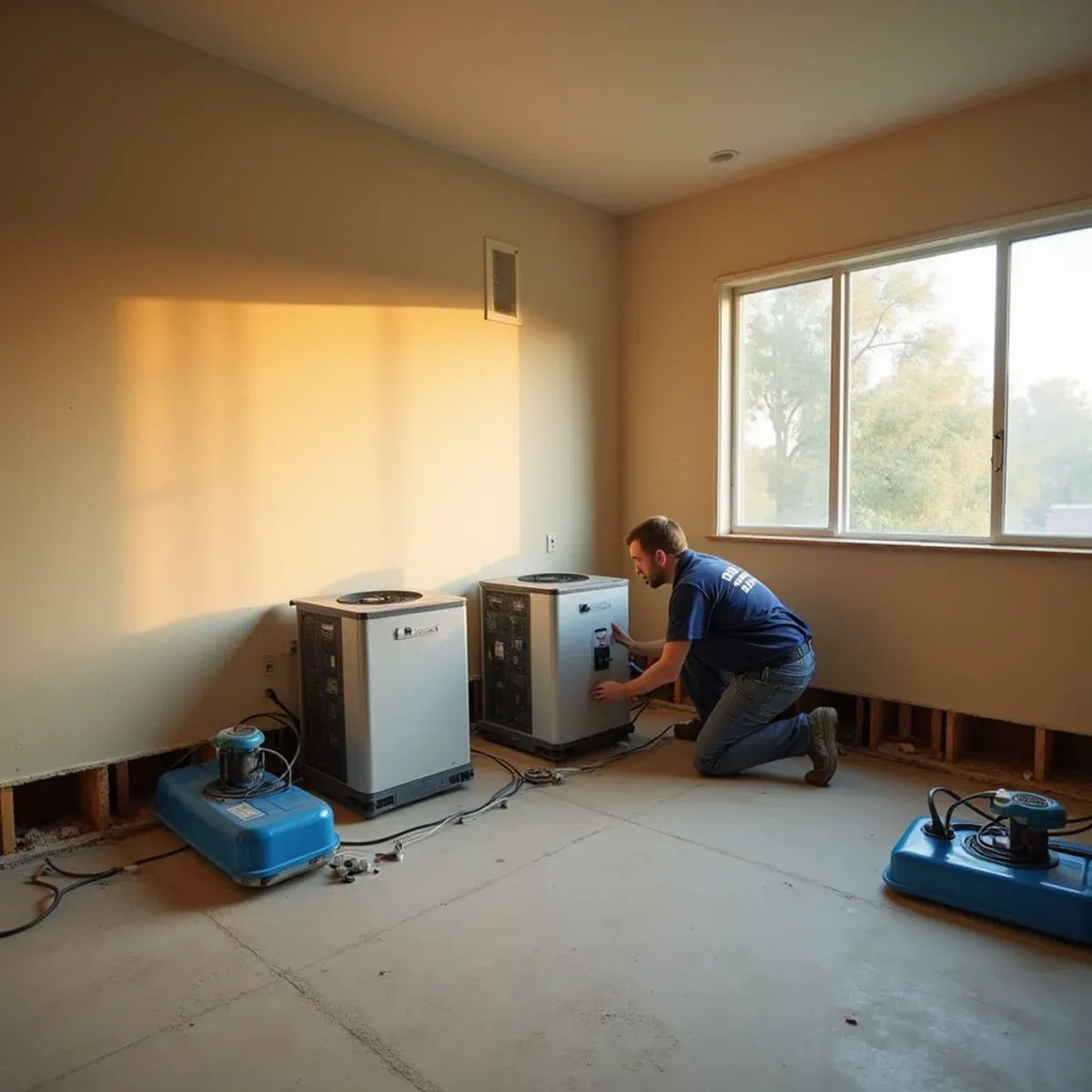
Carbon Canyon concentrates a storm. Water that fell across a wide stretch of hillside arrives at the Olinda Ranch and Country Hills edges in a hurry, carrying soil with it, and a v-ditch that looked fine in September decides the outcome. When it gets into a house it soaks the lowest twelve to eighteen inches across several rooms at once. The silt left in the pad and behind the base tells us immediately that the porous materials are not drying-in-place candidates, no matter how much equipment we bring.
Downtown is the other Brea. The small houses from the oil-town years have tight rooms, original plaster in places, galvanized supply lines and additions layered on across eighty years, so there's often no clean boundary to seal a chamber against. We build one with poly and tape rather than pretending a doorway is a wall, then run fewer air movers over more days so old finish work doesn't take a beating. Two jobs a few minutes apart with almost nothing in common.
What Brea Changes About Structural Drying
1Silt in the water changes the plan
Canyon runoff carries soil. When we find silt in the pad and behind the base, that tells us the water was Category 3 before it reached your floor, and the porous materials go rather than get dried. It also means cleaning has to happen before drying starts, because pushing air across contaminated material just distributes it through the rest of the house.
2Old downtown rooms need a built chamber
The small early-century houses near downtown have been added onto for decades, and there's rarely a clean architectural boundary to seal against. We build the chamber with poly and tape instead of treating a doorway as a wall, then run fewer air movers over more days so original plaster and old trim aren't blasted. Smaller rooms also mean placement matters more than machine count.
3Hillside two-story plans dry downward
In the Olinda Ranch and Blackstone tracts, an upstairs laundry or bathroom failure travels the floor assembly and lands in a ceiling below. We open access at the low point, dry the cavity between floors directly and meter the framing from both sides. Drying only the room where the water started leaves a wet ceiling assembly that surfaces later as a stain or a sagging seam.
How the Work Runs
The method is the same one we use on every structural drying job, documented to the IICRC S500:2025 standard. Here it is in short — the full structural drying & dehumidification process explains each stage in detail.
- Establish the dry standard
- Calculate the load and build the chamber
- Place air movers for surface evaporation
- Run LGR dehumidification to capture the moisture
- Monitor and adjust daily
- Verify, document, and demobilize
The Brea Background Worth Knowing
Brea's hillside tracts were designed to handle rain. Terrace drains catch runoff partway up a slope, v-ditches carry it around the toe, area drains take the flat yard, and everything ties into a system that moves water past the house rather than through it. The design works. What fails is maintenance. Over a dry summer those inlets fill with eucalyptus leaf litter, decomposed granite, and whatever the wind brought down the canyon, and nobody looks at them because they sit on a slope behind a fence. The first hard storm of the season finds every one that is blocked.
There is more on the housing stock, drainage and plumbing history of this city on our water damage restoration in Brea page.
Brea at a glance
- Dominant construction era
- 1920–2005
- Foundation type
- mixed on grade
- Supply piping found here
- galvanized steel, under-slab copper, PEX in newer hillside tracts
- Drain line materials
- cast iron, clay, ABS
- Terrain and water table
- hillside-mixed, deep water table
- Most common local failure
- canyon and hillside runoff overwhelming slope drainage during concentrated storms
- Highest-value local prevention
- keeping Carbon Canyon-side slope drains, v-ditches and downspout extensions genuinely clear
What It Costs in Brea
We do not quote a number over the phone before seeing the property — anyone who does is guessing. The variables that actually move the price on a structural drying job are size of the drying chamber, class of water intrusion, material types involved, and they are broken down in full on the structural drying & dehumidification page. The assessment and the written estimate are free anywhere in Brea, day or night, with no obligation.
Structural Drying Questions from Brea Homeowners
Not everything, but the soft materials that held the mud do. Silt-laden runoff is contaminated, so carpet, pad and wet insulation come out and affected drywall gets cut back to sound material. Framing, sheathing and slab clean up and dry well. On the hillside tracts we also check whether water entered the wall cavity from outside, because a cavity wetted through a weep or a failed slope drain behaves differently than one wetted by a pipe.
Three to five days covers most residential losses. Saturated hardwood, plaster, or a concrete slab can run seven or more. We will give you an estimated window after the first readings and update you daily — and equipment comes out when the numbers say so, not on a fixed schedule.
We would rather you did not. Drying is a continuous process, and every hour off extends the total run — which usually costs more than the sleep is worth. If noise is genuinely unmanageable we can often reconfigure the chamber or reposition units to reduce it. Talk to us instead of unplugging them.
Usually not under a standard homeowners policy. Water that runs across the ground and enters a building is surface water, and that is an excluded cause on nearly every form, whether it came off a Carbon Canyon slope or out of the street. Separate flood coverage handles it. Damage from a covered failure is a different story, so let us document the entry point and cause before anything gets cleaned up.