
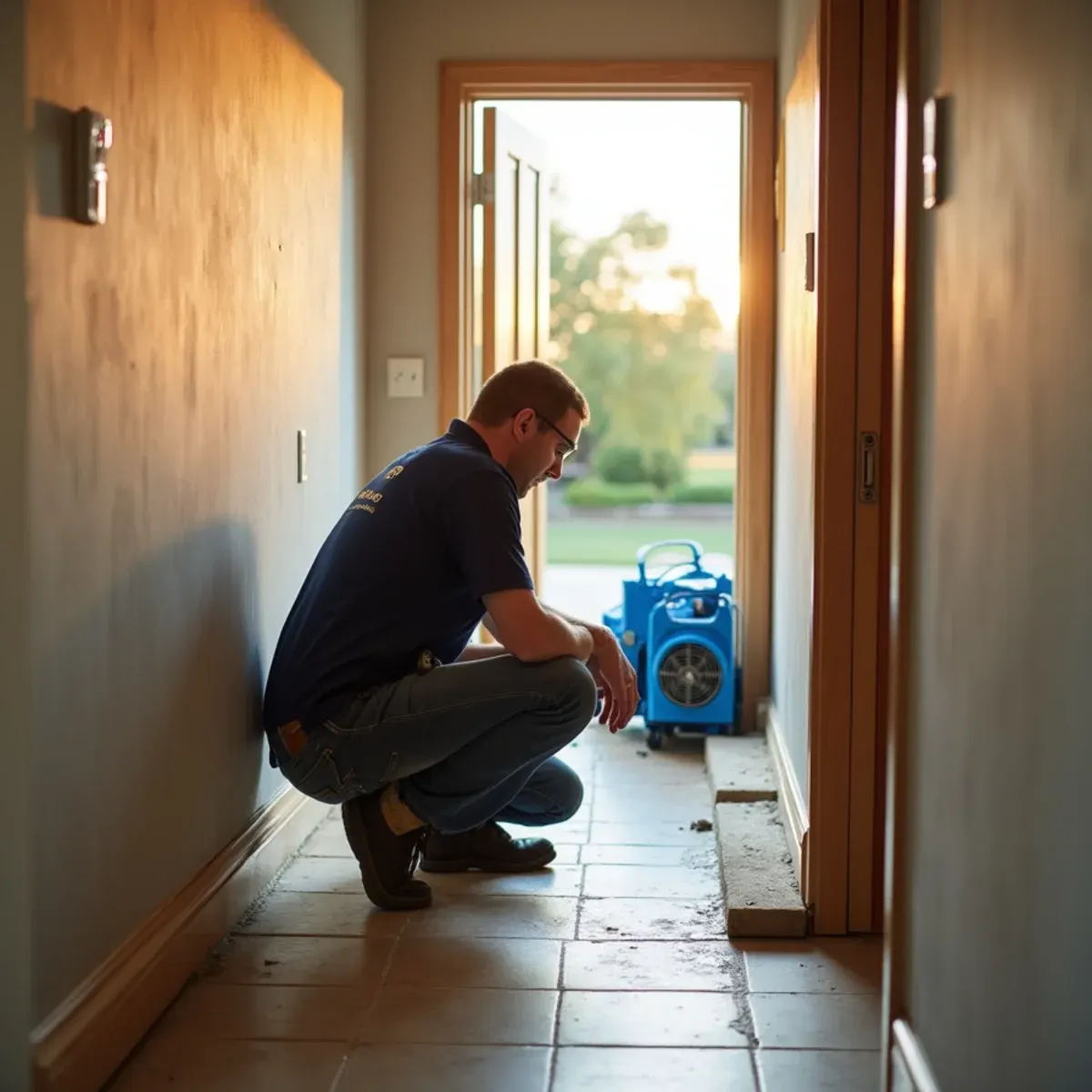
For a restaurant owner on Pioneer Boulevard, a broken supply line is not a property problem, it is a revenue problem. Artesia packs one of the densest concentrations of independent retail and restaurants in the region into a compact city of about sixteen thousand five hundred, almost all of it in 1950s buildings that were never designed to carry commercial kitchen loads. These are family businesses. There is no corporate reserve absorbing a three-week closure, so the first question is always the same: what has to happen for us to reopen, and how fast.
The buildings themselves make that harder than it sounds. Supply lines here run behind ceramic tile, stainless panels and equipment that was installed and never intended to come back out. Opening a wall the conventional way means demolishing tile that cannot be matched, which turns a drying job into a renovation. So we locate the failure precisely, cut the smallest access we can live with, and dry the cavity through ports. Away from the boulevard, the modest postwar single-family homes and older multi-family buildings are a straightforward slab job by comparison.
What Artesia Changes About Burst Pipe Damage
1Tile makes minimal access essential
Commercial kitchen walls along Pioneer Boulevard are tiled floor to ceiling, often with tile discontinued decades ago. Open a wall the usual way and the reopening date is set by tile availability, not by drying. We locate the break with thermal imaging, cut access in the smallest and least visible field we can, and dry the cavity through ports so the finished surface mostly survives.
2Closure cost drives the whole schedule
For an independent operator every closed day comes straight off the household. That reality shapes sequencing: containment so the front of house can trade while a back wall dries, night work where the health inspection allows it, and drying targets verified with readings so nobody reopens on optimism. We would rather run equipment one extra night than have a kitchen fail an inspection.
3Homes on the next block, different job
Artesia is not only its commercial spine. The postwar houses near Artesia Park and AJ Padelford Park are modest slab-on-grade homes with galvanized and copper supply lines, where a burst line spreads under flooring and the plan is ordinary cavity drying with no revenue clock at all. Same city, and we approach the two kinds of call very differently.
How the Work Runs
The method is the same one we use on every burst pipe damage job, documented to the IICRC S500:2025 standard. Here it is in short — the full burst pipe water damage repair process explains each stage in detail.
- Stop the source
- Locate the failure precisely
- Coordinate the plumbing repair
- Extract and open only what must be opened
- Cavity and structural drying
- Rebuild and finish
The Artesia Background Worth Knowing
A commercial kitchen is one of the hardest things you can ask a building to accommodate. High water use, continuous drainage, grease loading, floor drains, and equipment connections that get added and modified over the years. When that kitchen is in a building from the 1950s with original cast-iron waste lines, the failure is a matter of time.
There is more on the housing stock, drainage and plumbing history of this city on our water damage restoration in Artesia page.
Artesia at a glance
- Dominant construction era
- 1950–1970
- Foundation type
- slab on grade
- Supply piping found here
- galvanized steel, copper
- Drain line materials
- cast iron
- Terrain and water table
- flat, moderate water table
- Most common local failure
- grease-loaded cast-iron waste lines restricting until a commercial kitchen backs up
- Highest-value local prevention
- hydro-jetting the waste line rather than snaking it, so the pipe wall actually gets cleaned
What It Costs in Artesia
We do not quote a number over the phone before seeing the property — anyone who does is guessing. The variables that actually move the price on a burst pipe damage job are how long the line ran before discovery, which floor it happened on, hot line versus cold line, and they are broken down in full on the burst pipe water damage repair page. The assessment and the written estimate are free anywhere in Artesia, day or night, with no obligation.
Burst Pipe Damage Questions from Artesia Homeowners
Sometimes only partly. If the failure is in a back wall and we can contain the work area, many kitchens keep operating in a reduced footprint while that wall dries. What forces a full closure is usually the extent of demolition, not the water, which is exactly why we cut the smallest access we can and dry through ports. Call before anyone starts removing tile, because that decision drives your reopening date more than anything else.
We restore the water damage and coordinate the plumbing repair, working with your plumber or bringing in a licensed one from our network. Handling both under one schedule is what keeps a burst pipe from turning into two weeks of contractor coordination.
More than people expect. A half-inch supply line at typical residential pressure moves in the range of 8 to 10 gallons a minute. That is roughly 500 gallons in an hour — comparable to filling a small backyard pool inside your walls and floor.
Yes, and on Pioneer Boulevard that is usually how we schedule it. Overnight crews cost somewhat more in labor and almost always cost dramatically less than lost revenue from closing during operating hours.