
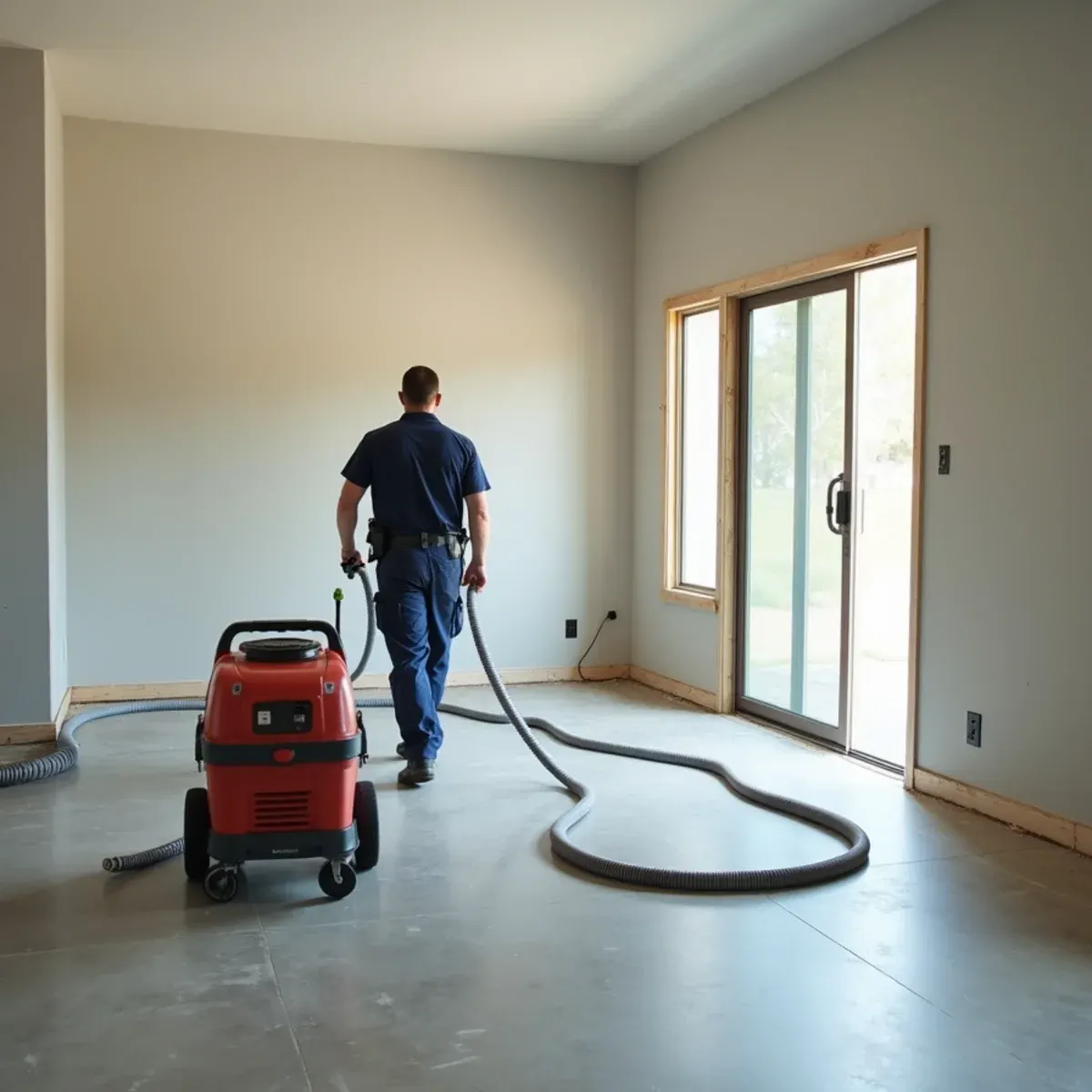
Most of our odor work in Artesia happens on Pioneer Boulevard, not in living rooms. That stretch holds one of the densest runs of independent restaurants and shops in the region, and nearly all of it sits in 1950s buildings that were never designed to house commercial kitchens. Cast iron drain lines built for a shoe store now carry years of cooking grease. When one backs up, the water that comes out is loaded with grease and sewage, and it goes straight under tile and into the wall base.
Grease behaves differently from plain water odor. It bonds to porous surfaces, sits inert while things are cool, and releases again the moment the kitchen heats up, which is why a place can smell clean at nine in the morning and sour by dinner service. Degreasing has to come before any deodorizing step or the treatment just sits on top of the film. We schedule the ozone or hydroxyl window overnight between close and prep, because those rooms have to be unoccupied. Artesia's residential slab homes are straightforward by comparison.
What Artesia Changes About Odor Removal
1Grease-loaded cast iron and backups
Decades of kitchen use in lines sized for retail leaves cast iron coated internally. Backups are not clean water, and the residue soaks into grout, into the slab through cracked tile, and into the bottom of the drywall behind the cook line. Removing that residue is the odor work. Anything sprayed or fogged before the degreasing is done wears off in days.
2Shared walls between adjoining storefronts
Pioneer Boulevard buildings share party walls, and the original construction rarely sealed penetrations between tenant spaces. A sewage backup in one kitchen puts odor into the neighbor's dining room through the wall base and the common ceiling plenum. We ask to inspect both sides before quoting, because treating one unit and leaving the other untouched gives everyone a short-lived result.
3Work has to fit service hours
A closed restaurant loses money every hour. We stage odor work around that: source removal and degreasing after close, air treatment overnight in the empty space, ventilation and clearance before morning prep. Ozone requires the room to be fully unoccupied and aired out before food handling resumes, so we plan the timing with your manager rather than around ours.
How the Work Runs
The method is the same one we use on every odor removal job, documented to the IICRC S500:2025 standard. Here it is in short — the full odor removal & deodorization process explains each stage in detail.
- Locate the residue
- Remove what holds it
- Clean the surfaces that stay
- Filter the air while we work
- Seal only what cannot be cleaned
- Treat the air, then verify
The Artesia Background Worth Knowing
A commercial kitchen is one of the hardest things you can ask a building to accommodate. High water use, continuous drainage, grease loading, floor drains, and equipment connections that get added and modified over the years. When that kitchen is in a building from the 1950s with original cast-iron waste lines, the failure is a matter of time.
There is more on the housing stock, drainage and plumbing history of this city on our water damage restoration in Artesia page.
Artesia at a glance
- Dominant construction era
- 1950–1970
- Foundation type
- slab on grade
- Supply piping found here
- galvanized steel, copper
- Drain line materials
- cast iron
- Terrain and water table
- flat, moderate water table
- Most common local failure
- grease-loaded cast-iron waste lines restricting until a commercial kitchen backs up
- Highest-value local prevention
- hydro-jetting the waste line rather than snaking it, so the pipe wall actually gets cleaned
What It Costs in Artesia
We do not quote a number over the phone before seeing the property — anyone who does is guessing. The variables that actually move the price on a odor removal job are how much material comes out, where the residue ended up, the type of odor involved, and they are broken down in full on the odor removal & deodorization page. The assessment and the written estimate are free anywhere in Artesia, day or night, with no obligation.
Odor Removal Questions from Artesia Homeowners
In most cases, yes, though it depends on how far the water traveled and what it got into. The heavy work, extraction, removing affected base and flooring, and degreasing, happens after close. Air treatment runs overnight in the empty space. If the residue reached under the slab through cracked tile or into a shared wall, that stretches the timeline, and we'll tell you that on the first walkthrough rather than partway in.
It may mask it for a few weeks. Rental units are usually undersized for a whole structure, and they treat air rather than the material producing the odor. They also should not run with anyone home, and long heavy cycles can degrade rubber seals, leather, and paint sheen. If the residue sits in a wall cavity or under the flooring, no amount of ozone reaches it.
Because residue was left somewhere. That is the answer nearly every time. The usual spots are attic insulation, the inside of flex duct, the wall cavity behind drywall that was replaced but never cleaned, the subfloor under new flooring, and the back of a cabinet run. Drying a structure to standard does not remove residue, so a job dried correctly can still smell if cleaning stopped at visible surfaces.
Yes, and on Pioneer Boulevard that is usually how we schedule it. Overnight crews cost somewhat more in labor and almost always cost dramatically less than lost revenue from closing during operating hours.