
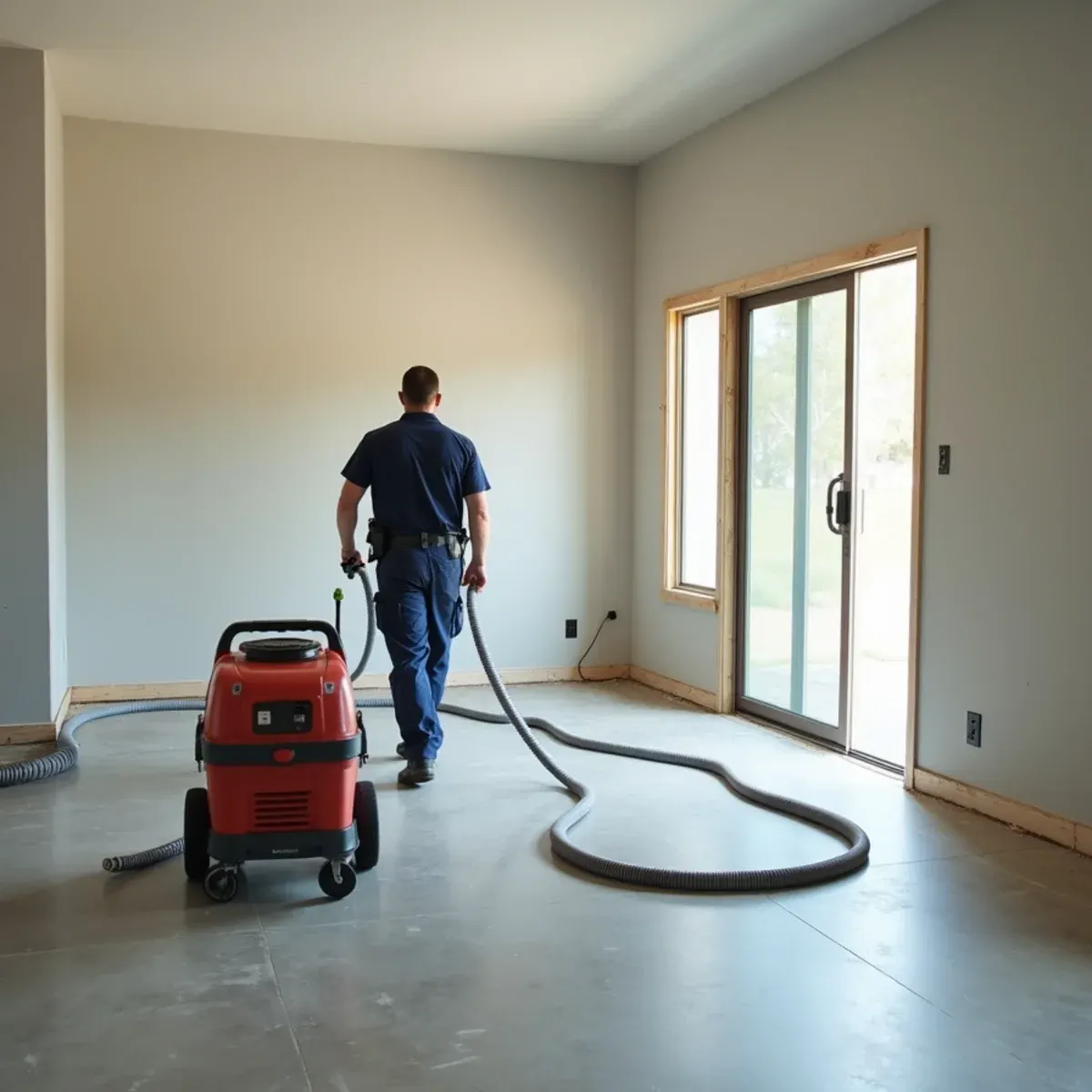
A pinhole in galvanized steel does not announce itself. It weeps a cup a day into the back of a kitchen wall, and the first thing anyone notices is a smell near the floor that gets stronger on warm afternoons. Norwalk filled in between 1945 and 1960, farmland to full city in about fifteen years, and plenty of those houses still run their original galvanized supply, scaled nearly shut from the inside. By the time the odor is obvious, the base plate, the carpet pad and the back of the cabinet run have been damp for months.
Small lots change how the work goes. These homes were built fast and economically with narrow side yards and very little permeable ground between the street and the stucco, so we are often staging equipment in a driveway and running hose out the front. The other Norwalk source is the drain side. Cast-iron laterals are the same age as the supply, and a bad one under the slab gives a sewage-type odor that comes and goes with laundry loads. Those two smells are different, and telling them apart on the first visit saves opening the wrong wall.
What Norwalk Changes About Odor Removal
1Decades of weeping, not a sudden break
Galvanized fails slowly. That matters for odor because a wall damp for six months holds far more microbial residue than one soaked overnight and dried in three days. Longer exposure means more removal: pad, baseboard, the lower drywall, sometimes the toe kick of the original cabinets. Treating the air over material like that is exactly how the smell comes back in August.
2Cast-iron laterals the same age as the supply
The drain side aged right alongside the galvanized. A cracked cast-iron lateral under a Norwalk slab lets waste into the soil, and the odor rises through the slab edge and plumbing penetrations rather than out of a fixture. If the smell tracks with running a washer or a shower rather than with the weather, we camera the line before opening anything.
3San Gabriel River channel on the west edge
Homes near the channel on the western side of the city sit where large regional runoff concentrates during long storms. Saturated ground at the slab edge keeps perimeter walls damp longer after a loss, which slows drying and gives odor more time to establish. We plan for extra dehumidification days on that side of Norwalk rather than pulling equipment on the usual schedule.
How the Work Runs
The method is the same one we use on every odor removal job, documented to the IICRC S500:2025 standard. Here it is in short — the full odor removal & deodorization process explains each stage in detail.
- Locate the residue
- Remove what holds it
- Clean the surfaces that stay
- Filter the air while we work
- Seal only what cannot be cleaned
- Treat the air, then verify
The Norwalk Background Worth Knowing
The homes built in Norwalk during the postwar surge were built to be affordable and built fast, which was exactly the right priority at the time. Seventy years later, some of those choices have consequences.
There is more on the housing stock, drainage and plumbing history of this city on our water damage restoration in Norwalk page.
Norwalk at a glance
- Dominant construction era
- 1945–1960
- Foundation type
- slab on grade
- Supply piping found here
- original galvanized steel
- Drain line materials
- cast iron
- Terrain and water table
- flat, moderate water table
- Most common local failure
- original galvanized supply lines failing after decades of internal scaling and erosion at fittings
- Highest-value local prevention
- clearing yard and area drains before the season, since small lots leave little ground between the street and the house
What It Costs in Norwalk
We do not quote a number over the phone before seeing the property — anyone who does is guessing. The variables that actually move the price on a odor removal job are how much material comes out, where the residue ended up, the type of odor involved, and they are broken down in full on the odor removal & deodorization page. The assessment and the written estimate are free anywhere in Norwalk, day or night, with no obligation.
Odor Removal Questions from Norwalk Homeowners
Repiping stops the source, and that has to happen. It does not remove what the leak already left behind. Months of slow weeping load the base plate, insulation, carpet pad and the back of the cabinets with microbial residue that keeps off-gassing long after the plumbing is dry. Sequence it the useful way: repair or repipe first, then let us open the wetted section, take out what absorbed the water, and clean the framing that stays.
It may mask it for a few weeks. Rental units are usually undersized for a whole structure, and they treat air rather than the material producing the odor. They also should not run with anyone home, and long heavy cycles can degrade rubber seals, leather, and paint sheen. If the residue sits in a wall cavity or under the flooring, no amount of ozone reaches it.
Because residue was left somewhere. That is the answer nearly every time. The usual spots are attic insulation, the inside of flex duct, the wall cavity behind drywall that was replaced but never cleaned, the subfloor under new flooring, and the back of a cabinet run. Drying a structure to standard does not remove residue, so a job dried correctly can still smell if cleaning stopped at visible surfaces.
If it is original galvanized from the postwar build-out, it has exceeded any reasonable service life. If you have had one failure, a second is a matter of when. The cheapest moment to repipe is while walls are already open for a repair — the demolition and patching are already in the scope.