
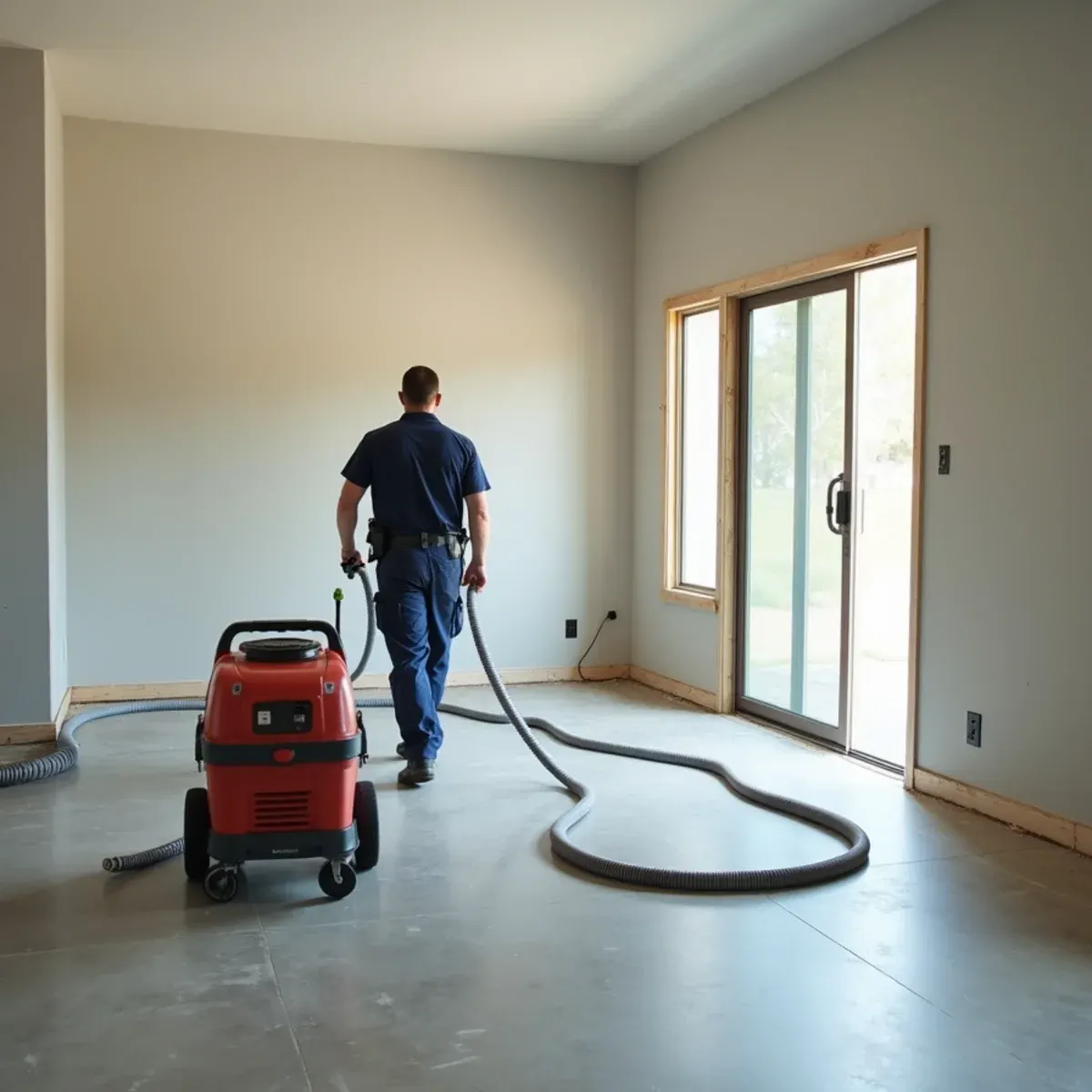
The smell is faintly sewage, it is strongest in one bedroom, and there has never been a backup. That call comes out of Bellflower more than anywhere else we work, and the reason is age. This was dairy and orchard land, named for the Bellflower apple, that filled fast after the war with small houses on small lots. In places the original systems are eighty years old, older than nearly anything in Orange County. Cast iron corrodes from the inside, cracks under the slab, and lets waste into the soil with nothing surfacing at a fixture.
Once waste has been in the soil under a slab, deodorizing the room accomplishes nothing, because the residue is beneath the concrete. That work runs through a plumber first: camera the line, locate the break, repair or line it. Then we handle what came up through the slab edge and the plumbing penetrations, meaning pad, base plate, lower drywall and the bottom of the cabinets. The multi-family added here since the 1970s adds a wrinkle, because several units often share one original lateral and one break becomes everybody's smell.
What Bellflower Changes About Odor Removal
1Galvanized and cast iron failing the same decade
Supply and drain went in together and are wearing out together. We frequently find two sources in one house: a slow galvanized weep producing musty MVOC odor inside a wall, and a cracked lateral producing sewage odor at the floor. They smell different, they sit in different places, and treating one while ignoring the other is how a homeowner ends up paying twice.
2Shared laterals in the multi-family stock
Plenty of apartments and duplexes were added to these small lots over the decades, often tied into a single original lateral. When it fails, the odor appears in whichever unit sits lowest or nearest the break, which is not necessarily where the problem is. Those jobs need the whole run cameraed and every affected unit documented separately for the carriers involved.
3Small lots leave nowhere to stage
Houses here sit close together on narrow lots with short driveways. Containment matters more when a neighbor's window is twelve feet from the wall we are opening, and equipment placement takes planning. We set negative pressure and run hose to the street rather than working open to the side yard, especially on anything involving sewage residue.
How the Work Runs
The method is the same one we use on every odor removal job, documented to the IICRC S500:2025 standard. Here it is in short — the full odor removal & deodorization process explains each stage in detail.
- Locate the residue
- Remove what holds it
- Clean the surfaces that stay
- Filter the air while we work
- Seal only what cannot be cleaned
- Treat the air, then verify
The Bellflower Background Worth Knowing
Galvanized steel was the standard supply pipe when Bellflower was being built, and it fails from the inside out. The zinc lining wears through, the steel underneath corrodes, and scale builds on the interior wall until the pipe is a fraction of its original diameter. Narrower pipe means faster, more turbulent water, which chews at elbows and threaded fittings until one of them lets go. Hot lines corrode faster than cold, which is why hot water pressure is usually the first thing to drop. Eighty years is well past any service life anyone intended when this was installed.
There is more on the housing stock, drainage and plumbing history of this city on our water damage restoration in Bellflower page.
Bellflower at a glance
- Dominant construction era
- 1940–1960
- Foundation type
- slab on grade
- Supply piping found here
- original galvanized steel, early copper
- Drain line materials
- cast iron
- Terrain and water table
- flat, moderate water table
- Most common local failure
- original galvanized supply lines and cast-iron laterals failing together in the same decade
- Highest-value local prevention
- scoping the sewer lateral, which on a house this age has usually never been looked at
What It Costs in Bellflower
We do not quote a number over the phone before seeing the property — anyone who does is guessing. The variables that actually move the price on a odor removal job are how much material comes out, where the residue ended up, the type of odor involved, and they are broken down in full on the odor removal & deodorization page. The assessment and the written estimate are free anywhere in Bellflower, day or night, with no obligation.
Odor Removal Questions from Bellflower Homeowners
Working fixtures do not rule out a failed lateral. Cast iron of that age commonly cracks along the bottom of the pipe, so waste leaves into the soil while everything still flushes normally. The odor then rises at the slab edge and around plumbing penetrations, which is why it turns up in a bedroom rather than a bathroom. A camera inspection settles it in under an hour, and it should happen before anyone deodorizes anything.
It may mask it for a few weeks. Rental units are usually undersized for a whole structure, and they treat air rather than the material producing the odor. They also should not run with anyone home, and long heavy cycles can degrade rubber seals, leather, and paint sheen. If the residue sits in a wall cavity or under the flooring, no amount of ozone reaches it.
Because residue was left somewhere. That is the answer nearly every time. The usual spots are attic insulation, the inside of flex duct, the wall cavity behind drywall that was replaced but never cleaned, the subfloor under new flooring, and the back of a cabinet run. Drying a structure to standard does not remove residue, so a job dried correctly can still smell if cleaning stopped at visible surfaces.
It is the most common gap we see here. A cast iron lateral that age has corroded along the bottom, the joints have shifted, and the parkway trees on most Bellflower streets have had seventy years to find them. A camera inspection costs a small fraction of a sewage remediation, and on a line that has never been scoped it usually finds something worth knowing about before it finds you at two in the morning.