
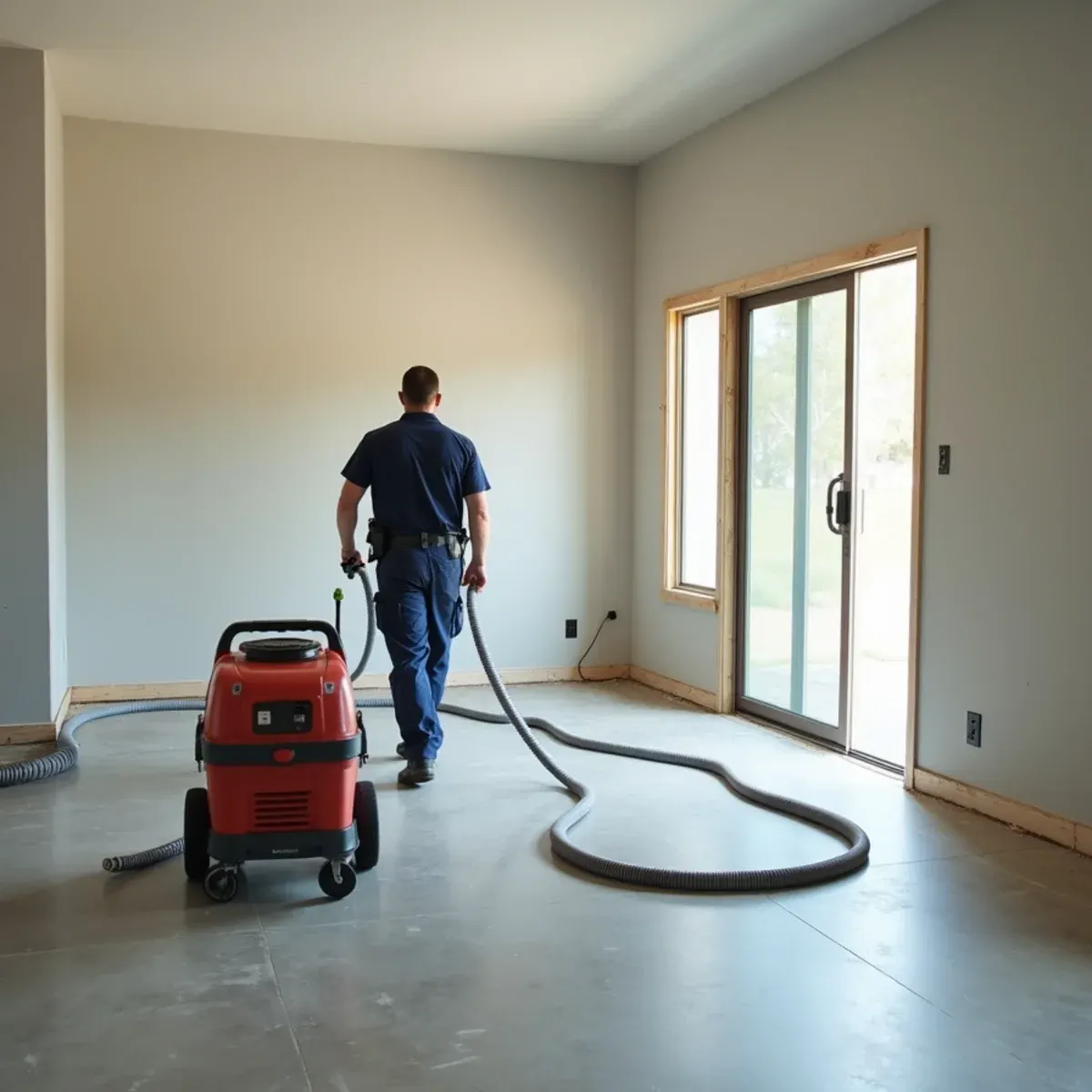
Lakewood went up in about three years, roughly seventeen and a half thousand homes, at a pace that hit a hundred a day. Crews framed the same plan over and over, and the plumbing went in the same wall every time. Seventy-plus years later that uniformity is why odor calls here follow a script. The original galvanized steel supply lines are rusting from the inside, and galvanized fails slowly, weeping into a wall cavity for months before anything shows on the surface.
So in Lakewood the smell is usually the first symptom, not the last. And because kitchen, bath and laundry share plumbing walls in these houses, one soaked cavity feeds odor into three rooms at once. Rust-tinged, slightly metallic, mixed with the sour note of wet bottom plate and old paper-faced drywall. We open the shared wall from the least visible side, clean and treat the framing and the slab edge, then handle cabinet toe kicks separately, because they hold residue people forget about.
What Lakewood Changes About Odor Removal
1One wet wall, three rooms
The clustered wet core was a construction efficiency. Kitchen sink, bathroom, and laundry hookups share framing so the plumber ran one stack. When that cavity gets wet, odor shows up in all three rooms, and homeowners chase it room by room without finding it. We treat the shared wall as one unit and open it in the right place the first time.
2Galvanized leaks smell before they show
A pinhole in seventy-year-old galvanized pipe releases a fine spray, not a flood. It wets insulation and framing gradually, and the first thing anyone notices is a smell near the baseboard. If a Lakewood house still has original steel supply lines, treat a persistent musty or metallic odor as a plumbing symptom until a moisture meter says otherwise.
3Identical plans speed the diagnosis
There are only a handful of original floor plans across the whole city, and additions tend to follow the same few patterns. We know where the wall runs, where the slab penetrations are, and which side of the wall to open so the repair is easier. That means less exploratory demolition and a smaller deodorization footprint than the same job elsewhere.
How the Work Runs
The method is the same one we use on every odor removal job, documented to the IICRC S500:2025 standard. Here it is in short — the full odor removal & deodorization process explains each stage in detail.
- Locate the residue
- Remove what holds it
- Clean the surfaces that stay
- Filter the air while we work
- Seal only what cannot be cleaned
- Treat the air, then verify
The Lakewood Background Worth Knowing
Galvanized steel supply piping was standard when Lakewood was built, and it fails in a specific and predictable way. The zinc coating protecting the steel wears through from the inside, the steel corrodes, and scale builds up on the interior wall — narrowing the pipe over decades. As the diameter shrinks, water velocity and turbulence increase, which accelerates the erosion at elbows and fittings until a thin spot lets go.
There is more on the housing stock, drainage and plumbing history of this city on our water damage restoration in Lakewood page.
Lakewood at a glance
- Dominant construction era
- 1950–1953
- Foundation type
- slab on grade
- Supply piping found here
- original galvanized steel
- Drain line materials
- cast iron
- Terrain and water table
- flat, moderate water table
- Most common local failure
- seventy-year-old galvanized supply lines letting go at a scaled, eroded fitting
- Highest-value local prevention
- repiping while walls are already open for a repair, rather than as a separate project later
What It Costs in Lakewood
We do not quote a number over the phone before seeing the property — anyone who does is guessing. The variables that actually move the price on a odor removal job are how much material comes out, where the residue ended up, the type of odor involved, and they are broken down in full on the odor removal & deodorization page. The assessment and the written estimate are free anywhere in Lakewood, day or night, with no obligation.
Odor Removal Questions from Lakewood Homeowners
Because repiping stops the leak, it doesn't remove what the leak left. If galvanized seeped into that shared wall for a year or two before anyone caught it, the insulation, the bottom plate and the back of the drywall are still carrying the residue. A plumber's access hole gets patched and sealed over the top of it. We open the cavity properly, remove and clean the affected material, then treat the air.
It may mask it for a few weeks. Rental units are usually undersized for a whole structure, and they treat air rather than the material producing the odor. They also should not run with anyone home, and long heavy cycles can degrade rubber seals, leather, and paint sheen. If the residue sits in a wall cavity or under the flooring, no amount of ozone reaches it.
Because residue was left somewhere. That is the answer nearly every time. The usual spots are attic insulation, the inside of flex duct, the wall cavity behind drywall that was replaced but never cleaned, the subfloor under new flooring, and the back of a cabinet run. Drying a structure to standard does not remove residue, so a job dried correctly can still smell if cleaning stopped at visible surfaces.
Have it assessed. Seventy-year-old galvanized has exceeded any reasonable service life, and declining pressure or rust-colored water means it is well along. If a repair is already opening walls, that is the cheapest moment you will ever get to repipe — the demolition and patching are already in the scope.