
Under a square mile, and among the most densely populated ground in Los Angeles County. That shapes every odor job in Hawaiian Gardens. A lot of the housing is stacked apartments built between the fifties and the mid seventies, where three or four units share one vertical plumbing stack inside a common chase. A drain failure on the top floor sends water and residue down that chase, and the tenant who smells it first is often two floors below the actual problem.
Two practical consequences. First, we need the chase opened, which means the owner or property manager has to authorize access, and most of our calls here come from renters who can't authorize anything. We'll do the inspection free and put the findings in writing so you have something to hand your landlord. Second, ozone is mostly off the table in an occupied building this dense, since it requires a genuinely empty space. We work with hydroxyl, containment and negative air instead, and that is the honest tradeoff.
What Hawaiian Gardens Changes About Odor Removal
1The stack is the odor path
Vertical plumbing chases run floor to floor with almost nothing sealing them at each level. Sewage residue on the chase framing, or wet insulation packed around the pipe, feeds odor into every unit the stack passes. Deodorizing one apartment while the chase stays contaminated buys a couple of weeks. The building has to be treated as one system.
2Renters need documentation, not promises
If you rent, you can't approve demolition and you shouldn't have to argue about a smell. Our assessment is free, and we write up what we found, where the source is and what it will take, in plain language. Tenants use that with property managers, and managers use it with carriers. We bill the insurance directly once the owner gives the go-ahead.
3No room to stage equipment
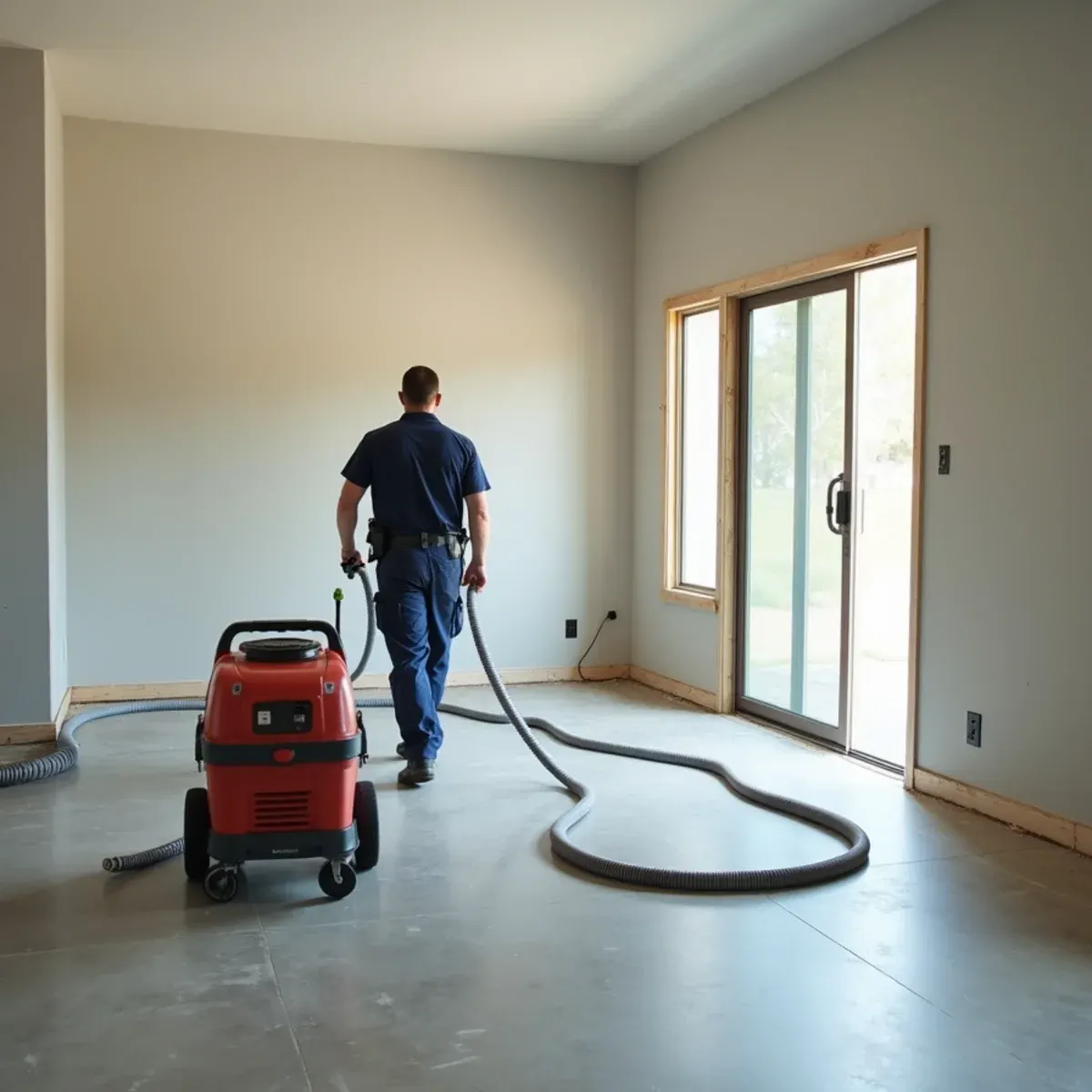
Lots here are tight, parking is scarce, and there is rarely a driveway or a yard to set equipment in. We plan for that: smaller footprint air scrubbers, hoses run through stairwells rather than blocking walkways, and containment built so neighbors keep their access. It takes a bit longer than a suburban job, and we'd rather say that than surprise you.
How the Work Runs
The method is the same one we use on every odor removal job, documented to the IICRC S500:2025 standard. Here it is in short — the full odor removal & deodorization process explains each stage in detail.
- Locate the residue
- Remove what holds it
- Clean the surfaces that stay
- Filter the air while we work
- Seal only what cannot be cleaned
- Treat the air, then verify
The Hawaiian Gardens Background Worth Knowing
In a multi-story apartment building, plumbing runs vertically through shared chases connecting stacked units. When a supply line or drain fails in that chase, water follows it downward through every unit below — and it does not stop politely at unit boundaries.
There is more on the housing stock, drainage and plumbing history of this city on our water damage restoration in Hawaiian Gardens page.
Hawaiian Gardens at a glance
- Dominant construction era
- 1950–1975
- Foundation type
- slab on grade
- Supply piping found here
- galvanized steel, copper, shared vertical stacks
- Drain line materials
- cast iron
- Terrain and water table
- flat, moderate water table
- Most common local failure
- stack failures that travel down through every unit below, expanding by one unit for roughly every extra hour of delay
- Highest-value local prevention
- immediate written notice to management, because in a stacked building the clock does more damage than the water
What It Costs in Hawaiian Gardens
We do not quote a number over the phone before seeing the property — anyone who does is guessing. The variables that actually move the price on a odor removal job are how much material comes out, where the residue ended up, the type of odor involved, and they are broken down in full on the odor removal & deodorization page. The assessment and the written estimate are free anywhere in Hawaiian Gardens, day or night, with no obligation.
Odor Removal Questions from Hawaiian Gardens Homeowners
Anyone can call, including you. We'll come out and assess at no cost, and we can usually tell from the pattern whether the source is in your walls or in the shared stack. What we can't do is open a chase or start removal without the owner's or property manager's authorization. So we document the findings, give you something to hand them, and follow up directly with them if you'd like.
It may mask it for a few weeks. Rental units are usually undersized for a whole structure, and they treat air rather than the material producing the odor. They also should not run with anyone home, and long heavy cycles can degrade rubber seals, leather, and paint sheen. If the residue sits in a wall cavity or under the flooring, no amount of ozone reaches it.
Because residue was left somewhere. That is the answer nearly every time. The usual spots are attic insulation, the inside of flex duct, the wall cavity behind drywall that was replaced but never cleaned, the subfloor under new flooring, and the back of a cabinet run. Drying a structure to standard does not remove residue, so a job dried correctly can still smell if cleaning stopped at visible surfaces.
Photograph and video everything before moving anything, notify your property manager in writing immediately, and move belongings out of the affected area if it is safe to do so. Do not wait for the neighbor upstairs to act — the damage compounds every hour and the written timeline protects you.