
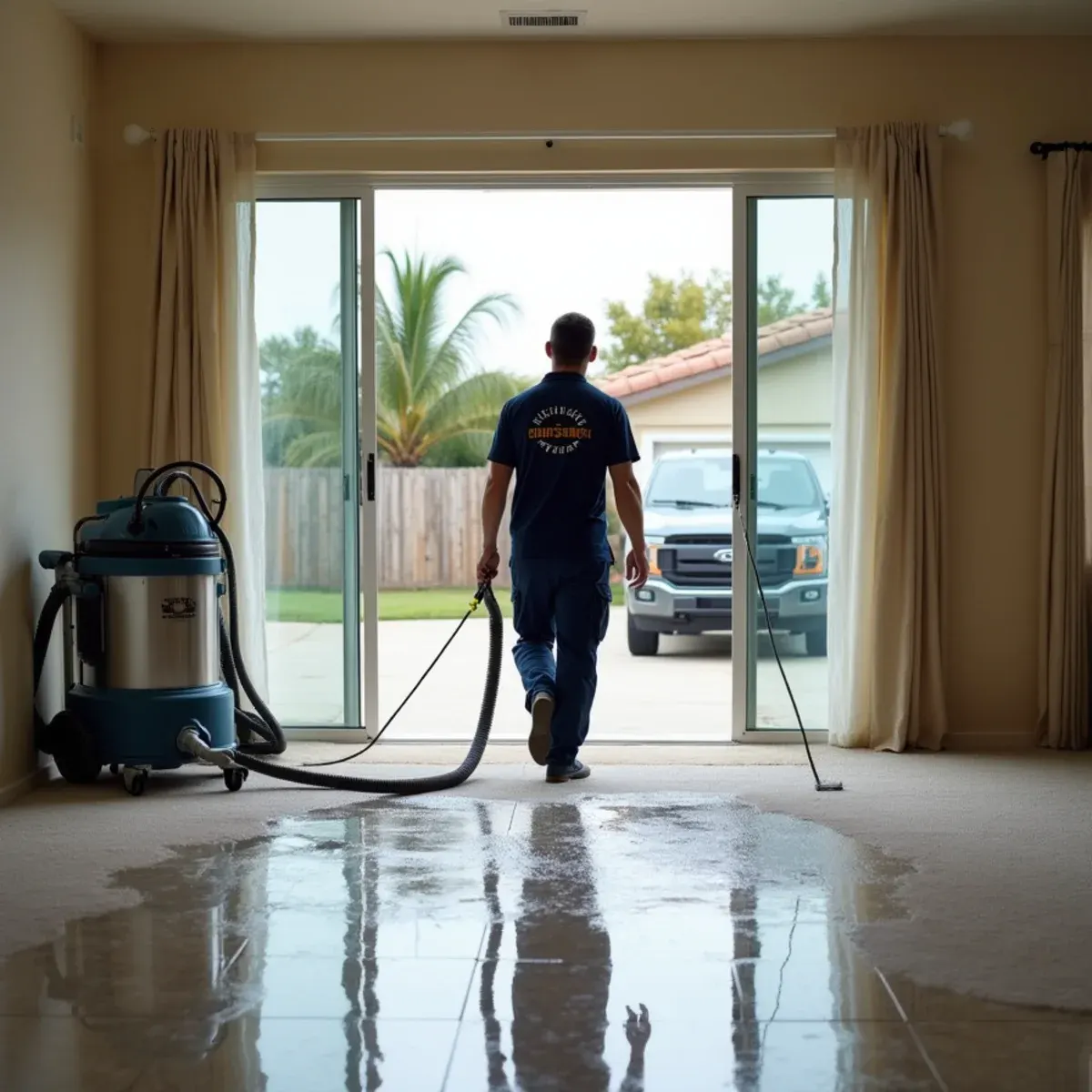
The tenant who calls us is usually not the tenant with the problem. In a Hawaiian Gardens apartment building, water from a failed line on an upper floor finds the plumbing chase and goes straight down — first the unit below, then the one below that — and the person who finally notices a bulging ceiling is often three floors from the actual break. This city is under a square mile and among the most densely populated in Los Angeles County, with a large share of 1960s and 1970s apartments built around shared vertical stacks. This is simply what a loss looks like here.
Most residents rent, and that adds a step. Extraction in a multi-unit building needs the owner or management to authorize the work, so the fastest thing a tenant can do is put the report in writing immediately — text, email, anything with a timestamp. While that's happening, we can be staging. Access is the other constraint: narrow stairs, no elevator in many of these buildings, and limited parking near the Carson Street corridor, so we plan on portable extractors carried up rather than a truck-mount reaching the top floor.
What Hawaiian Gardens Changes About Water Extraction
1One stack, every unit below
Water in a vertical chase doesn't stop at the unit that reported it. It wets the chase framing, the ceiling assembly and the wall cavity of every unit it passes, and the damage expands by roughly another unit for each extra hour of delay. We meter down the stack from the top affected unit rather than starting where the ceiling is visibly wet, because visible always lags actual.
2Written notice starts the clock
In a stacked building the clock does more damage than the water. A timestamped written notice to management protects the tenant, creates the record an insurer will want, and is usually what unlocks authorization for us to begin. Verbal reports to a manager get remembered differently later. Send a text or email, keep a copy, and note the time you first saw water.
3Portables where truck-mounts can't reach
Many buildings here have narrow interior stairs, no elevator, and street parking that puts the truck well away from the door. We carry portable extraction units up by hand and run compact pumps rather than pretending a long hose lay works in every building. That moves less volume per hour than a truck-mount, so we compensate with more units and more hands.
How the Work Runs
The method is the same one we use on every water extraction job, documented to the IICRC S500:2025 standard. Here it is in short — the full water extraction & removal process explains each stage in detail.
- Bulk removal with submersible pumps
- Truck-mounted extraction on carpet and pad
- Hard-surface and specialty extraction
- Cavity and void extraction
- Removing what cannot be saved
- Post-extraction moisture reading
The Hawaiian Gardens Background Worth Knowing
In a multi-story apartment building, plumbing runs vertically through shared chases connecting stacked units. When a supply line or drain fails in that chase, water follows it downward through every unit below — and it does not stop politely at unit boundaries.
There is more on the housing stock, drainage and plumbing history of this city on our water damage restoration in Hawaiian Gardens page.
Hawaiian Gardens at a glance
- Dominant construction era
- 1950–1975
- Foundation type
- slab on grade
- Supply piping found here
- galvanized steel, copper, shared vertical stacks
- Drain line materials
- cast iron
- Terrain and water table
- flat, moderate water table
- Most common local failure
- stack failures that travel down through every unit below, expanding by one unit for roughly every extra hour of delay
- Highest-value local prevention
- immediate written notice to management, because in a stacked building the clock does more damage than the water
What It Costs in Hawaiian Gardens
We do not quote a number over the phone before seeing the property — anyone who does is guessing. The variables that actually move the price on a water extraction job are volume and depth of water, flooring type, contamination level, and they are broken down in full on the water extraction & removal page. The assessment and the written estimate are free anywhere in Hawaiian Gardens, day or night, with no obligation.
Water Extraction Questions from Hawaiian Gardens Homeowners
We can come look and document your unit right away, and documentation matters more than most tenants realize. Actually removing water and materials in a rental needs the owner or management to authorize it, so we'll help push that along. What you should do immediately: report it in writing with a timestamp, photograph the ceiling and anything of yours that's wet, and move belongings out from under it. In a stacked building, delay is what turns one unit into four.
For a typical single-room residential loss, extraction runs one to three hours. Multi-room losses or Category 3 water can take most of a day because of containment setup and material removal. We will give you a realistic timeframe after the walkthrough, before we start.
Often we can save the carpet and only replace the pad, which is the cheaper and less disruptive path. The deciding factors are water category, how long it sat, and whether the pad is a moisture barrier type. Clean water caught quickly usually means the carpet stays.
Photograph and video everything before moving anything, notify your property manager in writing immediately, and move belongings out of the affected area if it is safe to do so. Do not wait for the neighbor upstairs to act — the damage compounds every hour and the written timeline protects you.