
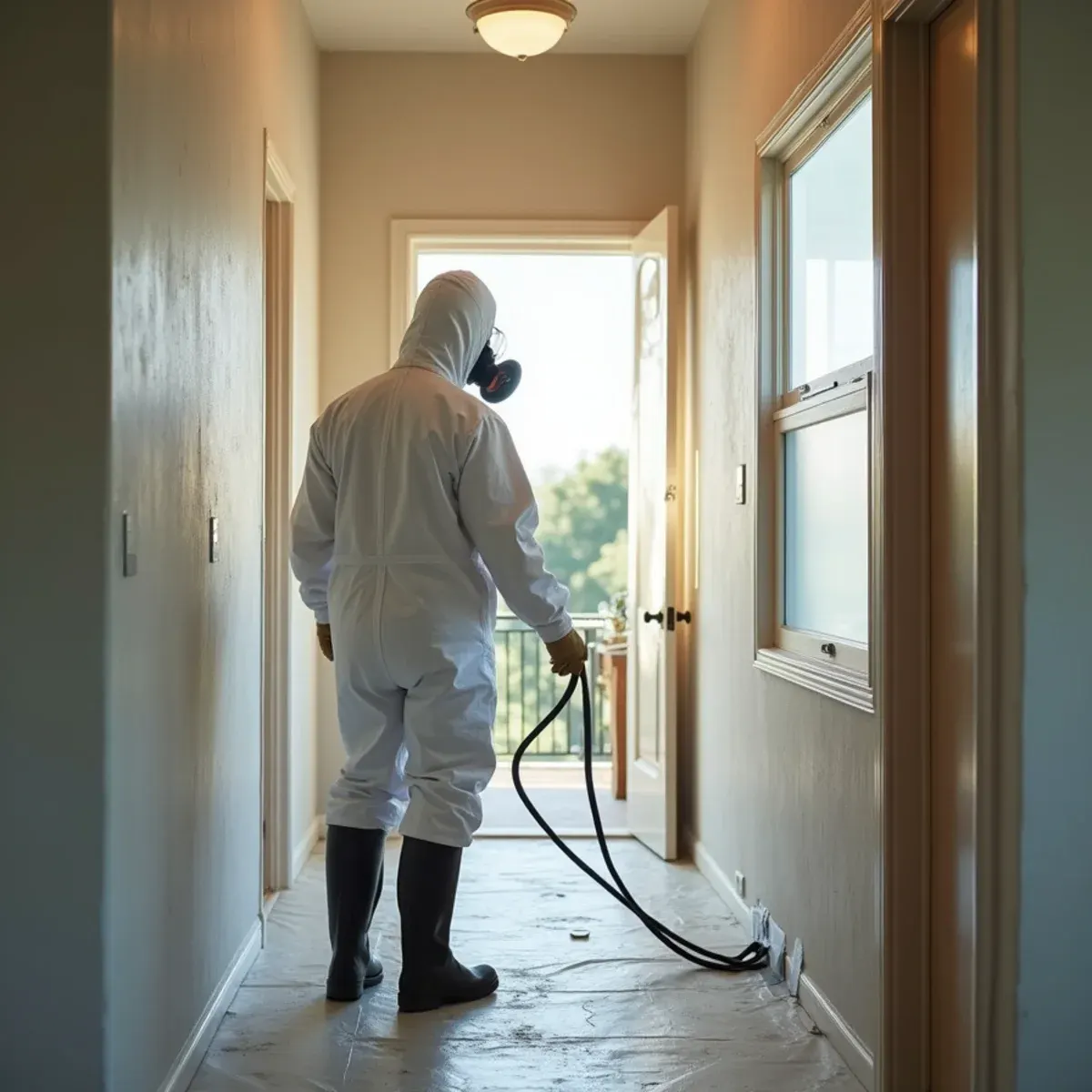
The clock does more damage than the water here. Hawaiian Gardens is the smallest city in Los Angeles County by area and among the most densely populated per acre, and a large share of that density is sixties and seventies apartment buildings arranged around shared vertical plumbing stacks. When a stack blocks, waste travels down the chase, and it reaches every unit below the obstruction in turn. It does not stop because somebody noticed. It stops when the water gets turned off building-wide, and until that happens each hour tends to bring another unit into the loss.
Almost everyone affected is a renter, which changes the shape of the problem in a way that has nothing to do with plumbing. The tenant standing in it usually cannot authorize any work. The person who can authorize it is a management company that may not answer at eleven at night. And the tenant who first notices something wrong is often not the tenant with the real problem, because the unit at the bottom of the stack takes the volume from everyone above. Around Carson Street we have walked into buildings where three apartments were affected and only one had called.
What Hawaiian Gardens Changes About Sewage Cleanup
1The lowest unit takes everyone's water
In a stacked building, the ground-floor apartment is the relief point for the whole column. That resident did not cause it, cannot stop it and often gets contacted last. Our first action on arrival is getting water use shut down for the entire stack, not just the unit that called, because every shower and dishwasher above adds directly to what is on that floor.
2Who can actually authorize the work
A tenant can let us in. A tenant generally cannot sign for demolition of the building's structure. That gap costs hours in the middle of the night, and Category 3 water gets worse by the hour. We start emergency containment and extraction to limit spread while chasing authorization, and we tell tenants plainly to put their notice to management in writing with a timestamp.
3Contents coverage versus the building policy
Renters are often surprised that the owner's policy covers the structure and not their belongings, and that sewer backup usually needs a separate endorsement on either side. Photograph everything before it moves, including the underside of furniture and the bottom of closets. We document each unit as its own file so a resident's claim does not depend on a report written for the property owner.
How the Work Runs
The method is the same one we use on every sewage cleanup job, documented to the IICRC S500:2025 standard. Here it is in short — the full sewage backup cleanup process explains each stage in detail.
- Secure the area and set containment
- Full PPE and safe extraction
- Remove contaminated porous materials
- Clean and disinfect all remaining surfaces
- Deodorize at the source
- Dry, verify, and clear
The Hawaiian Gardens Background Worth Knowing
In a multi-story apartment building, plumbing runs vertically through shared chases connecting stacked units. When a supply line or drain fails in that chase, water follows it downward through every unit below — and it does not stop politely at unit boundaries.
There is more on the housing stock, drainage and plumbing history of this city on our water damage restoration in Hawaiian Gardens page.
Hawaiian Gardens at a glance
- Dominant construction era
- 1950–1975
- Foundation type
- slab on grade
- Supply piping found here
- galvanized steel, copper, shared vertical stacks
- Drain line materials
- cast iron
- Terrain and water table
- flat, moderate water table
- Most common local failure
- stack failures that travel down through every unit below, expanding by one unit for roughly every extra hour of delay
- Highest-value local prevention
- immediate written notice to management, because in a stacked building the clock does more damage than the water
What It Costs in Hawaiian Gardens
We do not quote a number over the phone before seeing the property — anyone who does is guessing. The variables that actually move the price on a sewage cleanup job are affected square footage, volume of porous material removed, contents in the affected area, and they are broken down in full on the sewage backup cleanup page. The assessment and the written estimate are free anywhere in Hawaiian Gardens, day or night, with no obligation.
Sewage Cleanup Questions from Hawaiian Gardens Homeowners
Send written notice now, by text or email, with the time on it, even though you have already called. That record matters later. Stop using water in your unit and ask the neighbors above you to do the same, because in a stacked building they are feeding it. Photograph everything before you move it. Stay out of the standing water. We can begin emergency containment and extraction to stop the spread while authorization for the structural work is being sorted out.
It depends on the source. A toilet that overflows with clean bowl water because of a stuck fill valve is Category 1 or 2 and is far less serious. A toilet that backs up from the main line is carrying waste from the whole system, and that is Category 3 — it needs the full protocol.
No. Standard practice for Category 3 water is removal and disposal of carpet and pad that were contacted. Porous materials cannot be reliably disinfected all the way through, and the health risk of leaving them is not worth the savings.
Photograph and video everything before moving anything, notify your property manager in writing immediately, and move belongings out of the affected area if it is safe to do so. Do not wait for the neighbor upstairs to act — the damage compounds every hour and the written timeline protects you.