
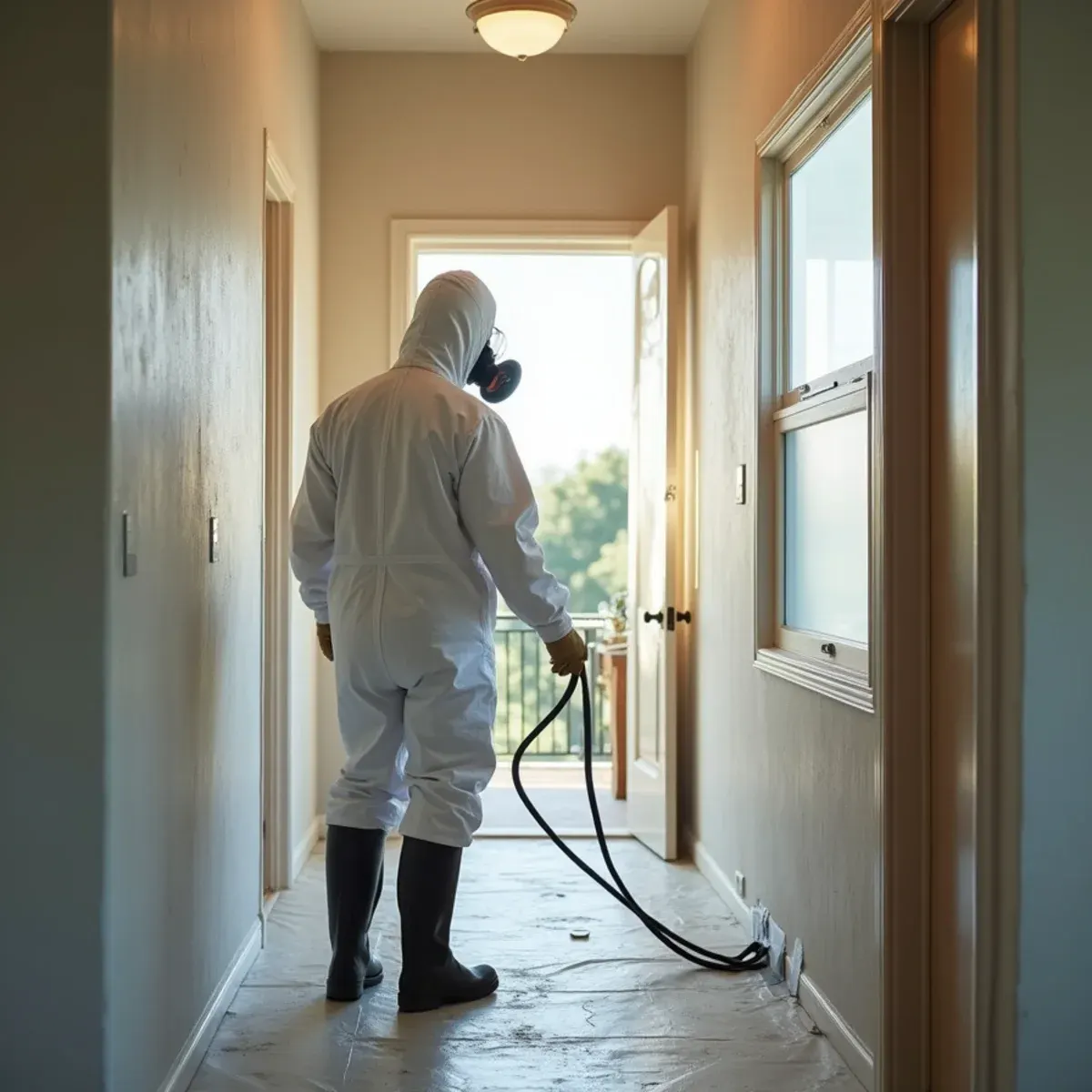
Open a wall in a Lakewood house and you find three rooms' plumbing inside it. Roughly 17,500 homes went up here between 1950 and 1953, at times a hundred a day, and the way that pace was achieved was by clustering the wet rooms: kitchen, bathroom and laundry all sharing one plumbing core. It made the houses fast to build and it makes a sewage backup here a three-room problem from the first minute. Contaminated water that surfaces in the tub is already in the wall cavity the kitchen sink drains into.
The cast iron in those walls is the other half of it. An entire city's waste lines share not just a decade but a three-year installation window, which is unusual anywhere. Cast iron fails from the inside out: the bottom of the pipe channels as it corrodes, the interior roughens, solids catch on the roughness, and the line closes down. Lakewood's pipe is now more than seventy years old and squarely in that range. Homes on the same street with the same plan tend to reach the same point within a few years of each other.
What Lakewood Changes About Sewage Cleanup
1One wet wall, three rooms affected
Because the kitchen, bath and laundry share a plumbing core, containment and demolition rarely stay inside the room where the water showed up. We open and check all three from the start rather than working one and coming back. It looks like a bigger scope on paper. It is actually the smaller job, because the alternative is finishing the bathroom and then discovering the kitchen cabinet base has been wet for four days.
2Cast iron channeled at the bottom
Seventy-year-old cast iron does not fail with a clean break. It thins along the bottom of the pipe, roughens inside, and collects everything that passes. That is why these houses often have a history of slow drains before the day they stop entirely. When we scope the line after cleanup, we are looking at wall thickness and bottom channeling, not just whatever caused this particular blockage.
3The walls are already open
The cheapest moment to replace a failing drain section is while the wall is opened for the cleanup, before rebuild. Doing it later as its own project means paying twice for the same demolition and finish work. We flag it during the job and tell you what the camera shows, so the decision gets made at the point where it costs the least, rather than being revisited in two years.
How the Work Runs
The method is the same one we use on every sewage cleanup job, documented to the IICRC S500:2025 standard. Here it is in short — the full sewage backup cleanup process explains each stage in detail.
- Secure the area and set containment
- Full PPE and safe extraction
- Remove contaminated porous materials
- Clean and disinfect all remaining surfaces
- Deodorize at the source
- Dry, verify, and clear
The Lakewood Background Worth Knowing
Galvanized steel supply piping was standard when Lakewood was built, and it fails in a specific and predictable way. The zinc coating protecting the steel wears through from the inside, the steel corrodes, and scale builds up on the interior wall — narrowing the pipe over decades. As the diameter shrinks, water velocity and turbulence increase, which accelerates the erosion at elbows and fittings until a thin spot lets go.
There is more on the housing stock, drainage and plumbing history of this city on our water damage restoration in Lakewood page.
Lakewood at a glance
- Dominant construction era
- 1950–1953
- Foundation type
- slab on grade
- Supply piping found here
- original galvanized steel
- Drain line materials
- cast iron
- Terrain and water table
- flat, moderate water table
- Most common local failure
- seventy-year-old galvanized supply lines letting go at a scaled, eroded fitting
- Highest-value local prevention
- repiping while walls are already open for a repair, rather than as a separate project later
What It Costs in Lakewood
We do not quote a number over the phone before seeing the property — anyone who does is guessing. The variables that actually move the price on a sewage cleanup job are affected square footage, volume of porous material removed, contents in the affected area, and they are broken down in full on the sewage backup cleanup page. The assessment and the written estimate are free anywhere in Lakewood, day or night, with no obligation.
Sewage Cleanup Questions from Lakewood Homeowners
Because in these 1950-53 Lakewood plans, those are the same wall. The kitchen sink, the bathroom fixtures and usually the laundry all drain into one shared plumbing core, so contaminated water in that cavity is behind the kitchen cabinets whether or not anything ever showed on the kitchen floor. We meter both sides before cutting. If the kitchen side reads dry, it stays. When it does not, opening it now costs far less than opening it after the tile is back on.
It depends on the source. A toilet that overflows with clean bowl water because of a stuck fill valve is Category 1 or 2 and is far less serious. A toilet that backs up from the main line is carrying waste from the whole system, and that is Category 3 — it needs the full protocol.
No. Standard practice for Category 3 water is removal and disposal of carpet and pad that were contacted. Porous materials cannot be reliably disinfected all the way through, and the health risk of leaving them is not worth the savings.
Have it assessed. Seventy-year-old galvanized has exceeded any reasonable service life, and declining pressure or rust-colored water means it is well along. If a repair is already opening walls, that is the cheapest moment you will ever get to repipe — the demolition and patching are already in the scope.