
The name is a clue. Fountain Valley sits on what was historically called Gospel Swamp — wetland drained and filled before the tract homes went in during the 1960s and 1970s — and it has one of the shallowest water tables in Orange County. On ground this flat, storm water doesn't run off. It sits. A yard drain packed with leaves in November becomes a pond against your stem wall in February, and that pond only has to be an inch deep to find its way under a slider track and into the living room.
The housing is unusually consistent: slab-on-grade tracts built in a narrow window, well kept, mostly owner-occupied on the streets around Mile Square Regional Park and off Brookhurst. That consistency means the same details fail across the city on the same night — thresholds, garage slabs, and side yards where a fence line blocks the only drainage path. It also means slab vapor is a normal background condition here. After a wet week, damp flooring is often the slab breathing, not a leak.
What Fountain Valley Changes About Storm Damage
1Clear yard drains before November
On dead-flat ground the yard drains are the only exit water has. One blocked grate in a side yard turns a planting bed into standing water against the foundation. Pull the grates, rod the lines, and confirm they actually discharge before the season starts. This is the cheapest storm prevention in the city and the one most people skip until the second year the garage floods.
2Garage slabs and low thresholds
Most storm intrusions we see here come in at floor level rather than from above. The garage slab sits low, sliders sit in tracks that have settled, and a quarter inch of ponding is enough to cross them. Extraction is straightforward; what matters is drying the wall base and the bottom plate before wet drywall wicks upward and takes the insulation with it.
3A wet slab isn't always a leak
With ground water this close to the surface, slabs push vapor upward year-round and harder after a long soak. We take in-situ relative humidity readings inside the slab before recommending any flooring work, because installing new floor over a slab that's still releasing moisture guarantees a repeat failure. Sometimes the correct answer is a vapor barrier, not a repair.
How the Work Runs
The method is the same one we use on every storm damage job, documented to the IICRC S500:2025 standard. Here it is in short — the full storm damage restoration process explains each stage in detail.
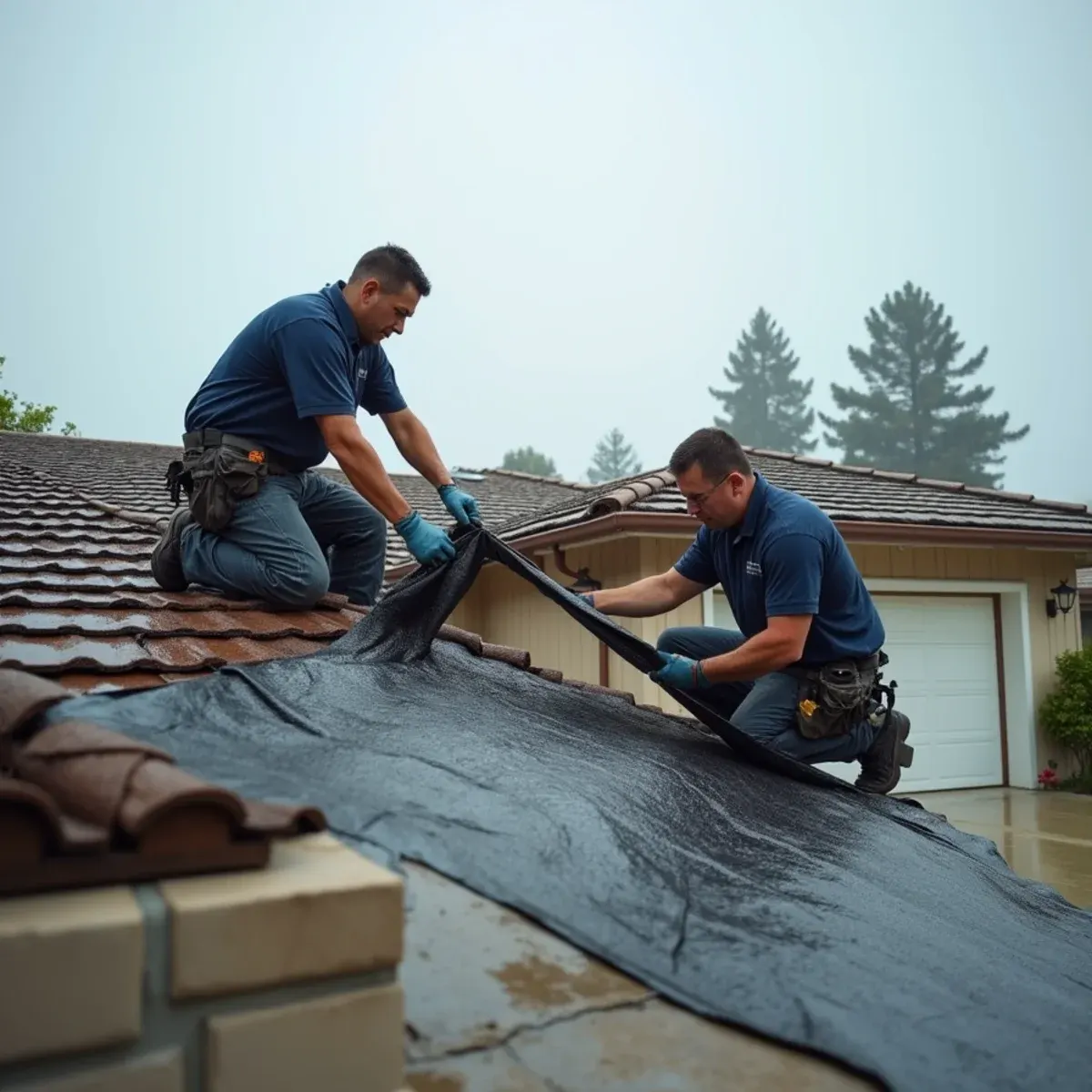
- Emergency tarping and board-up
- Water diversion and extraction
- Full damage documentation
- Interior mitigation
- Structural drying to standard
- Permanent repairs
The Fountain Valley Background Worth Knowing
Groundwater beneath Fountain Valley sits close enough to the surface that moisture vapor migration up through concrete slabs is a routine background condition rather than an anomaly. Homeowners here regularly describe a slab that feels cool and damp, or a closet on an exterior wall that never quite feels dry, without any leak at all.
There is more on the housing stock, drainage and plumbing history of this city on our water damage restoration in Fountain Valley page.
Fountain Valley at a glance
- Dominant construction era
- 1960–1980
- Foundation type
- slab on grade
- Supply piping found here
- under-slab copper
- Drain line materials
- cast iron
- Terrain and water table
- flat, shallow water table
- Most common local failure
- slab vapor emission mistaken for a leak, and flooring failures caused by installing over an untested slab
- Highest-value local prevention
- clearing the yard and area drains before the season, because a blocked drain on dead-flat ground ponds water against the house
What It Costs in Fountain Valley
We do not quote a number over the phone before seeing the property — anyone who does is guessing. The variables that actually move the price on a storm damage job are size of the opening and duration of intrusion, emergency mitigation scope, how many rooms the water reached, and they are broken down in full on the storm damage restoration page. The assessment and the written estimate are free anywhere in Fountain Valley, day or night, with no obligation.
Storm Damage Questions from Fountain Valley Homeowners
Follow the water, not the door. On ground this flat the fix is almost always drainage: clear or add area drains at the low spots, make sure the discharge point actually sits lower than the collection point, and remove whatever dams the flow — a raised planter, a newer patio, a fence footing. We dry the wall base and floor now, then walk the yard with you during the next rain so you can see where water really goes.
During. Emergency tarping and board-up happen in the rain — that is the entire point of them. We triage by severity, so active intrusion into occupied living space goes to the front of the queue.
Sudden wind and rain damage is generally covered, including the resulting interior water damage. What gets excluded is damage from a roof that had already failed or from deferred maintenance, and flooding from water that came across the ground, which needs separate flood insurance.
The city sits on former wetland with one of the shallowest water tables in Orange County, so moisture vapor migrating up through slabs is a normal background condition here rather than a defect. It matters most when installing flooring over the slab, which is why we test with in-situ RH probes before anything goes back down.