
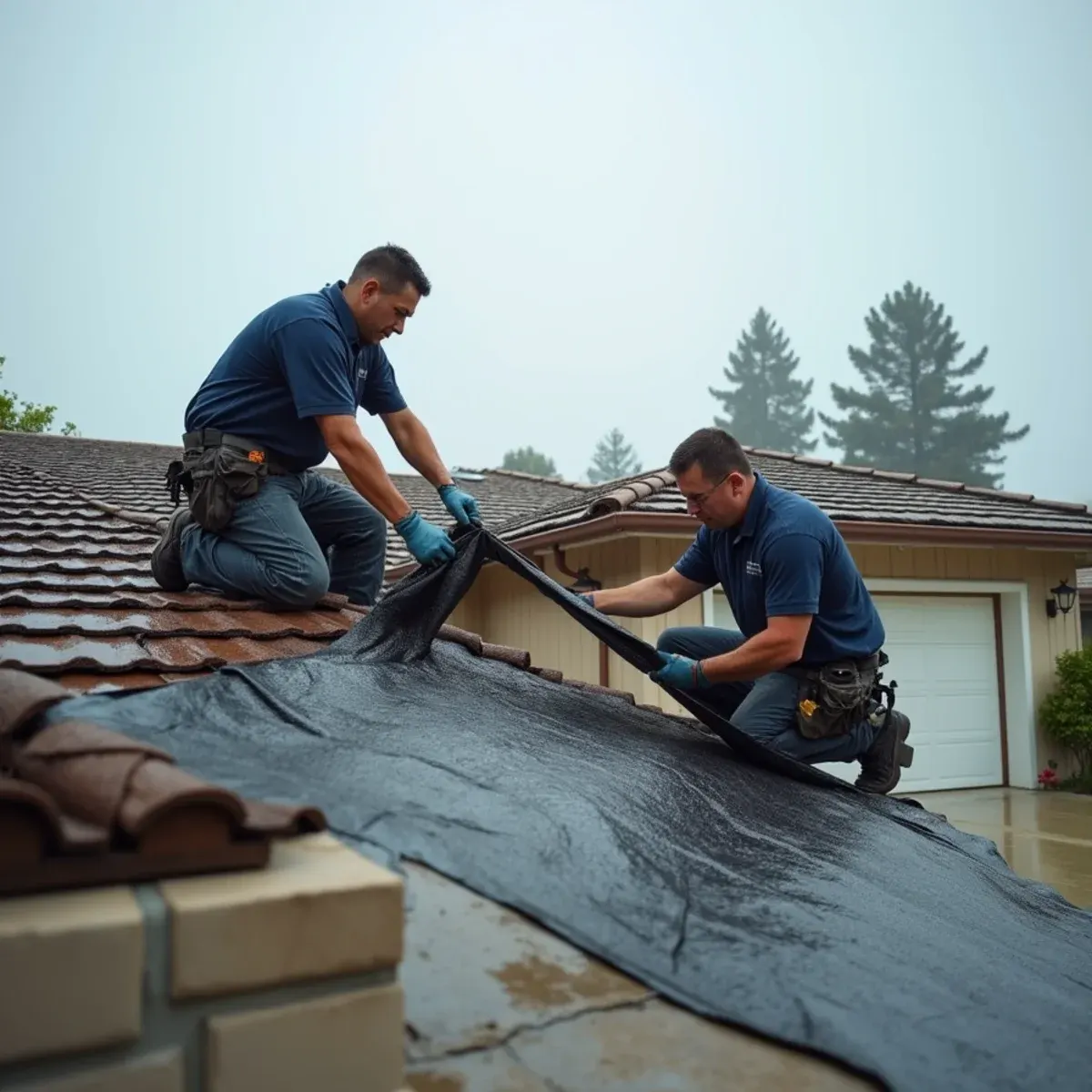
For a restaurant owner on Bolsa Avenue, a storm is a closure risk before it's a building problem. Little Saigon's kitchens mostly operate in buildings put up in the 1950s and 1960s — low-slope roofs with ponding areas, aging parapet flashing, rooftop equipment cut into the deck years after the building went up. Water finds those cuts. It lands in a kitchen ceiling or on a dry storage shelf, and now you have a health inspection question on top of a drying question.
Residentially, Westminster sits low and flat near the Bolsa Chica channel with one of the shallower water tables in the county. Slabs here already carry a higher baseline moisture load than slabs a few miles inland, so after a week of rain a slab that never seemed damp starts pushing vapor up into flooring. People call it a leak. Often it isn't. We test before we tear out, because replacing a floor over a slab that's still wet just buys the same failure next winter.
What Westminster Changes About Storm Damage
1Low-slope roofs and ponding water
The flat and low-slope roofs over most of the commercial buildings along Bolsa hold water by design tolerance, not by accident. Add clogged scuppers or a roof drain packed with debris and the pond deepens until it finds a seam or an equipment curb. Clearing scuppers and drains before the season is the highest-value thing a building owner in this corridor can do.
2Food service raises the standard
Storm water that touches food-contact surfaces, dry storage or prep areas gets treated as contaminated, not merely wet. We work to a cleaning and clearance standard that will hold up with the health department, document it, and prioritize the areas that decide whether you can reopen. Reopening two days sooner is usually worth more than any single line item on the estimate.
3A shallow water table slows drying
Ground water sits close to the surface here, so slabs stay cooler and wetter than inland slabs and vapor drive keeps pushing upward while we're trying to dry a floor. We take in-situ relative humidity readings inside the slab rather than a surface reading before signing off. That's the difference between a dry floor and one that cups again in March.
How the Work Runs
The method is the same one we use on every storm damage job, documented to the IICRC S500:2025 standard. Here it is in short — the full storm damage restoration process explains each stage in detail.
- Emergency tarping and board-up
- Water diversion and extraction
- Full damage documentation
- Interior mitigation
- Structural drying to standard
- Permanent repairs
The Westminster Background Worth Knowing
Westminster's shallow groundwater means many slabs here carry a higher baseline moisture load than slabs a few miles inland. In an undamaged home with breathable flooring that is usually a non-issue. It becomes an issue in two situations.
There is more on the housing stock, drainage and plumbing history of this city on our water damage restoration in Westminster page.
Westminster at a glance
- Dominant construction era
- 1950–1970
- Foundation type
- slab on grade
- Supply piping found here
- under-slab copper, galvanized steel
- Drain line materials
- cast iron
- Terrain and water table
- coastal-flat, shallow water table
- Most common local failure
- flooring installed over a slab that was never tested and is still releasing vapor
- Highest-value local prevention
- in-situ slab relative humidity testing before any new floor goes down
What It Costs in Westminster
We do not quote a number over the phone before seeing the property — anyone who does is guessing. The variables that actually move the price on a storm damage job are size of the opening and duration of intrusion, emergency mitigation scope, how many rooms the water reached, and they are broken down in full on the storm damage restoration page. The assessment and the written estimate are free anywhere in Westminster, day or night, with no obligation.
Storm Damage Questions from Westminster Homeowners
It depends how far the water got and what it touched. If it stayed on hard floors in the dining room, extraction and drying can often work around your hours. If it reached dry storage, wet ceiling material over prep, or anything food-contact, that becomes a cleaning and clearance job with documentation the health department will want. We sequence the work so the areas gating your reopening get done first, and we give you an honest timeline on day one.
During. Emergency tarping and board-up happen in the rain — that is the entire point of them. We triage by severity, so active intrusion into occupied living space goes to the front of the queue.
Sudden wind and rain damage is generally covered, including the resulting interior water damage. What gets excluded is damage from a roof that had already failed or from deferred maintenance, and flooding from water that came across the ground, which needs separate flood insurance.
Westminster has a shallow water table, so slabs here carry more baseline moisture than slabs further inland. Normally that is harmless, but it matters when installing flooring over the slab and it means drying after a loss takes longer. We test with in-situ relative humidity probes before any new floor goes down.