
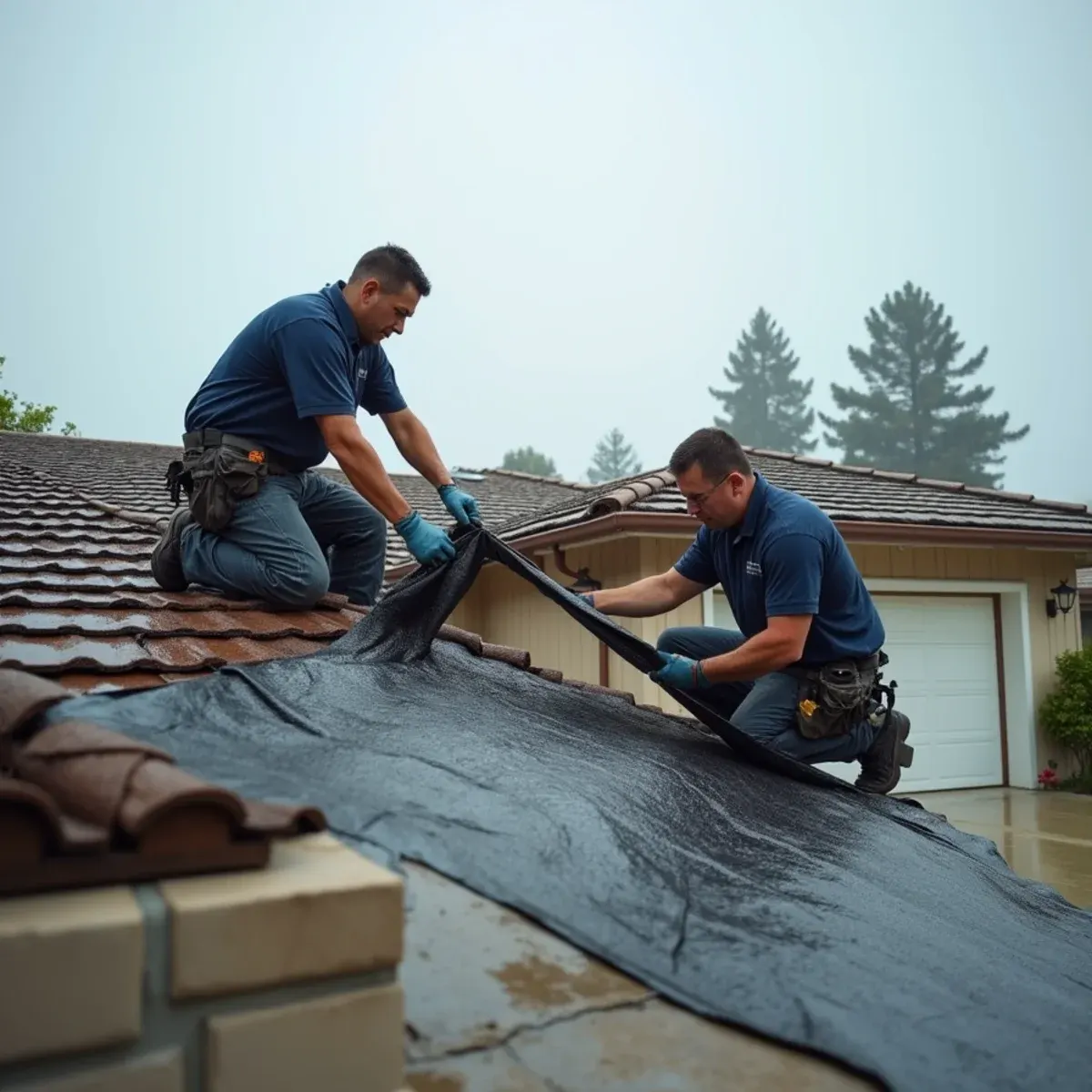
People in Midway City tell us the same thing over and over: they called four companies and three of them didn't have the city on their list. About a square mile of unincorporated Orange County wedged between Westminster and Huntington Beach, roughly 8,500 residents, no city hall — so service maps built from city names leave a hole right here. That's a nuisance in normal weather. During an atmospheric river, when every crew is committed and calling around takes hours, it's a much bigger problem.
The housing runs older than the neighboring cities on average, a 1940s-to-1960s mix on both slab and raised foundations, plus a substantial number of mobile and manufactured homes. The ground is low and coastal-flat with a shallow water table, so it saturates fast and stays saturated through a wet stretch. Permits run through Orange County rather than a city building department, which affects the repair side of the timeline. We work this square mile like anywhere else, and we know how it's built.
What Midway City Changes About Storm Damage
1County permitting, not a city desk
Because Midway City is unincorporated, the repair side of a storm loss goes through Orange County. That isn't harder, but it is different, and it catches contractors who assume a city counter down the street. We plan for the county process when scoping structural repairs after tarping and drying, and we tell you up front where inspection timing is likely to land in the schedule.
2Manufactured homes need underfloor work
In the mobile and manufactured homes here, storm water entering through a roof seam or a wall often ends up in the floor cavity, sitting on the belly wrap where it can't evaporate. Drying the interior does nothing for it. We open the wrap from underneath, remove the trapped water, dry the cavity, and reseal — otherwise the floor deck quietly deteriorates for months.
3Low ground holds the last storm
Sitting low near the Bolsa channel with a shallow water table, this square mile doesn't shed water between systems during a wet stretch. The second and third storms land on ground that's already full, so yard drainage that coped in December fails in February. Clearing drains and keeping the discharge path open matters more here than a few miles inland.
How the Work Runs
The method is the same one we use on every storm damage job, documented to the IICRC S500:2025 standard. Here it is in short — the full storm damage restoration process explains each stage in detail.
- Emergency tarping and board-up
- Water diversion and extraction
- Full damage documentation
- Interior mitigation
- Structural drying to standard
- Permanent repairs
The Midway City Background Worth Knowing
Midway City's housing stock is older than its neighbors on average, with a good deal of it predating 1960, and it includes a substantial mobile home population. That combination produces a specific mix of problems.
There is more on the housing stock, drainage and plumbing history of this city on our water damage restoration in Midway City page.
Midway City at a glance
- Dominant construction era
- 1940–1960
- Foundation type
- mixed on grade
- Supply piping found here
- galvanized steel, copper, manufactured-home supply lines
- Drain line materials
- cast iron, clay
- Terrain and water table
- coastal-flat, shallow water table
- Most common local failure
- manufactured-home underfloor leaks trapped in the belly wrap, which can sit for months
- Highest-value local prevention
- treating any spongy floor area as a moisture problem until a meter says otherwise
What It Costs in Midway City
We do not quote a number over the phone before seeing the property — anyone who does is guessing. The variables that actually move the price on a storm damage job are size of the opening and duration of intrusion, emergency mitigation scope, how many rooms the water reached, and they are broken down in full on the storm damage restoration page. The assessment and the written estimate are free anywhere in Midway City, day or night, with no obligation.
Storm Damage Questions from Midway City Homeowners
We come out. Midway City is unincorporated, so it's missing from a lot of automated service maps, but it's a normal part of our coverage and we know the housing here — the older single-family stock, the manufactured homes, the low ground. Our written 60-minute arrival guarantee applies only in Cypress. Everywhere else, including here, we dispatch as fast as conditions allow and tell you honestly where you sit in the queue during a county-wide storm.
During. Emergency tarping and board-up happen in the rain — that is the entire point of them. We triage by severity, so active intrusion into occupied living space goes to the front of the queue.
Sudden wind and rain damage is generally covered, including the resulting interior water damage. What gets excluded is damage from a roof that had already failed or from deferred maintenance, and flooding from water that came across the ground, which needs separate flood insurance.
Yes, fully. It is about a fourteen-minute run from our Cypress base — closer than several cities we serve routinely — and the 60-minute response commitment applies here the same as anywhere else in our area.