
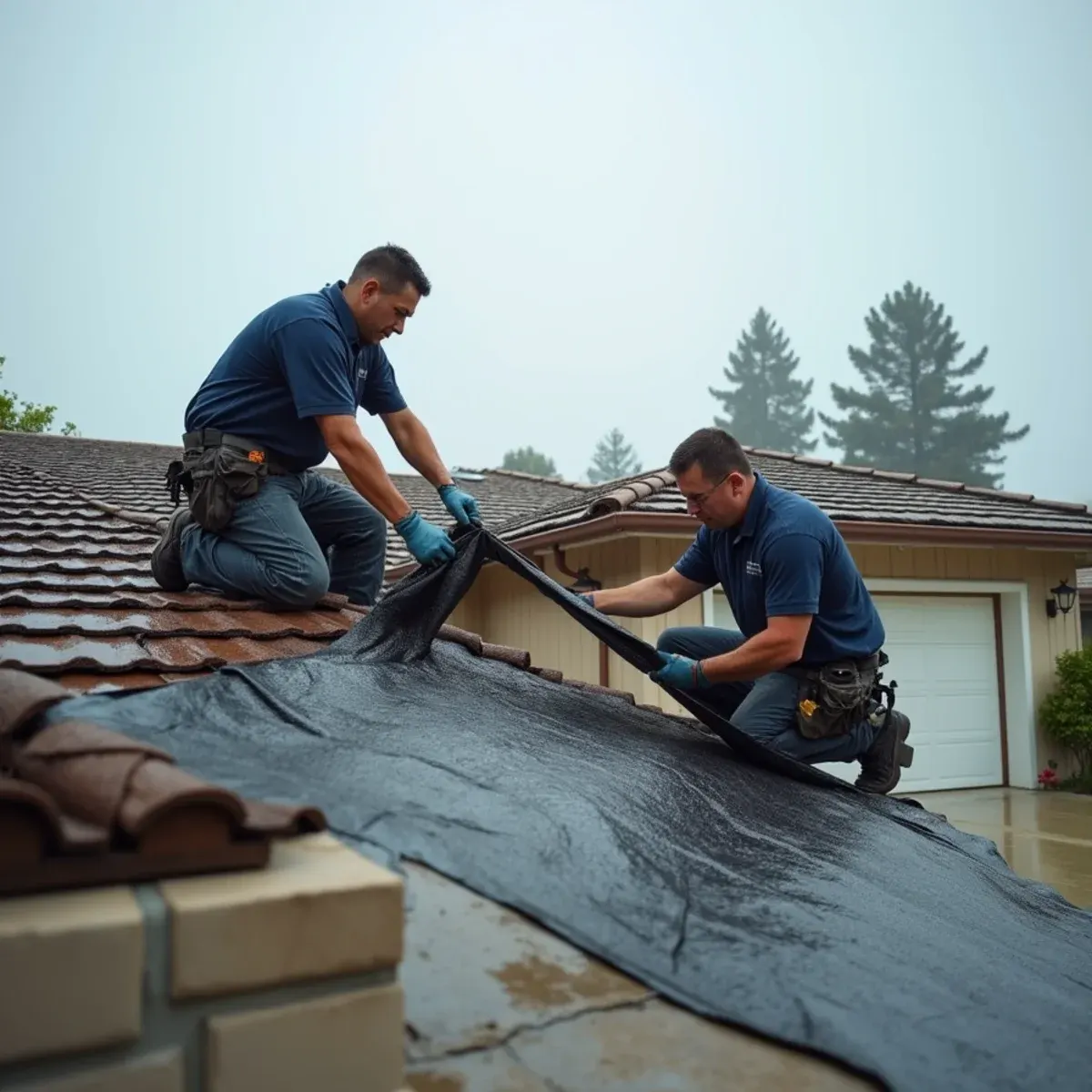
Bellflower filled in fast after the war on old dairy and orchard land, and the houses that went up then are still the houses here — small, low-pitched, close together, on small lots. Eighty years is a long life for any roof structure, and even reroofed homes usually kept the original framing, original fascia and original gutter runs sized for a different era of storm. Add a lot line six feet from your neighbor's and there's very little permeable ground left to absorb what comes off two roofs at once.
There's also a great deal of multi-family here, added over decades along Bellflower Boulevard and the Rosecrans corridor, much of it flat or low-slope. Those roofs fail differently: water ponds instead of running, one blocked drain floods several units, and stairwells and walkways carry water to places nobody planned for. Our Cypress base is about twelve minutes southeast, one of the shortest runs we make, but during a regional atmospheric river the whole basin calls at once, so we dispatch as fast as conditions allow and work in call order.
What Bellflower Changes About Storm Damage
1Small lots, nowhere for water to go
The typical Bellflower lot is mostly house, driveway and patio slab. Rain that lands on the roof has almost no soil to reach, so it runs to the lowest hard surface — often a driveway that slopes back toward the garage, or a side yard three feet wide between two houses. That side yard is the single most common intrusion path we see in this city, year after year.
2Low-slope roofs and ponding
Many of the postwar houses and nearly all the apartment buildings have low-slope sections: flat patio covers, rear additions, tar and gravel over the original roof. Low slope tolerates blockage badly. A gutter full of leaves or one plugged scupper turns a shedding roof into a shallow pool, and the added weight alone can open seams. Clearing drains before November is worth more than any product.
3Multi-family means coordinated response
When an apartment roof fails, we're tarping and drying multiple units on different leases with different owners. We work with the property manager on access, document each unit separately so tenants aren't left arguing about damage that isn't theirs, and set containment so drying equipment in one unit isn't running in someone's bedroom all night without warning.
How the Work Runs
The method is the same one we use on every storm damage job, documented to the IICRC S500:2025 standard. Here it is in short — the full storm damage restoration process explains each stage in detail.
- Emergency tarping and board-up
- Water diversion and extraction
- Full damage documentation
- Interior mitigation
- Structural drying to standard
- Permanent repairs
The Bellflower Background Worth Knowing
Galvanized steel was the standard supply pipe when Bellflower was being built, and it fails from the inside out. The zinc lining wears through, the steel underneath corrodes, and scale builds on the interior wall until the pipe is a fraction of its original diameter. Narrower pipe means faster, more turbulent water, which chews at elbows and threaded fittings until one of them lets go. Hot lines corrode faster than cold, which is why hot water pressure is usually the first thing to drop. Eighty years is well past any service life anyone intended when this was installed.
There is more on the housing stock, drainage and plumbing history of this city on our water damage restoration in Bellflower page.
Bellflower at a glance
- Dominant construction era
- 1940–1960
- Foundation type
- slab on grade
- Supply piping found here
- original galvanized steel, early copper
- Drain line materials
- cast iron
- Terrain and water table
- flat, moderate water table
- Most common local failure
- original galvanized supply lines and cast-iron laterals failing together in the same decade
- Highest-value local prevention
- scoping the sewer lateral, which on a house this age has usually never been looked at
What It Costs in Bellflower
We do not quote a number over the phone before seeing the property — anyone who does is guessing. The variables that actually move the price on a storm damage job are size of the opening and duration of intrusion, emergency mitigation scope, how many rooms the water reached, and they are broken down in full on the storm damage restoration page. The assessment and the written estimate are free anywhere in Bellflower, day or night, with no obligation.
Storm Damage Questions from Bellflower Homeowners
Practically, it's whoever's floor is wet. Those three-to-six-foot side yards in Bellflower usually have no drain at all, and both roofs discharge into them. We dry your house first and sort out cause second. Then we show you where the water entered — nearly always a threshold, a low stucco crack, or a foundation vent. A single area drain in that side yard fixes it permanently far more often than people expect.
During. Emergency tarping and board-up happen in the rain — that is the entire point of them. We triage by severity, so active intrusion into occupied living space goes to the front of the queue.
Sudden wind and rain damage is generally covered, including the resulting interior water damage. What gets excluded is damage from a roof that had already failed or from deferred maintenance, and flooding from water that came across the ground, which needs separate flood insurance.
It is the most common gap we see here. A cast iron lateral that age has corroded along the bottom, the joints have shifted, and the parkway trees on most Bellflower streets have had seventy years to find them. A camera inspection costs a small fraction of a sewage remediation, and on a line that has never been scoped it usually finds something worth knowing about before it finds you at two in the morning.