
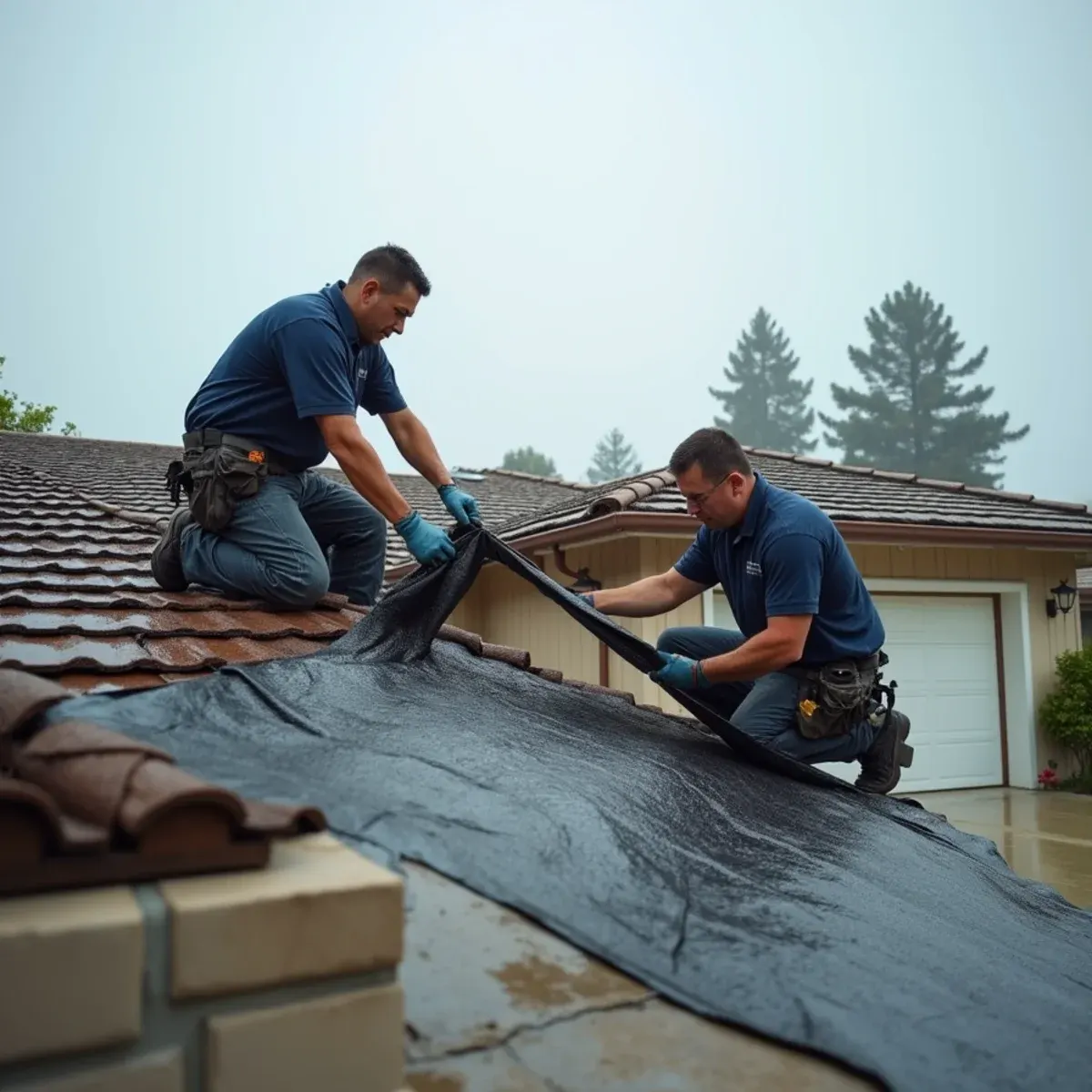
There's a version of storm restoration that's fast and cheap: cut out two feet of wall, pull the trim, throw it in the dumpster, run fans. On most houses that's a reasonable trade. In Downey it often isn't. Jean Vandruff's Cinderella Homes brought turrets, pointed rooflines, arched doorways and gingerbread trim to ordinary tract housing, and that millwork is not something a lumberyard can match. When the readings allow it, we dry those assemblies in place — slower, more monitoring, more equipment hours, and worth it.
Underneath the detailing these are standard 1950s slab houses with galvanized supply lines and cast-iron drains, built flat and built quickly. Storm water gets in at the roof geometry more than anywhere else: those decorative rooflines create valleys, dormers and steep-to-shallow transitions a plain gable roof doesn't have, and each transition is a flashing detail that has been weathering for seventy years. We're about seventeen minutes northwest of our Cypress base and dispatch as fast as conditions allow during a widespread event.
What Downey Changes About Storm Damage
1Complicated rooflines, more flashing
Turrets, dormers and pointed roof sections look charming and drain badly. Every change in pitch is a flashing joint, and seventy-year-old flashing buried under multiple reroofs is where storm leaks start in these tracts. When we tarp, we cover the transition and the plane above it, not just the visible stain, because water travels along framing for some distance before it shows up on a ceiling.
2Drying in place to save the millwork
Cabinet ends, arched casings and applied trim will usually survive a storm event if they're dried under control and monitored daily. That means more dehumidification, injected air into wall cavities, and readings recorded against S500:2025 goals rather than a technician's opinion. We'll be honest when a piece is too far gone, but we don't demolish first and measure afterward.
3Flat ground, slow-draining streets
Downey is dead flat, and during heavy sustained rain the streets in Northeast Downey and around Furman Park hold water long enough to back up into driveways that slope toward the house. Garage and laundry-room intrusion at grade is as common here as roof leaks. Clearing your own driveway drain and the gutter in front of your house genuinely changes the outcome.
How the Work Runs
The method is the same one we use on every storm damage job, documented to the IICRC S500:2025 standard. Here it is in short — the full storm damage restoration process explains each stage in detail.
- Emergency tarping and board-up
- Water diversion and extraction
- Full damage documentation
- Interior mitigation
- Structural drying to standard
- Permanent repairs
The Downey Background Worth Knowing
The instinct on a wet wall is to open it, and sometimes that is correct. But IICRC S500:2025 is built around restoring rather than replacing wherever the drying goals can genuinely be met, and on a house with original arched casings and applied gingerbread, meeting those goals is worth some patience. We would rather spend three extra days with equipment running than pull a run of trim that would have to be milled from scratch to come back. The standard supports that choice and so does the arithmetic on the estimate, because custom millwork is not cheap and matching a fifties profile is not quick.
There is more on the housing stock, drainage and plumbing history of this city on our water damage restoration in Downey page.
Downey at a glance
- Dominant construction era
- 1950–1965
- Foundation type
- slab on grade
- Supply piping found here
- galvanized steel, under-slab copper
- Drain line materials
- cast iron
- Terrain and water table
- flat, moderate water table
- Most common local failure
- 1950s slab and galvanized failures in houses whose decorative woodwork makes careful, low-demolition drying worth paying for
- Highest-value local prevention
- drying in place wherever readings allow, because the trim and detailing on these houses cannot be bought
What It Costs in Downey
We do not quote a number over the phone before seeing the property — anyone who does is guessing. The variables that actually move the price on a storm damage job are size of the opening and duration of intrusion, emergency mitigation scope, how many rooms the water reached, and they are broken down in full on the storm damage restoration page. The assessment and the written estimate are free anywhere in Downey, day or night, with no obligation.
Storm Damage Questions from Downey Homeowners
Not as a first step. We drill discreetly, usually behind base shoe or inside a closet, and push dry air into the cavity so the plaster and the trim dry from the inside out. We take readings every day and we show them to you. If a section stops responding and stays wet past the point where mold risk is real, we'll say so and remove the minimum — but the goal is that your casings and cabinet detailing stay on the house.
During. Emergency tarping and board-up happen in the rain — that is the entire point of them. We triage by severity, so active intrusion into occupied living space goes to the front of the queue.
Sudden wind and rain damage is generally covered, including the resulting interior water damage. What gets excluded is damage from a roof that had already failed or from deferred maintenance, and flooding from water that came across the ground, which needs separate flood insurance.
Usually, yes. We go into the wall cavity through small ports low on the wall, hidden behind shoe molding or inside a closet, and dry from the inside out rather than taking the finished face off. That takes longer and needs more equipment than gutting the wall would, which is exactly the trade we think is worth making on a house with millwork that cannot be bought. Where it will not work, we tell you early.