
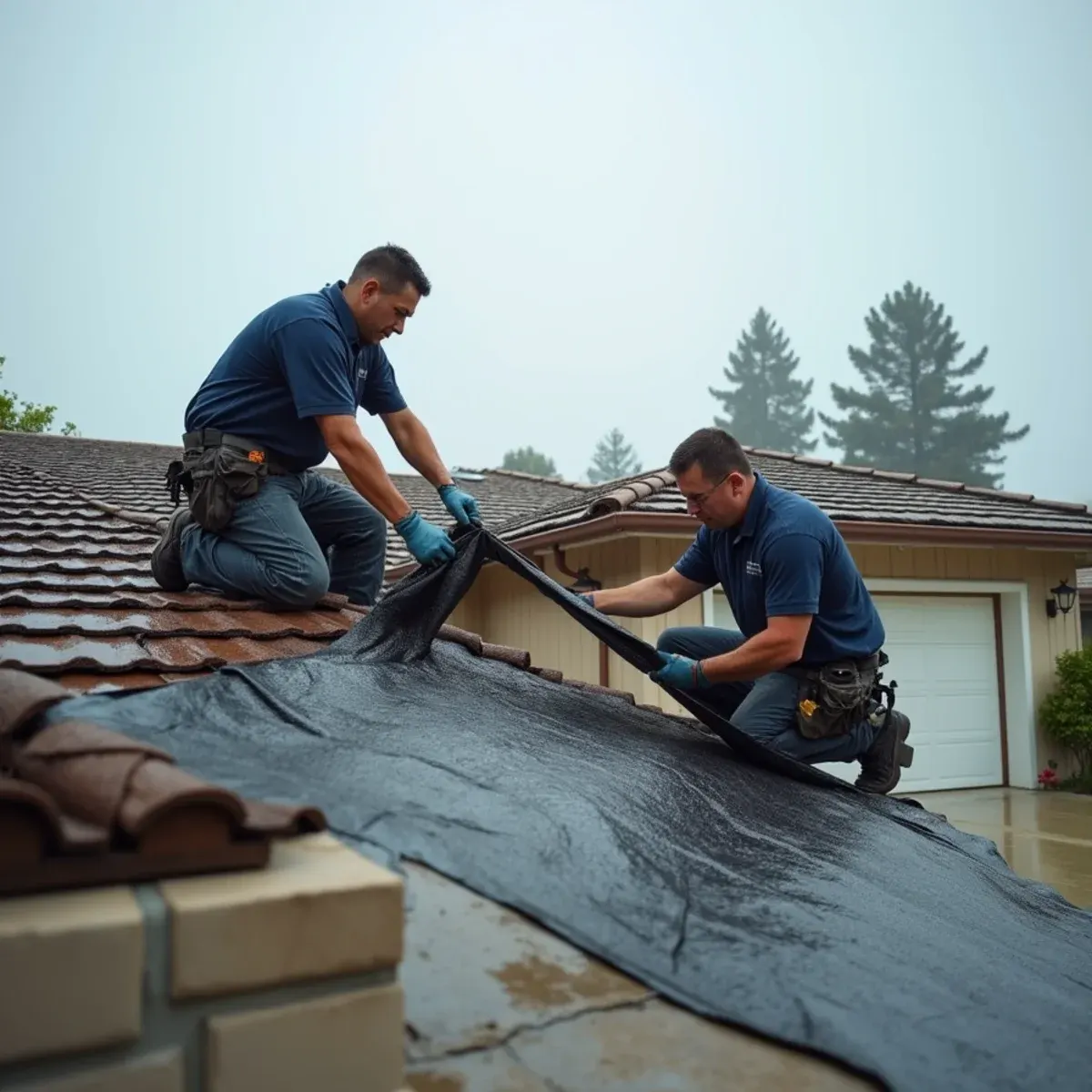
Buena Park has more apartments and more hotel rooms than the small cities around it, and that changes what a storm night looks like. A roof or parapet failure over a 1960s apartment building doesn't stay in one unit — water runs the deck, finds the nearest chase or light fixture, and by the time somebody locates the manager it has reached three or four homes on two floors. Along Beach Boulevard near Knott's, the same failure means occupied rooms that can't be sold.
The single-family side of the city is its own thing: 1950s and 1960s slab tracts across 90620 and 90621, mostly re-roofed at least once, mature trees over them, and Coyote Creek collecting runoff on the east side. When several storms stack up, the ground stops taking water and yard drains that worked in October stop working in February. We handle both kinds of call, and we're honest about order — during a county-wide event, crews go out in the sequence calls come in.
What Buena Park Changes About Storm Damage
1Multi-unit losses need separate files
When storm water crosses into several apartments, each unit is its own documentation job: separate moisture maps, separate photos, separate readings, separate contents lists. Insurers and property managers will not accept one bundled file, and rebuilding it later from memory is how claims get reduced. We split it on the first visit, before anyone starts pulling wet carpet out of a hallway.
2Hotels and restaurants can't go dark
Hospitality along the Beach Boulevard corridor loses money by the room and by the cover, so drying plans get built around what has to stay open. That usually means containment, quieter equipment where guests are close, and working floor by floor overnight. We'd rather set more equipment for fewer days than fewer machines and a longer closure.
3Tenants need a posted shutoff
In an apartment building, the person who notices a sagging ceiling is rarely the person who can stop the water. Posting the main shutoff location, the roof access point and a 24-hour contact in the laundry room or entry lobby cuts response time more than any equipment we own. During a storm, delay is the variable that actually decides the size of the loss.
How the Work Runs
The method is the same one we use on every storm damage job, documented to the IICRC S500:2025 standard. Here it is in short — the full storm damage restoration process explains each stage in detail.
- Emergency tarping and board-up
- Water diversion and extraction
- Full damage documentation
- Interior mitigation
- Structural drying to standard
- Permanent repairs
The Buena Park Background Worth Knowing
Buena Park has a large apartment and condominium stock, and multi-unit water losses are a meaningful share of our work here. A supply line failure in a second-floor unit reaches the unit below within minutes and frequently affects three or four units before anyone finds the shutoff.
There is more on the housing stock, drainage and plumbing history of this city on our water damage restoration in Buena Park page.
Buena Park at a glance
- Dominant construction era
- 1950–1975
- Foundation type
- slab on grade
- Supply piping found here
- galvanized steel, under-slab copper
- Drain line materials
- cast iron
- Terrain and water table
- flat, moderate water table
- Most common local failure
- multi-unit escalation, where one riser or supply failure reaches three or four units before anyone finds the shutoff
- Highest-value local prevention
- posting the main shutoff location and an emergency contact where tenants will actually see it
What It Costs in Buena Park
We do not quote a number over the phone before seeing the property — anyone who does is guessing. The variables that actually move the price on a storm damage job are size of the opening and duration of intrusion, emergency mitigation scope, how many rooms the water reached, and they are broken down in full on the storm damage restoration page. The assessment and the written estimate are free anywhere in Buena Park, day or night, with no obligation.
Storm Damage Questions from Buena Park Homeowners
Ask your carrier about the policy structure, but on our side we document it as three losses regardless. Each unit gets its own moisture readings, photos, drying log and contents list. That way the building's policy and any renters' policies each have what they need, and nobody's damage gets averaged into someone else's. It also keeps the drying honest — a unit two floors down can be wetter than the one directly under the roof.
During. Emergency tarping and board-up happen in the rain — that is the entire point of them. We triage by severity, so active intrusion into occupied living space goes to the front of the queue.
Sudden wind and rain damage is generally covered, including the resulting interior water damage. What gets excluded is damage from a roof that had already failed or from deferred maintenance, and flooding from water that came across the ground, which needs separate flood insurance.
Regularly. Multi-unit losses get documented unit by unit with separate photographs, moisture maps, and drying logs, which is what lets several owners, an HOA, and multiple carriers each resolve their portion without disputing a single blended invoice.