
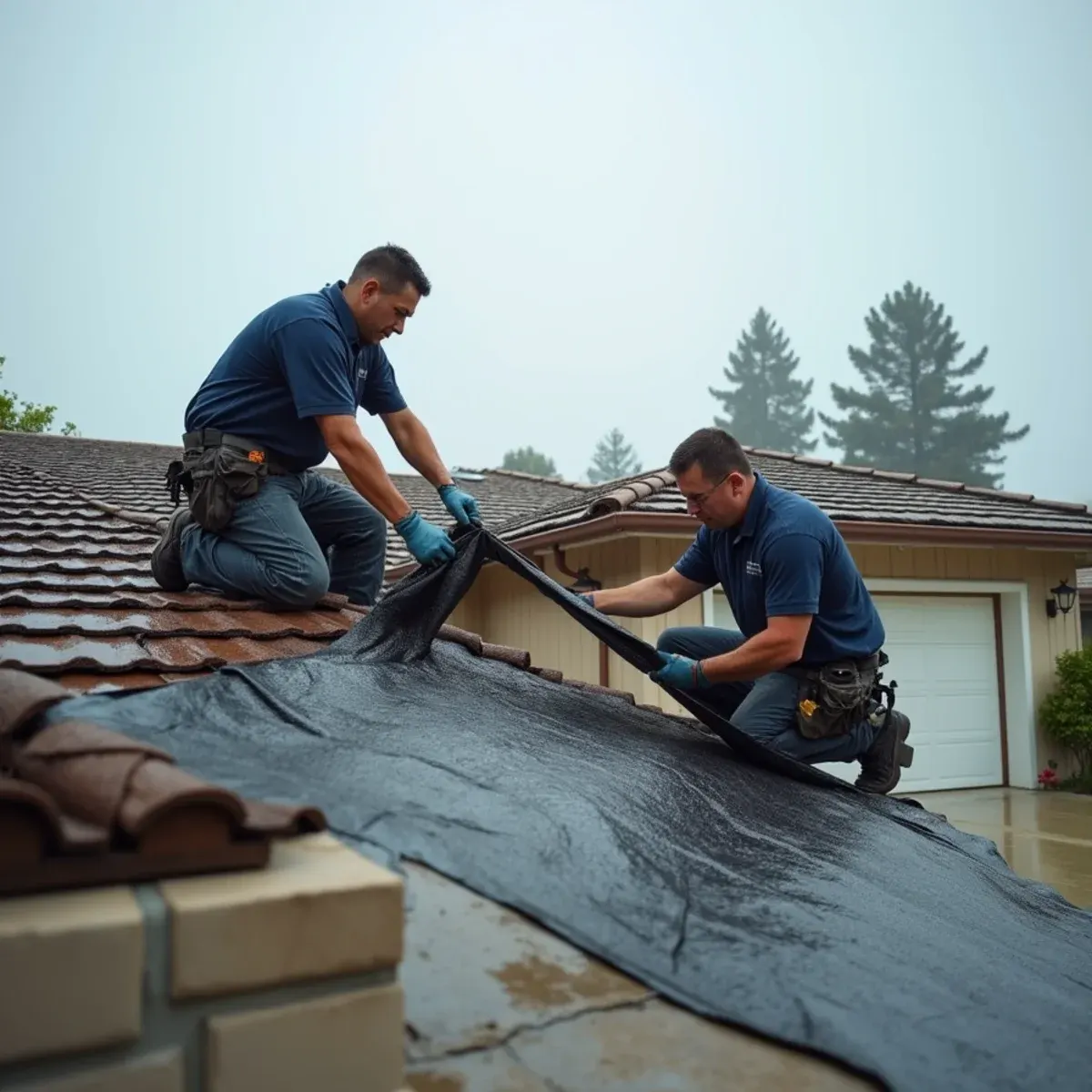
Cerritos was planned, not accumulated, and it shows. Late-1960s and 1970s tracts, consistent construction, a much higher share of two-story homes than the cities around it, and generally well maintained. That consistency has a quiet consequence during storms: water entering a second-floor roof or wall doesn't come straight down. It gets into an enclosed floor assembly, spreads sideways along the joist bays, and drops through a first-floor ceiling somewhere you'd never connect to the leak — sometimes a room away.
The other thing about this city is timing. Homes built in the 1970s are only now entering the window that 1950s cities have been living in for years, which means roof coverings, flashing details and sealed penetrations across whole neighborhoods are aging together and hitting their limits in the same few seasons. Coyote Creek runs along the Cypress border and carries a lot of regional runoff. We work both sides of that line constantly, so a Cerritos storm call is familiar ground.
What Cerritos Changes About Storm Damage
1Water travels before it appears
In a two-story house the ceiling stain marks the low point of the assembly, not the entry point. We map moisture across the whole floor system with meters and thermal imaging before opening anything, then dry the cavity through the smallest access we can manage. Chasing the stain first usually means several holes in a ceiling and the wet area still spreading above all of them.
2Uniform tracts age on one schedule
Because whole neighborhoods went in within a few years, roof coverings, pipe boots and skylight curbs reach their limits together. If two houses on your street had storm leaks this winter, your roof is on the same schedule. A pre-season check of the penetrations and valleys — not the field of the roof — is where the money goes furthest on this housing stock.
3Drying without wrecking the finishes
These homes are typically well kept, with flooring and cabinetry owners don't want opened unnecessarily. Where readings allow, we dry wall and floor cavities through small controlled openings, injection drying and negative pressure rather than broad demolition. It takes longer and needs daily monitoring, but on a house in this condition the trade is usually worth making.
How the Work Runs
The method is the same one we use on every storm damage job, documented to the IICRC S500:2025 standard. Here it is in short — the full storm damage restoration process explains each stage in detail.
- Emergency tarping and board-up
- Water diversion and extraction
- Full damage documentation
- Interior mitigation
- Structural drying to standard
- Permanent repairs
The Cerritos Background Worth Knowing
Cerritos has a considerably higher proportion of two-story homes than the single-story tract cities around it, and that changes the geometry of every water loss. A failure on the second floor does not stay there — it goes through the floor assembly into the ceiling below and spreads laterally across the joists before it drops.
There is more on the housing stock, drainage and plumbing history of this city on our water damage restoration in Cerritos page.
Cerritos at a glance
- Dominant construction era
- 1965–1985
- Foundation type
- slab on grade
- Supply piping found here
- under-slab copper
- Drain line materials
- cast iron, ABS
- Terrain and water table
- flat, moderate water table
- Most common local failure
- upper-floor failures that spread laterally through the enclosed floor assembly before dropping through a ceiling well away from the source
- Highest-value local prevention
- the annual meter test, since 1970s under-slab copper is only now entering its failure window here
What It Costs in Cerritos
We do not quote a number over the phone before seeing the property — anyone who does is guessing. The variables that actually move the price on a storm damage job are size of the opening and duration of intrusion, emergency mitigation scope, how many rooms the water reached, and they are broken down in full on the storm damage restoration page. The assessment and the written estimate are free anywhere in Cerritos, day or night, with no obligation.
Storm Damage Questions from Cerritos Homeowners
Both, in that order of investigation. Water from the upstairs entry point runs along the floor framing until something stops it, then finds a seam and drops — which is why the stain lands over the dining room. We confirm the path with moisture readings across the assembly, dry the whole wet area rather than the visible patch, and repair the actual entry point on the roof or wall. Fixing only the stained ceiling leaves wet framing sitting there.
During. Emergency tarping and board-up happen in the rain — that is the entire point of them. We triage by severity, so active intrusion into occupied living space goes to the front of the queue.
Sudden wind and rain damage is generally covered, including the resulting interior water damage. What gets excluded is damage from a roof that had already failed or from deferred maintenance, and flooding from water that came across the ground, which needs separate flood insurance.
Usually fifteen to twenty minutes. Cerritos borders Cypress across Coyote Creek, so it is one of our closest service areas and the 60-minute commitment applies fully.