
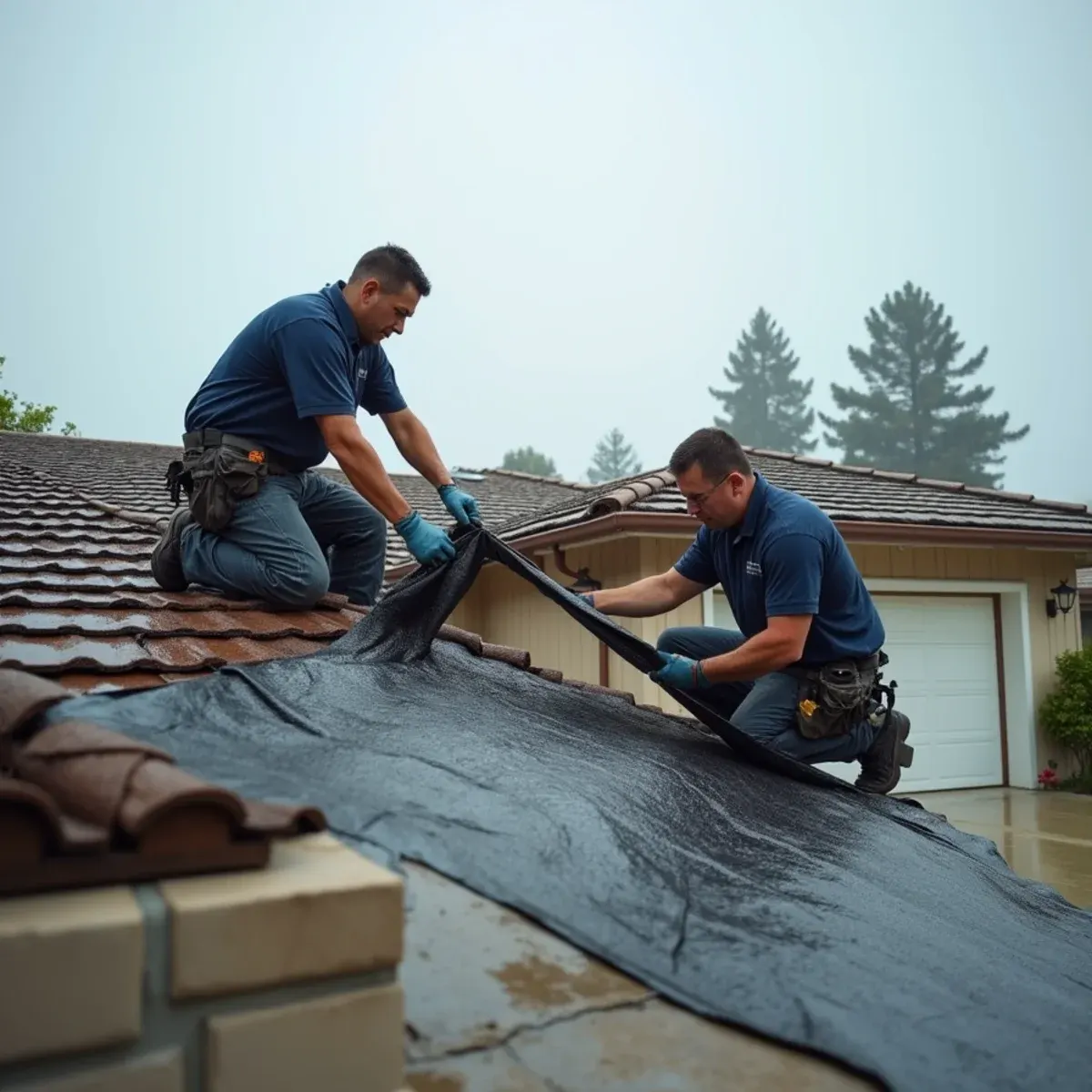
For an independent owner on Pioneer Boulevard, three weeks closed isn't an inconvenience — it's the business. Little India's restaurants and shops operate in buildings put up in the 1950s and never designed for commercial kitchens, with low-slope roofs, added rooftop equipment and grease-loaded cast-iron waste lines underneath. A storm stresses all of it at once: the roof takes standing water, the drain lines take runoff they were never sized for, and the two problems arrive on the same night.
The residential side is modest postwar single-family and older multi-family on flat ground, most of it re-roofed once and now due again. Around AJ Padelford Park and the older streets, storm calls tend to be ceiling leaks and garage flooding rather than anything dramatic. Artesia is compact — about 16,500 people in a couple of square miles — which means when a storm hits, it hits the whole city at once and every crew in the area is committed within a few hours.
What Artesia Changes About Storm Damage
1Reopening speed drives the plan
For a restaurant, the drying scope and the reopening date are the same conversation. We sequence work so the kitchen, dry storage and anything the health department will look at get cleared first, and we document the cleaning to a standard that holds up on inspection. Where a dining room can dry behind containment while limited service continues, we'll build the plan that way.
2Storm runoff finds greased drain lines
Decades of grease coat the rough interior of these cast-iron waste lines and narrow them steadily. Add saturated ground and extra water in the system during a storm, and a line that was coping backs up into a kitchen floor. Hydro-jetting before the wet season actually scours the pipe wall; snaking punches a hole through the grease and leaves the restriction sitting there.
3Low-slope commercial roofs pond
The flat and near-flat roofs along Pioneer Boulevard rely on drains and scuppers that fill with leaves and packaging debris through the fall. When the pond deepens, water finds a seam or the curb around a rooftop unit and lands in a ceiling. Twenty minutes on the roof in October prevents most of the storm calls we take from this corridor.
How the Work Runs
The method is the same one we use on every storm damage job, documented to the IICRC S500:2025 standard. Here it is in short — the full storm damage restoration process explains each stage in detail.
- Emergency tarping and board-up
- Water diversion and extraction
- Full damage documentation
- Interior mitigation
- Structural drying to standard
- Permanent repairs
The Artesia Background Worth Knowing
A commercial kitchen is one of the hardest things you can ask a building to accommodate. High water use, continuous drainage, grease loading, floor drains, and equipment connections that get added and modified over the years. When that kitchen is in a building from the 1950s with original cast-iron waste lines, the failure is a matter of time.
There is more on the housing stock, drainage and plumbing history of this city on our water damage restoration in Artesia page.
Artesia at a glance
- Dominant construction era
- 1950–1970
- Foundation type
- slab on grade
- Supply piping found here
- galvanized steel, copper
- Drain line materials
- cast iron
- Terrain and water table
- flat, moderate water table
- Most common local failure
- grease-loaded cast-iron waste lines restricting until a commercial kitchen backs up
- Highest-value local prevention
- hydro-jetting the waste line rather than snaking it, so the pipe wall actually gets cleaned
What It Costs in Artesia
We do not quote a number over the phone before seeing the property — anyone who does is guessing. The variables that actually move the price on a storm damage job are size of the opening and duration of intrusion, emergency mitigation scope, how many rooms the water reached, and they are broken down in full on the storm damage restoration page. The assessment and the written estimate are free anywhere in Artesia, day or night, with no obligation.
Storm Damage Questions from Artesia Homeowners
Sometimes, with containment, if the water stayed in the dining area and never touched food handling or storage. If it came through a ceiling above prep, or reached dry goods, that section has to be closed, cleaned and cleared properly — storm water off a roof isn't clean once it has run through insulation and ceiling tile. We'll give you a realistic read on day one and prioritize the areas that decide your reopening date rather than working front to back.
During. Emergency tarping and board-up happen in the rain — that is the entire point of them. We triage by severity, so active intrusion into occupied living space goes to the front of the queue.
Sudden wind and rain damage is generally covered, including the resulting interior water damage. What gets excluded is damage from a roof that had already failed or from deferred maintenance, and flooding from water that came across the ground, which needs separate flood insurance.
Yes, and on Pioneer Boulevard that is usually how we schedule it. Overnight crews cost somewhat more in labor and almost always cost dramatically less than lost revenue from closing during operating hours.