
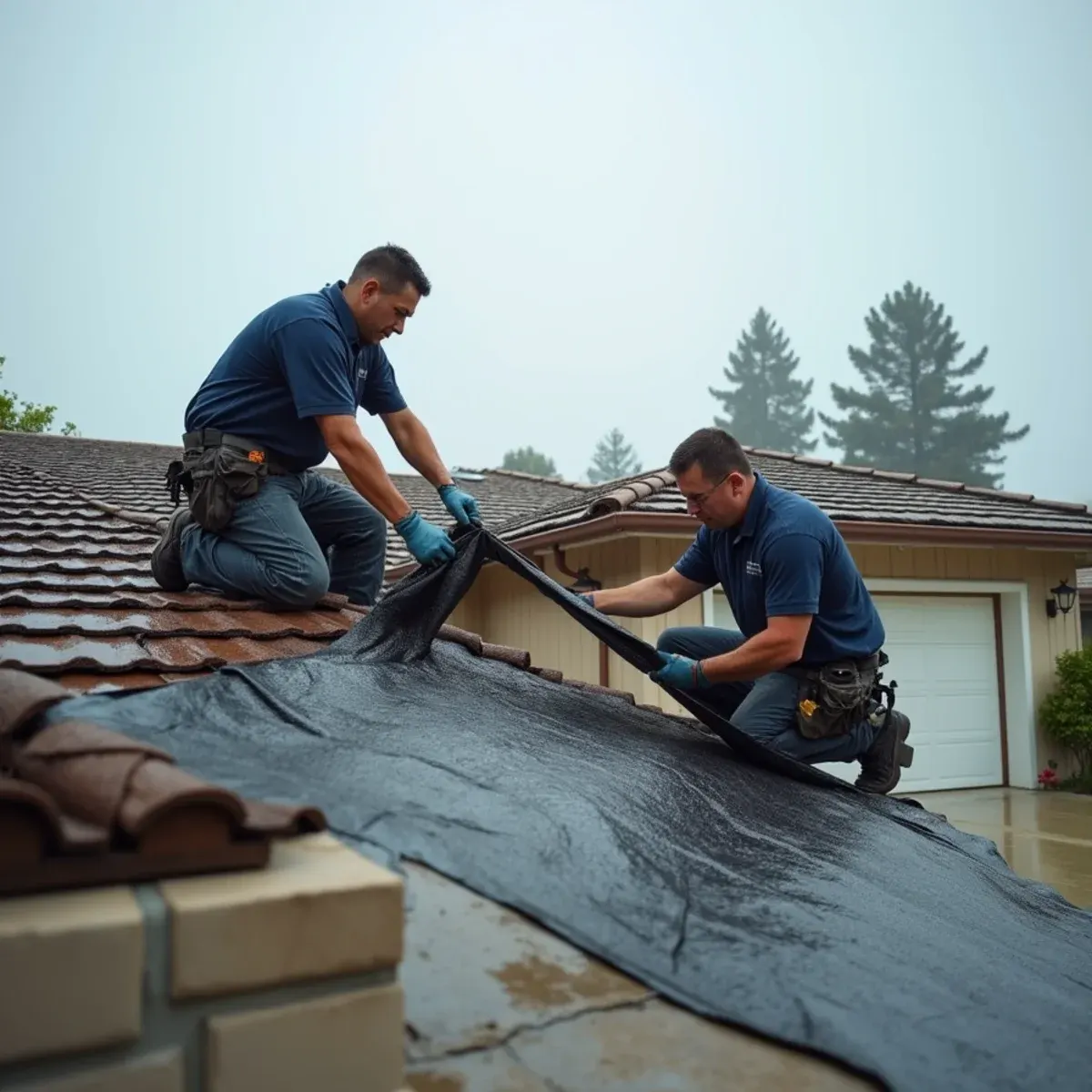
In a stacked Hawaiian Gardens apartment building, storm water that gets through the roof rarely stops at the top floor. It finds the plumbing chase around the shared vertical stack and goes down — through the ceiling of the unit below, then the one below that. Roughly one more unit for every extra hour before someone with a key gets on site. This is the smallest city in Los Angeles County by area and one of the most densely populated per acre, and the buildings behave accordingly.
Most residents here rent, which creates the specific problem we see all winter: the tenant who notices the water is often not the tenant who has the problem, and neither of them can authorize anything. Meanwhile the manager may live somewhere else entirely. The buildings around the Carson Street corridor and near Lee Ware Park are mostly 1960s and 1970s construction on slab, built economically, with chases never sealed between floors. In a storm, delay does more damage than the rain.
What Hawaiian Gardens Changes About Storm Damage
1Notify management in writing immediately
Call, then send a text or email with the time and what you saw. In a stacked building, verbal reports get lost between shifts and the delay is exactly what expands the loss downward. A written record also protects a tenant later if there's an argument about when the leak was first reported. This costs nothing and it's the single most effective thing a renter here can do.
2Every unit is a separate loss
When water descends through three or four apartments, each household has its own damaged belongings and its own renters' policy, and the building carries its own. We document each unit separately — readings, photos, contents — from the first visit. Bundling them into a single file is how a family on the bottom floor ends up with nothing recorded at all.
3Tight sites limit equipment access
These buildings sit on small lots with shared parking and narrow walkways, so a truck-mount often can't get close and available power is limited. We plan for portable extraction, longer hose runs, and distributing dehumidifiers across circuits so we don't trip a building already under strain. Knowing the site layout before we roll saves real time on a busy storm night.
How the Work Runs
The method is the same one we use on every storm damage job, documented to the IICRC S500:2025 standard. Here it is in short — the full storm damage restoration process explains each stage in detail.
- Emergency tarping and board-up
- Water diversion and extraction
- Full damage documentation
- Interior mitigation
- Structural drying to standard
- Permanent repairs
The Hawaiian Gardens Background Worth Knowing
In a multi-story apartment building, plumbing runs vertically through shared chases connecting stacked units. When a supply line or drain fails in that chase, water follows it downward through every unit below — and it does not stop politely at unit boundaries.
There is more on the housing stock, drainage and plumbing history of this city on our water damage restoration in Hawaiian Gardens page.
Hawaiian Gardens at a glance
- Dominant construction era
- 1950–1975
- Foundation type
- slab on grade
- Supply piping found here
- galvanized steel, copper, shared vertical stacks
- Drain line materials
- cast iron
- Terrain and water table
- flat, moderate water table
- Most common local failure
- stack failures that travel down through every unit below, expanding by one unit for roughly every extra hour of delay
- Highest-value local prevention
- immediate written notice to management, because in a stacked building the clock does more damage than the water
What It Costs in Hawaiian Gardens
We do not quote a number over the phone before seeing the property — anyone who does is guessing. The variables that actually move the price on a storm damage job are size of the opening and duration of intrusion, emergency mitigation scope, how many rooms the water reached, and they are broken down in full on the storm damage restoration page. The assessment and the written estimate are free anywhere in Hawaiian Gardens, day or night, with no obligation.
Storm Damage Questions from Hawaiian Gardens Homeowners
Move what you can out of the path, put containers under the drip, and don't push at a bulging ceiling — a sagging drywall belly full of water can let go all at once, so stay clear of it. Message the manager in writing with the time so there's a record, and photograph everything. If a light fixture is involved, kill that circuit at the panel if you can do it safely. We can respond and start documenting your unit while the building's side gets sorted.
During. Emergency tarping and board-up happen in the rain — that is the entire point of them. We triage by severity, so active intrusion into occupied living space goes to the front of the queue.
Sudden wind and rain damage is generally covered, including the resulting interior water damage. What gets excluded is damage from a roof that had already failed or from deferred maintenance, and flooding from water that came across the ground, which needs separate flood insurance.
Photograph and video everything before moving anything, notify your property manager in writing immediately, and move belongings out of the affected area if it is safe to do so. Do not wait for the neighbor upstairs to act — the damage compounds every hour and the written timeline protects you.