
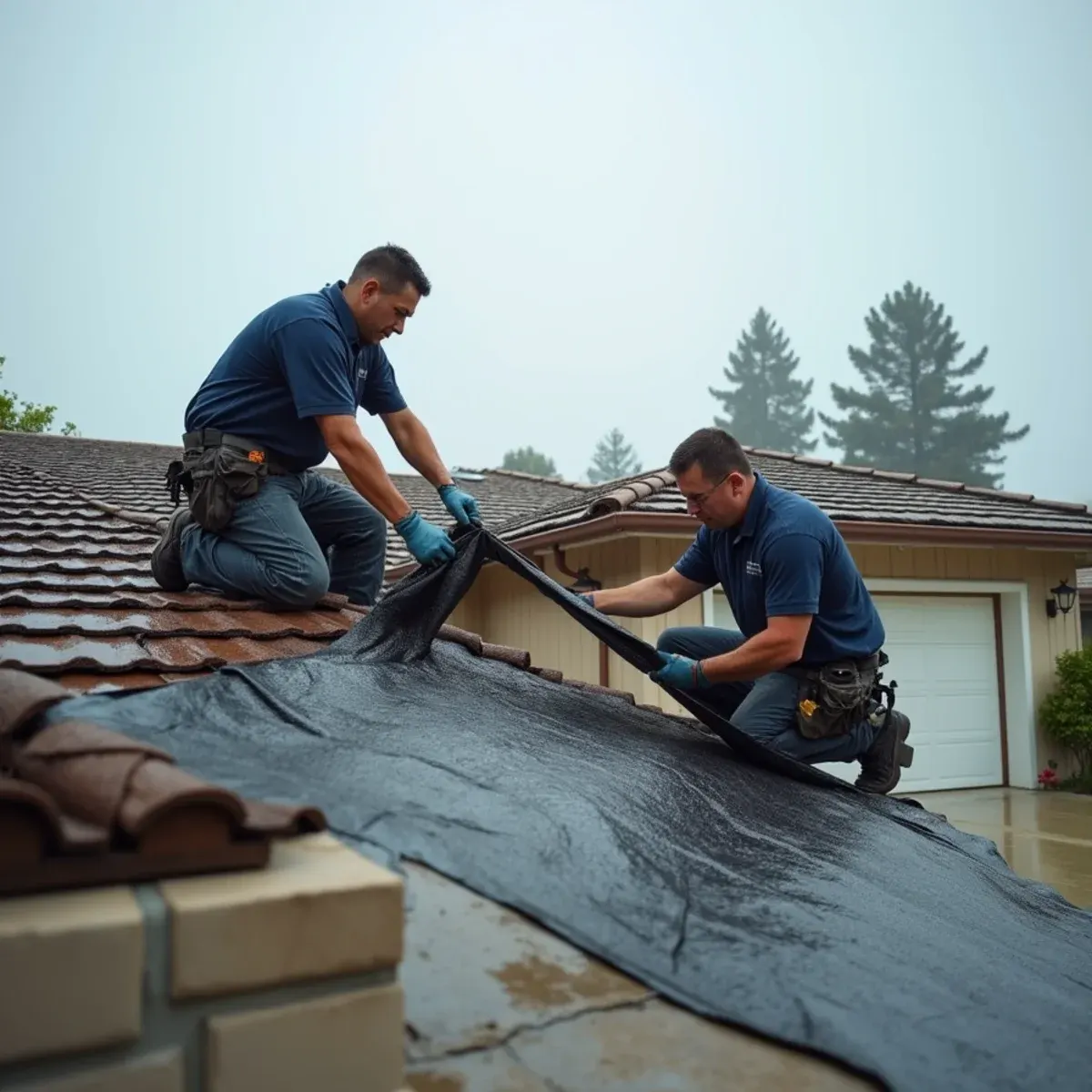
The most useful thing anyone can tell us about a Long Beach storm call is the neighborhood. A 1926 plaster wall in Bluff Park and a 1955 drywall wall in Los Altos are different restoration problems with different urgency, different equipment and different outcomes — and both are in this city. Get that wrong and you either tear out material that could have been saved or you leave saturated plaster in place until the keys let go. We identify the construction before anyone cuts anything.
The geography splits too. Naples sits on filled land with canal-front lots and the water table right there. Belmont Shore is narrow lots with no driveway and street parking that disappears in the rain, so equipment staging has to be planned before we leave the shop. East Long Beach near the Cypress border — El Dorado Park Estates, Los Altos — is slab-on-grade built in the same era as our home city and drains toward the same San Gabriel River system, so it behaves like home ground to us.
What Long Beach Changes About Storm Damage
1Construction type decides the method
Before any demolition we establish what the walls and floors actually are. Lath and plaster gets desiccant drying and speed; postwar drywall gets conventional drying and controlled cuts; canal-front ground floors get slab moisture testing first. Applying one approach across this city is how good original material ends up in a dumpster and how bad material gets left inside a wall.
2Belmont Shore staging is the hard part
On the narrow lots off Second Street there's frequently no driveway and nowhere to sit a truck near the door. That means portable equipment, long hose runs, and a plan made before arrival. During a storm, the crews circling for parking are the crews not drying anyone's house. Tell us the parking reality when you call and we'll load for it.
3Canal-front ground floors stay wet
In Naples and the canal areas, ground water sits close under filled land, so ground-floor slabs and lower walls carry a higher baseline moisture load and dry slowly. We take in-situ slab readings rather than surface readings and set expectations accordingly. A drying timeline that works fine in Bixby Knolls will run noticeably longer a block from the water.
How the Work Runs
The method is the same one we use on every storm damage job, documented to the IICRC S500:2025 standard. Here it is in short — the full storm damage restoration process explains each stage in detail.
- Emergency tarping and board-up
- Water diversion and extraction
- Full damage documentation
- Interior mitigation
- Structural drying to standard
- Permanent repairs
The Long Beach Background Worth Knowing
The postwar tracts around El Dorado Park, Los Altos, and the neighborhoods near the Cypress border were built in the same era and largely the same way as the housing in our home city. Single-story slab construction, plumbing routed under the concrete, and a fifty-to-seventy-year age on the supply lines.
There is more on the housing stock, drainage and plumbing history of this city on our water damage restoration in Long Beach page.
Long Beach at a glance
- Dominant construction era
- 1920–1980
- Foundation type
- mixed on grade
- Supply piping found here
- original 1920s piping, galvanized steel, under-slab copper
- Drain line materials
- cast iron, clay
- Terrain and water table
- coastal-flat, shallow water table
- Most common local failure
- the approach changing entirely by neighborhood — a 1926 plaster wall and a 1955 drywall wall are different restoration problems
- Highest-value local prevention
- identifying the construction type before anyone starts cutting
What It Costs in Long Beach
We do not quote a number over the phone before seeing the property — anyone who does is guessing. The variables that actually move the price on a storm damage job are size of the opening and duration of intrusion, emergency mitigation scope, how many rooms the water reached, and they are broken down in full on the storm damage restoration page. The assessment and the written estimate are free anywhere in Long Beach, day or night, with no obligation.
Storm Damage Questions from Long Beach Homeowners
It makes it different in kind. You're on flat, slab-on-grade ground draining toward the San Gabriel River system, so the risk is surface water and saturated soil rather than the coastal and canal conditions in Naples or Belmont Shore. In a long storm, blocked yard drains and low thresholds cause more losses out there than roofs do. The upside is that your construction is straightforward to dry, and we work that side of the city constantly.
During. Emergency tarping and board-up happen in the rain — that is the entire point of them. We triage by severity, so active intrusion into occupied living space goes to the front of the queue.
Sudden wind and rain damage is generally covered, including the resulting interior water damage. What gets excluded is damage from a roof that had already failed or from deferred maintenance, and flooding from water that came across the ground, which needs separate flood insurance.
All of it, with the fastest response to East Long Beach — El Dorado Park Estates, Los Altos, and the neighborhoods near the Cypress border, which are typically twenty to twenty-five minutes. Coastal and downtown areas run a little longer, and we will give you a realistic ETA when you call.