
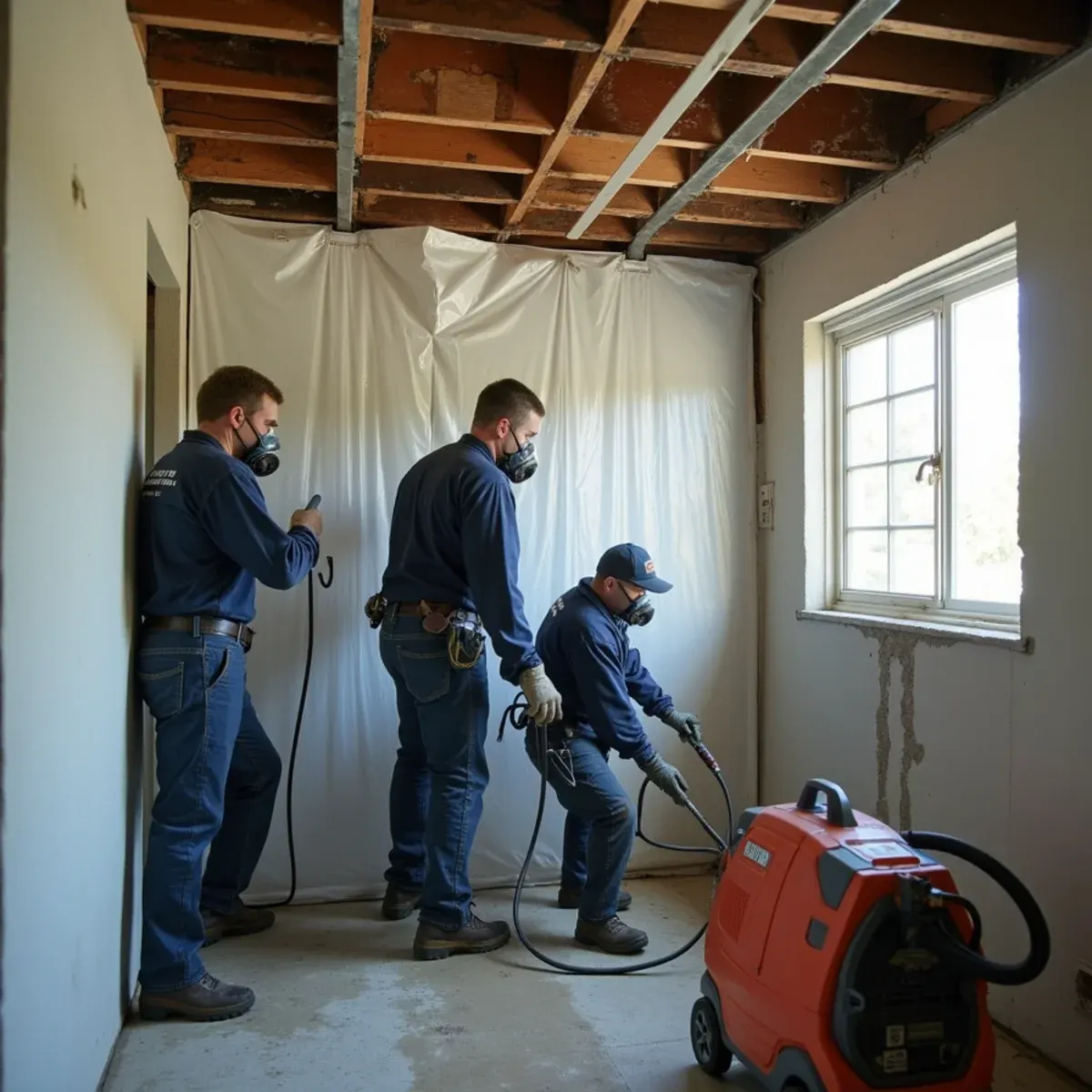
The right answer changes by the mile here. Brackish canal water in a Naples ground floor, plaster over lath in a 1926 Bluff Park house, a narrow Belmont Shore lot with nowhere to park a truck, and a slab tract in East Long Beach that behaves exactly like the homes on our own side of the Cypress line. Same city, same storm, four different jobs. Before anything gets cut we identify the construction, because a 1926 plaster wall and a 1955 drywall wall fail in completely different ways and on different schedules.
Geography splits it further. Naples sits on filled land at canal level with a shallow water table, so ground water arrives with salt in it and leaves chloride behind in the framing after drying is finished. East Long Beach near El Dorado Park drains toward the San Gabriel River and floods the way our home city does, which is familiar ground for us. Belmont Shore lots are narrow with limited street parking, so where the truck sits and how hose lines run gets settled before the crew leaves the shop.
What Long Beach Changes About Flood Cleanup
1Naples sits at canal level on fill
Filled land, a shallow table, and water with salt in it. Ground water here can rise into a slab edge or a garage without a drop coming over the seawall, and the residue it leaves keeps pulling humidity back into materials long after readings look acceptable. On brackish losses we rinse and neutralize affected assemblies rather than treating a dry meter reading as the end of the job.
2Belmont Shore staging is planned early
Narrow lots, no driveways and tight parking mean extraction efficiency drops with every extra foot of hose, and equipment gets carried through finished space. We settle the truck position, hose route and debris path before dispatch, and tell you what the street will look like for the duration. Improvising that on arrival costs hours you do not have on a Category 3 loss.
31920s plaster and 1955 drywall diverge
In Bluff Park and California Heights, plaster over wood lath holds several times the water drywall does, wicks well above the visible line, and needs desiccant drying with a cut line set by meter. In Los Altos and El Dorado Park Estates, drywall on a slab is a faster and far more predictable scope. Same service, and almost no overlap in method between them.
How the Work Runs
The method is the same one we use on every flood cleanup job, documented to the IICRC S500:2025 standard. Here it is in short — the full flood damage cleanup process explains each stage in detail.
- Safety assessment and utility check
- Containment and negative air
- Documentation and contents triage
- Extraction and controlled demolition
- Cleaning and disinfection
- Structural drying and clearance
The Long Beach Background Worth Knowing
The postwar tracts around El Dorado Park, Los Altos, and the neighborhoods near the Cypress border were built in the same era and largely the same way as the housing in our home city. Single-story slab construction, plumbing routed under the concrete, and a fifty-to-seventy-year age on the supply lines.
There is more on the housing stock, drainage and plumbing history of this city on our water damage restoration in Long Beach page.
Long Beach at a glance
- Dominant construction era
- 1920–1980
- Foundation type
- mixed on grade
- Supply piping found here
- original 1920s piping, galvanized steel, under-slab copper
- Drain line materials
- cast iron, clay
- Terrain and water table
- coastal-flat, shallow water table
- Most common local failure
- the approach changing entirely by neighborhood — a 1926 plaster wall and a 1955 drywall wall are different restoration problems
- Highest-value local prevention
- identifying the construction type before anyone starts cutting
What It Costs in Long Beach
We do not quote a number over the phone before seeing the property — anyone who does is guessing. The variables that actually move the price on a flood cleanup job are how high the water reached, how long it sat before extraction, contents volume in the flooded area, and they are broken down in full on the flood damage cleanup page. The assessment and the written estimate are free anywhere in Long Beach, day or night, with no obligation.
Flood Cleanup Questions from Long Beach Homeowners
The classification is the same — Category 3 — so removal, disinfection and drying follow the same sequence. What changes is what stays behind. Salt is hygroscopic, so chloride left in framing and wall cavities keeps drawing humidity back in and can corrode fasteners and connectors over the years that follow. On canal-front losses we rinse the affected assemblies and check for residue before signing off, which a purely freshwater job would not require.
Yes. Water that crossed soil, pavement, or a storm drain is Category 3 by IICRC classification regardless of appearance — it carries bacteria, fuel and oil residue, lawn chemicals, and whatever else was on the ground. Do not walk through it in open shoes, and keep children and pets out of the area entirely.
If the water came from outside across the ground, almost certainly not — that requires separate flood insurance. If it came from a failed water heater, a burst pipe, or a supply line inside the garage, it is usually covered. We document the source carefully because that distinction determines everything.
All of it, with the fastest response to East Long Beach — El Dorado Park Estates, Los Altos, and the neighborhoods near the Cypress border, which are typically twenty to twenty-five minutes. Coastal and downtown areas run a little longer, and we will give you a realistic ETA when you call.