
Roughly 17,500 homes went up in Lakewood between 1950 and 1953, some weeks at a hundred a day. That's an entire city whose roofs, eaves and wet-core layouts share not just a decade but a three-year window. When an atmospheric river comes through, we don't get scattered calls — we get the same failure repeating from Mayfair Park to Del Valle, house after house, because these homes reached the end of the same detail at very nearly the same time.
The floor plans put kitchen, bath and laundry against shared plumbing walls, so when storm water gets into a ceiling or a wall it lands in the busiest part of the house. Original galvanized supply lines are still in service in a lot of these homes, and a storm week is when people find out: a roof leak gets opened up and the pipe behind it turns out to be scaled nearly shut. If a wall has to come open anyway, that's the moment to replace the run.
What Lakewood Changes About Storm Damage
1Repipe while the wall is open
Storm repairs open walls that would otherwise stay closed another decade. Original galvanized in these houses fails predictably — zinc wears through, steel corrodes, scale narrows the bore, and a fitting eventually lets go. Replacing that run while the drywall is already out costs a fraction of doing it as its own project later. We point at what's exposed, show you the pipe interior, and let you decide.
2Shared wet-core walls concentrate damage
Kitchen, bathroom and laundry back onto the same plumbing wall in most of these plans, so water in that wall reaches three rooms' worth of finishes and cabinetry. Drying it means getting air into the cavity from both sides, often from behind base cabinets, rather than pointing fans at a painted surface. Cabinet toe kicks and the subfloor beneath them are where moisture hides longest.
3Citywide storms mean call order
When one weather system hits 17,500 homes of the same age, every roof finds its weak point on the same night and every restoration company in the area is committed within hours. Crews go out in the order calls come in. Calling early, even before you know how bad it is, is the practical advantage. We'll talk you through shutting things down safely while you wait.
How the Work Runs
The method is the same one we use on every storm damage job, documented to the IICRC S500:2025 standard. Here it is in short — the full storm damage restoration process explains each stage in detail.
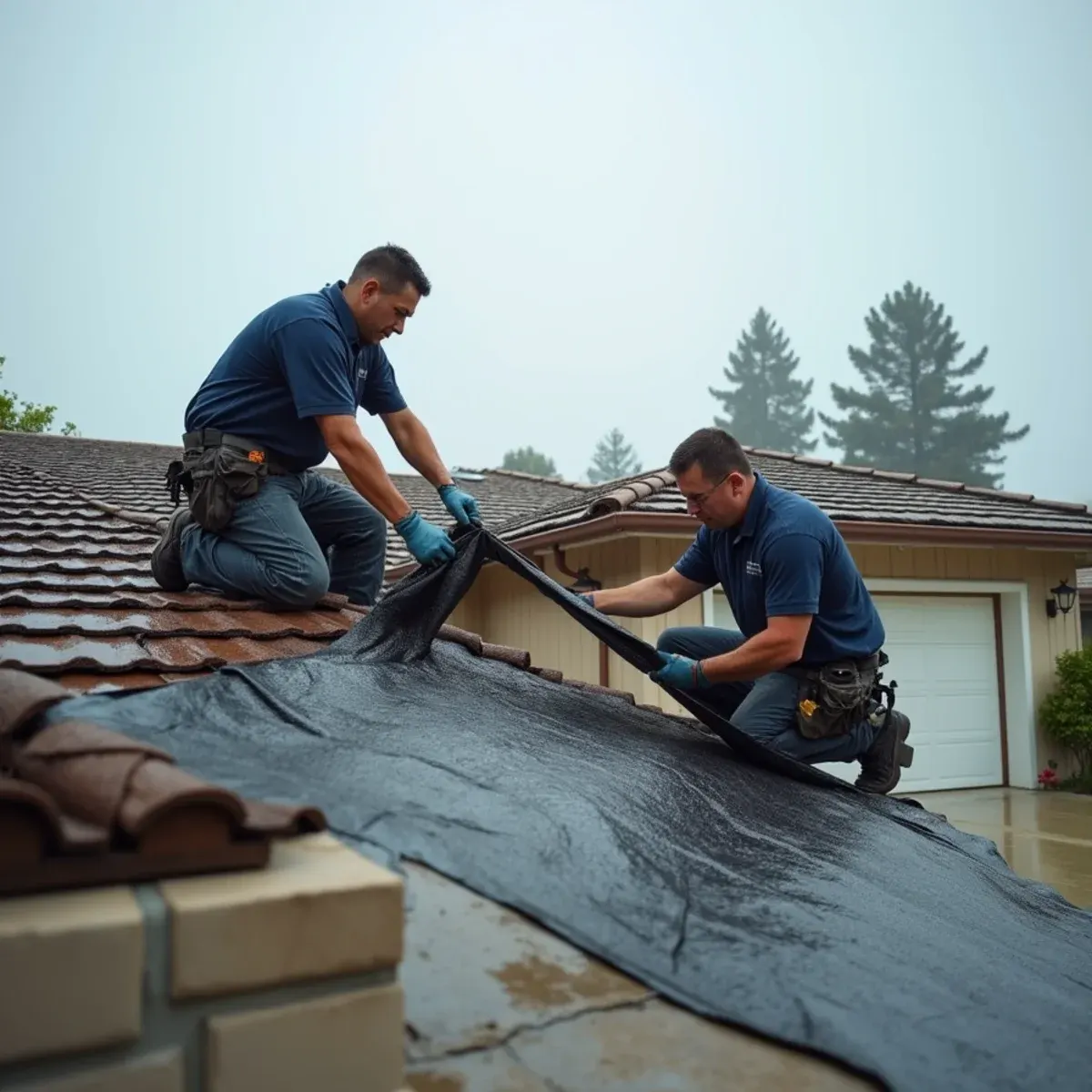
- Emergency tarping and board-up
- Water diversion and extraction
- Full damage documentation
- Interior mitigation
- Structural drying to standard
- Permanent repairs
The Lakewood Background Worth Knowing
Galvanized steel supply piping was standard when Lakewood was built, and it fails in a specific and predictable way. The zinc coating protecting the steel wears through from the inside, the steel corrodes, and scale builds up on the interior wall — narrowing the pipe over decades. As the diameter shrinks, water velocity and turbulence increase, which accelerates the erosion at elbows and fittings until a thin spot lets go.
There is more on the housing stock, drainage and plumbing history of this city on our water damage restoration in Lakewood page.
Lakewood at a glance
- Dominant construction era
- 1950–1953
- Foundation type
- slab on grade
- Supply piping found here
- original galvanized steel
- Drain line materials
- cast iron
- Terrain and water table
- flat, moderate water table
- Most common local failure
- seventy-year-old galvanized supply lines letting go at a scaled, eroded fitting
- Highest-value local prevention
- repiping while walls are already open for a repair, rather than as a separate project later
What It Costs in Lakewood
We do not quote a number over the phone before seeing the property — anyone who does is guessing. The variables that actually move the price on a storm damage job are size of the opening and duration of intrusion, emergency mitigation scope, how many rooms the water reached, and they are broken down in full on the storm damage restoration page. The assessment and the written estimate are free anywhere in Lakewood, day or night, with no obligation.
Storm Damage Questions from Lakewood Homeowners
It's normal here specifically. These homes were built within three years of each other to the same plans, so a roof covering, a valley detail or a pipe boot reaches the end of its life across the whole block in the same couple of winters. That's a shared build date, not a shared defect. The useful takeaway is that your neighbor's failure tells you exactly what to inspect on your own roof before the next system arrives.
During. Emergency tarping and board-up happen in the rain — that is the entire point of them. We triage by severity, so active intrusion into occupied living space goes to the front of the queue.
Sudden wind and rain damage is generally covered, including the resulting interior water damage. What gets excluded is damage from a roof that had already failed or from deferred maintenance, and flooding from water that came across the ground, which needs separate flood insurance.
Have it assessed. Seventy-year-old galvanized has exceeded any reasonable service life, and declining pressure or rust-colored water means it is well along. If a repair is already opening walls, that is the cheapest moment you will ever get to repipe — the demolition and patching are already in the scope.